




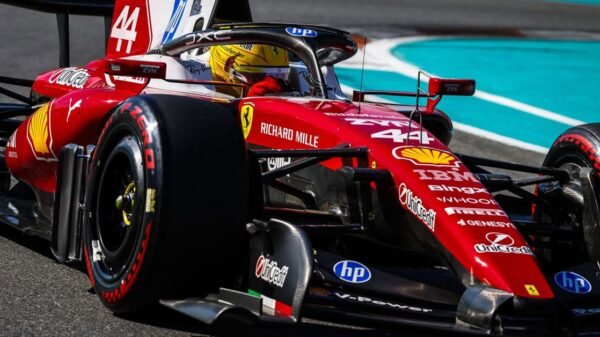
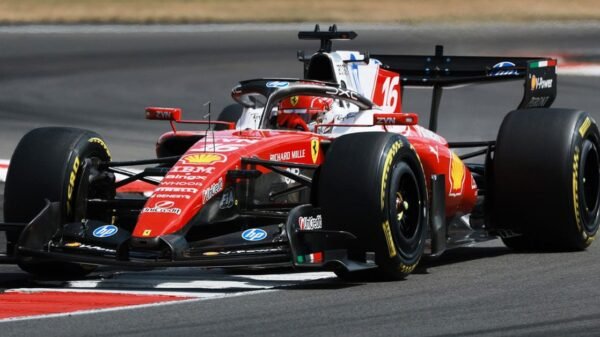
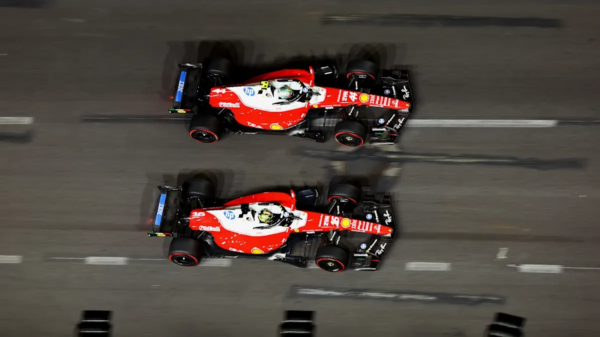

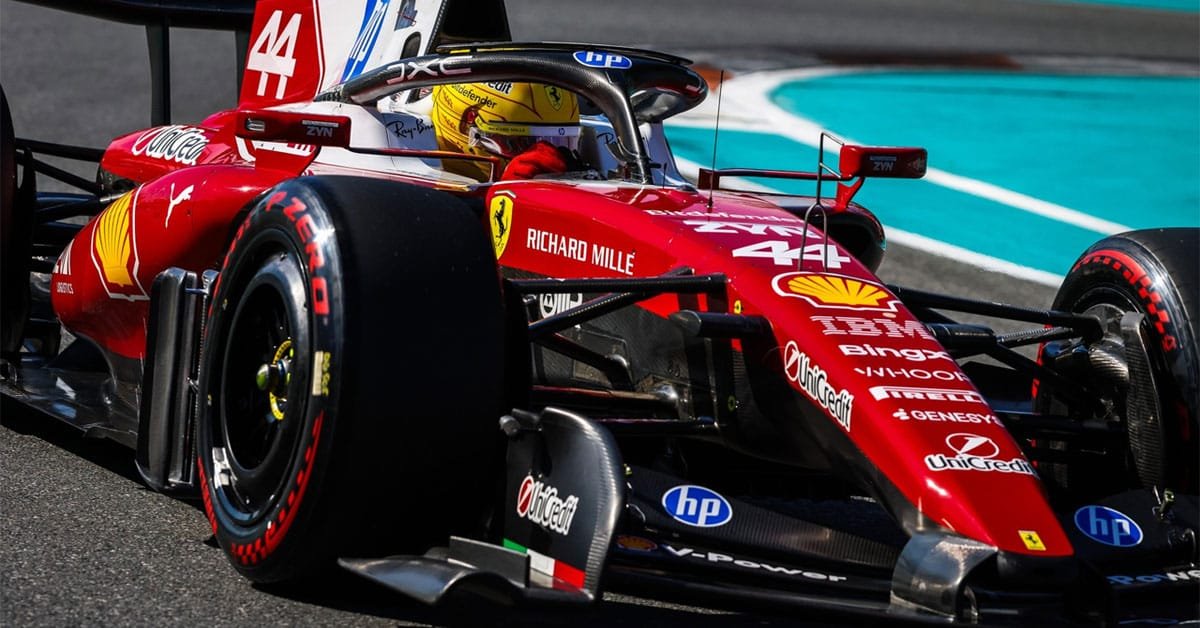
Lewis Hamilton’s intelligent last-lap strategy at the 2026 Las Vegas Grand Prix has garnered significant praise from Formula 1 broadcaster Will Buxton. Despite securing seventh position, the seven-time world champion delivered a performance that Buxton feels was largely overshadowed by his collision with Ferrari teammate Charles Leclerc. Hamilton’s recovery drive and sophisticated approach to energy deployment offered a much more encouraging picture of his capabilities.
The Tactical Chess Match of Las Vegas
The Las Vegas Grand Prix evolved into a complex tactical contest where energy deployment proved decisive. Drivers were continuously tasked with assessing the optimal moment to utilize available power, balancing the immediate gains of overtaking against the strategic advantage of conserving energy for later stages of the lap. The sheer volume of overtaking maneuvers and lead changes reflected the unpredictable nature of the race, making tactical awareness exceptionally valuable.
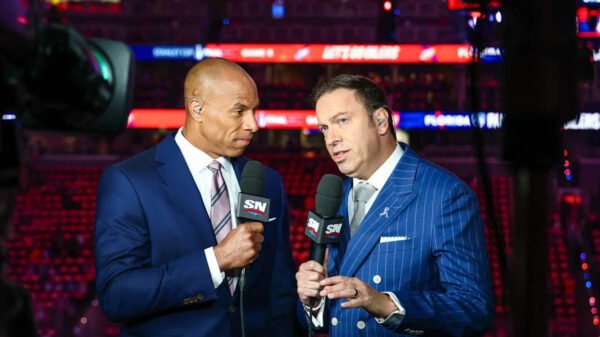
While Max Verstappen received considerable praise for managing these circumstances, Lewis Hamilton exhibited comparable racing intelligence further down the order, though his efforts received less attention. Speaking on the Up to Speed podcast, Will Buxton described the Ferrari driver’s overall performance as exceptional, specifically noting how he recovered after being sent into a spin by his teammate.
Key Moments: Strategy and On-Track Battles
Buxton was particularly impressed by Hamilton’s decision on the final lap to allow George Russell to overtake him. Instead of immediately committing his available energy to defending the position, the British driver ensured he retained power for the finish. Buxton deemed this an “exceptionally intelligent demonstration of racecraft.”
Before the collision with Charles Leclerc, Hamilton was involved in battles with the McLaren drivers. However, his race was compromised by two costly incidents. The first resulted in a ten-second time penalty for gaining an advantage by leaving the track during his battle with Lando Norris; Hamilton made his disagreement with the stewards’ decision clear over team radio. His prospects suffered another major setback when Charles Leclerc attempted an ill-judged overtaking maneuver against his teammate, leading to contact and sending both Ferraris into spins. This incident reignited controversy surrounding the team’s internal rivalry and overshadowed much of Hamilton’s individual performance.
Driver Performances and Pace
Hamilton demonstrated that he quickly adapted to the strategic challenges associated with energy deployment in the 2026 Formula 1 cars. Like Max Verstappen, the seven-time world champion understood the importance of looking beyond the immediate battle for position to determine where deploying available power would yield the greatest advantage. His last-lap maneuver involving George Russell serves as a compelling example of this approach.
Prior to the Grand Prix, Ferrari had voiced concerns about its straight-line speed deficit compared to principal rivals. Nevertheless, once the race began, the Scuderia proved competitive, with Hamilton demonstrating particularly impressive pace. Considering that both McLaren cars ultimately finished on the podium, there is a strong argument that Hamilton possessed sufficient pace to challenge for a similarly encouraging result.
Championship Context and Future Focus
Despite finishing seventh, Hamilton’s performance highlighted his ability to adapt strategically. His racecraft and intelligent energy management remained among the more encouraging aspects of an otherwise frustrating Grand Prix for Ferrari. The seventh-place finish did not fully reflect what Hamilton demonstrated on track in Las Vegas, especially given his teammate’s mistake denied him a potential podium fight.
The next race is yet to be confirmed, but the focus for Ferrari will likely involve addressing the straight-line speed deficit that was openly expressed before the event.
What aspect of Hamilton’s energy deployment strategy do you think was the most crucial factor in his final result?
