
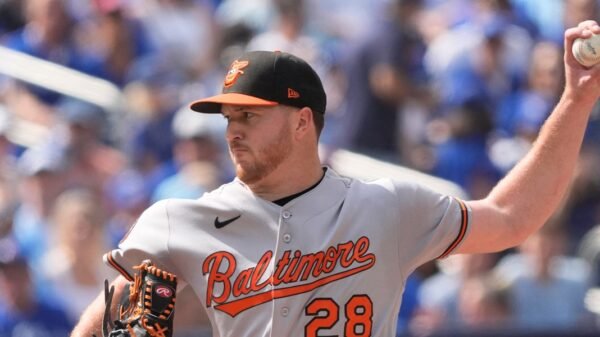










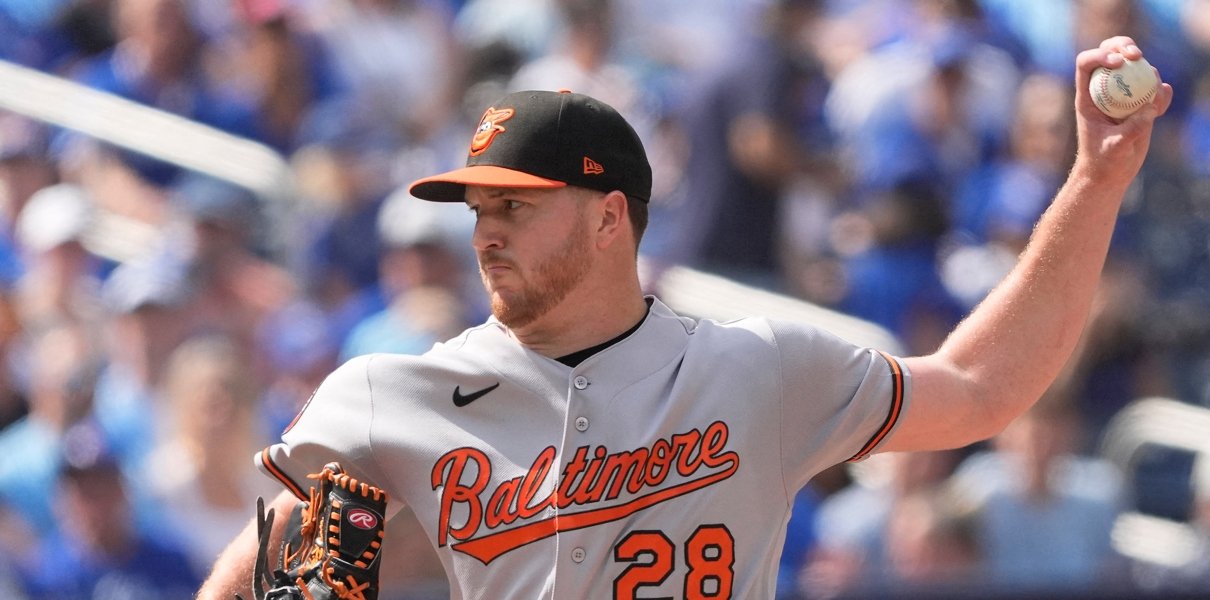
The Chicago Cubs have signed left-handed starting pitcher Trevor Rogers. This move comes as the team works to solidify its rotation ahead of the upcoming season. Rogers, who spent the 2026 season with the Baltimore Orioles, brings experience and a specific profile to the Cubs’ plans.
Official Update on the Signing
Sources have confirmed that the Chicago Cubs have officially signed Trevor Rogers. Rogers, who turned 29 recently, was a former first-round pick and top-100 prospect who debuted with the Marlins in 2020. His career saw periods of injury, leading to his trade to the Orioles, where his performance improved. In 2026, Rogers posted a 4.03 ERA with a 4.0 fWAR across 30 starts and 169.2 innings.
The signing carried specific consequences for the Cubs. Because Rogers declined a qualifying offer from Baltimore and the Cubs exceeded the luxury tax in 2026, the franchise will forfeit its second- and fifth-highest picks in the 2027 MLB draft, in addition to a $1 million reduction from their international bonus pool.
Further details regarding the contract structure have emerged. The deal is reported to be a five-year agreement valued at $120 million, translating to an average annual value of $24 million. Reports also indicate that there are deferrals within the agreement, which will affect the net present value for payroll purposes.
Immediate Roster Impact
The acquisition of Rogers directly addresses the Cubs’ need for reliable starting pitching. The team entered the offseason needing two, if not three, dependable pitchers, and Rogers’ signing checks that box for near-front-of-the-rotation upside. He is a left-handed pitcher, a profile the Cubs have shown interest in.
As of the latest reports, the Cubs’ opening day rotation is projected to feature Trevor Rogers alongside Javier Assad, Edward Cabrera, Justin Steele (contingent on his readiness), and Braxton Garret.
Recent Context
Rogers’ profile increased significantly heading into free agency due to his strong performance during the final 20 starts of the 2026 season. During that stretch, he posted a 2.90 ERA with a 3.10 FIP, achieving a 24.8% strikeout rate and maintaining a low 4.4% walk rate.
The Cubs reportedly scouted Rogers earlier this month. His attributes noted include a fastball velocity close to average for a lefty starter, above-average extension, an above-average strikeout rate, and the ability to induce chase, which contributes to quality of contact reduction. Furthermore, he maintains a low walk rate.
Why This Matters
The signing provides a significant boost to the Cubs’ pitching depth as they navigate the offseason. While Rogers fills an immediate need, the team still has work to do in the rotation, and the need for at least one, and possibly two, more sure-fire starters remains. The signing may close the door on pursuing other pitchers in the same tier, though the Cubs have shown interest in other targets.
The Cubs’ offseason strategy also involves other potential moves. While a trade remains a possibility, the team has recently dealt from its prospect depth. The organization has also shown interest in position players, with established interest in Teruaki Sato.
What to Monitor
While the Rogers deal is a major step forward for the Cubs’ 2027 rotation plans, the team’s needs are not entirely met. Observers will be watching to see if the Cubs pursue additional free-agent pitchers from a lower tier, or if they make any further moves, such as a trade, as the offseason progresses. The status of other potential rotation contributors, like Ben Brown and Cade Horton, also remains a factor.
Given the ongoing nature of offseason maneuvering, what other pitching targets might the Cubs pursue to round out their rotation?
