


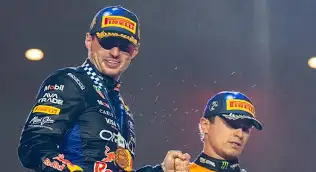
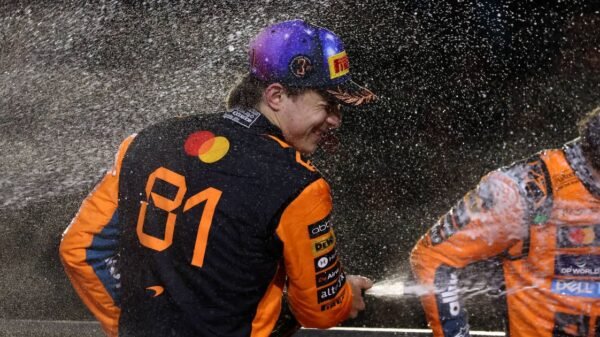
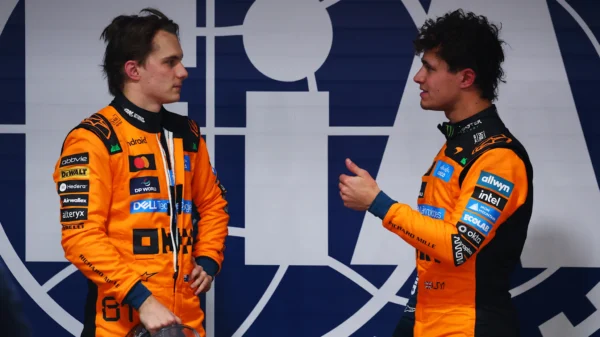
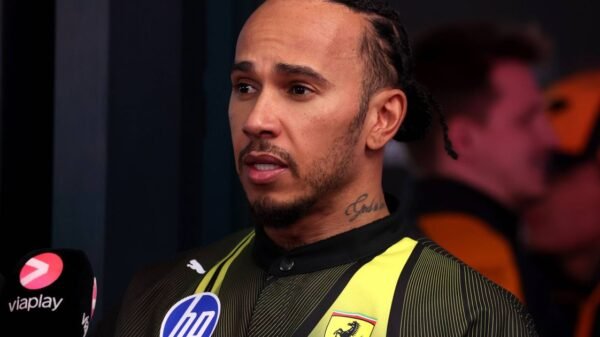



Four-time world champion Max Verstappen claimed victory on the iconic Las Vegas Strip, securing the win in a Grand Prix defined by relentless action. His 1:27:39.624 finish edged out Lando Norris of McLaren by a razor-thin margin of just 0.639 seconds, with Oscar Piastri following closely behind. While the spectacle delivered a staggering 352 on-track overtakes, Verstappen himself offered a stark critique of the racing style, comparing the overtake-heavy affair to “playing Mario Kart,” igniting a major post-race discussion about the nature of modern Formula 1.
How the Race Unfolded
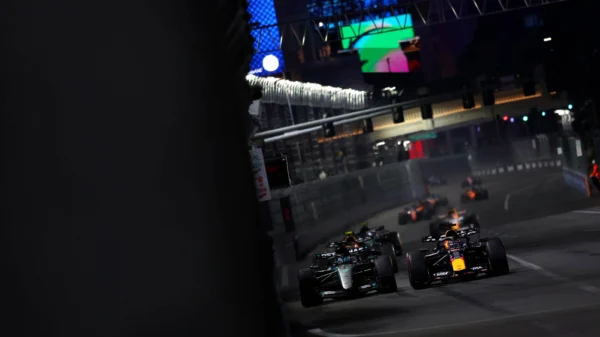
The 2026 Formula 1 Heineken Las Vegas Grand Prix was a masterclass in high-octane attrition and constant jockeying for position. The race saw drivers trading the lead repeatedly down the 1.9-kilometer Las Vegas Boulevard straight, with Verstappen frequently battling his Red Bull teammate, Isack Hadjar, alongside Mercedes duo Andrea Kimi Antonelli and the McLaren drivers. The sheer volume of action meant that momentum shifted almost constantly throughout the 50 laps. While the race was characterized by intense wheel-to-wheel action, the narrative was less about sustained pace and more about tactical survival and capitalizing on fleeting opportunities.
Key Turning Points
The race was littered with moments that dramatically altered the standings. Pit strategy played a crucial role in the final order, though the relentless on-track battles often overshadowed the pit stops. Several incidents led to penalties, most notably a 10-second time penalty handed to both Charles Leclerc and Isack Hadjar following a collision or speeding in the Safety Car. These penalties directly impacted the final classification, affecting drivers who were otherwise in contention. Furthermore, the race saw several retirements, including Fernando Alonso on Lap 49, Sergio Pérez on Lap 17 after contact with Haas rookie Rafael Câmara, and Arvid Lindblad on Lap 19.
Driver Performances
Max Verstappen delivered a commanding performance to secure the win, navigating the chaotic environment to take the top spot. McLaren showcased strong pace, with Lando Norris finishing second and Oscar Piastri taking third. The Mercedes contingent showed promise, with Andrea Kimi Antonelli charging into fourth place, closely followed by Alpine’s Pierre Gasly in fifth, and Franco Colapinto in sixth. Ferrari saw mixed results; Lewis Hamilton secured seventh place in his 250th Grand Prix, while Charles Leclerc dropped to tenth after incurring his penalty. George Russell, starting from pole position, faded to ninth, while Carlos Sainz Jr. of Williams finished eighth.
Championship Context
The results carry significant implications for both the Drivers’ and Constructors’ standings. Verstappen’s victory solidifies his dominance, though his critique suggests a philosophical divergence from the pure racing ethos. For the midfield, the strong showings from Antonelli and the McLaren pairing indicate that the battle for podium spots remains fiercely contested. The performance of the teams highlights the razor-thin margins separating the frontrunners from the rest of the grid in this highly competitive season.
What Comes Next
With the Las Vegas Grand Prix concluded, circuit teardown operations have begun across the Las Vegas Boulevard area, with lane closures expected over the coming weeks. Attention now turns to the next scheduled Grand Prix. Teams are expected to focus on refining their strategies in the wake of the high-contact nature of the Las Vegas event, particularly regarding managing tire wear and navigating aggressive slipstream battles.
Given the intense action, do you believe the spectacle of high-overtake racing enhances the excitement of F1, or does it detract from the purity of the sport?