






The 2026 Las Vegas Grand Prix delivered a thrilling, unpredictable spectacle, ultimately crowning a victor whose performance was shaped by strategic gambles and intense on-track drama. While the final standings reflected a fierce battle, the defining storyline revolved around the complex internal dynamics within Scuderia Ferrari, particularly the pivotal pit stop decision that preceded a high-profile collision between teammates Lewis Hamilton and Charles Leclerc. This race holds significant weight for the championship standings, as the contrasting fortunes of the drivers underline the razor-thin margins separating contenders.
How the Race Unfolded
The Las Vegas Grand Prix unfolded with the characteristic unpredictability of the season, featuring numerous overtakes and a fascinating battle heavily influenced by energy management strategies employed by the drivers. The race largely adhered to the expected pattern set by Pirelli, with a straightforward one-stop Soft-Medium strategy proving sufficient for competitive finishes, as tyre degradation remained commendably low. However, the deployment of the Safety Car following the collision between Rafael Camara and Sergio Perez served as the major inflection point, dictating the tactical maneuvers of the leading teams.
The race saw several drivers manage the conditions differently. While most opted for the Soft-Medium sequence, three drivers—Isack Hadjar, Rafael Camara, and Valtteri Bottas—adopted a two-stop strategy due to incidents or difficulties. The overall narrative was one of constant momentum shifts, where small tactical advantages or disadvantages could rapidly alter a driver’s standing.
Key Turning Points
Several moments crystallized the race’s drama. The initial battle saw McLaren’s Oscar Piastri make a remarkable recovery, moving from 17th on the grid to secure a strong third-place finish. Lando Norris, despite struggling to get his Soft tyres into their optimal operating window early on, managed to salvage a second-place finish after hovering in the lower reaches of the top ten.
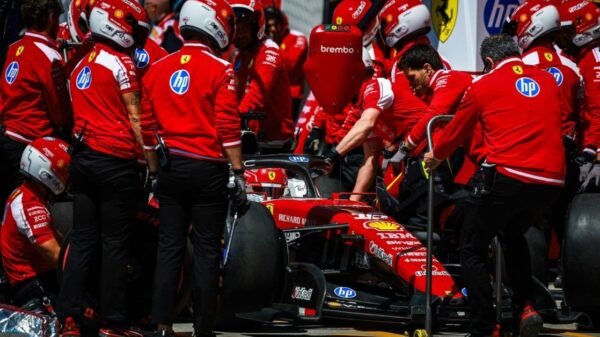
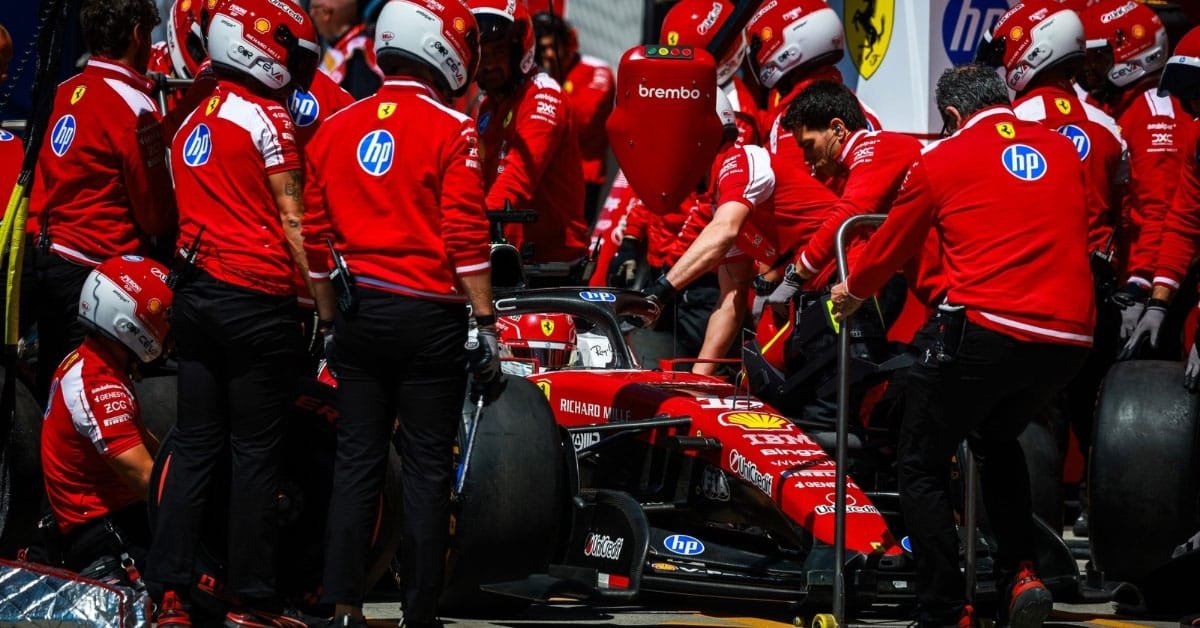
The most controversial turning point centered on Ferrari. Following the Safety Car deployment on lap 19, with Hamilton running seventh and Leclerc close behind, the team faced a critical choice. Pitting both drivers simultaneously was deemed too complicated, especially given Hamilton’s pending 10-second time penalty for an earlier incident with Norris. The team opted to pit Charles Leclerc first, followed by Hamilton on the subsequent lap. This decision, while strategically sound in prioritizing the collective result, immediately altered the track positions and set the stage for the subsequent tension.
Later, the internal dynamic shifted again. After Hamilton recovered and overtook Leclerc, Ferrari issued instructions for the drivers to maintain their relative positions. This directive, intended to quell internal conflict, was ultimately disregarded by Leclerc, leading to the collision that dominated post-race discussions.
Driver Performances
The standout performances were marked by resilience and strategic execution. Oscar Piastri’s recovery drive from 17th to third was a masterclass in race management. Lando Norris demonstrated significant pace in his recovery, showcasing his ability to fight back despite early tyre issues. Among the leaders, the ability to manage energy and tyre wear proved crucial.
From the strategic perspective, Liam Lawson earned recognition by setting the fastest lap on the final tour, clocking in at 1:35.591. In contrast, the race also saw several retirements or non-starts, including Fernando Alonso’s Aston Martin one lap shy of the finish, and Sergio Perez retiring after contact with Rafael Camara.
Championship Context
The Las Vegas GP proved to be a litmus test for team cohesion as much as raw pace. For Ferrari, the pit stop sequence and subsequent internal friction raise serious questions about the team’s ability to manage two highly competitive talents. While the initial pit stop was strategically justified by the team leadership, its ripple effect contributed to the volatile atmosphere that followed. The performance of McLaren, in particular, signaled their continued upward trajectory, while the consistency of the one-stop strategy affirmed the reliability of the compounds in the cool Las Vegas conditions.
Pirelli confirmed that the C4 Medium and C5 Soft compounds performed as expected, noting that the low temperatures made tyre management delicate, particularly during neutralisations. The race confirmed that strategic timing, amplified by Safety Car interventions, can outweigh raw pace in determining the final classification.
What Comes Next
As the season moves forward, the focus for teams will undoubtedly be on maintaining the momentum gained by top performers like McLaren, while Ferrari navigates the internal challenges highlighted in Las Vegas. The upcoming race will test the resolve of the teams to execute flawless strategy under pressure, especially as the implications of internal team dynamics become clearer.
What do you think the long-term impact of Ferrari’s team order dispute will be on their performance in the next Grand Prix?
