















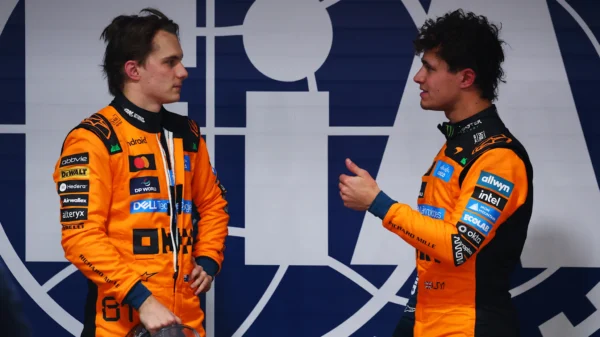
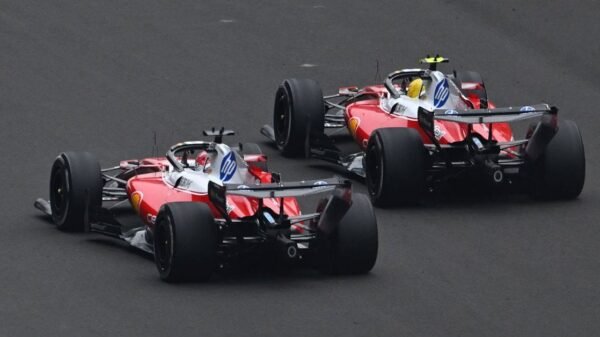











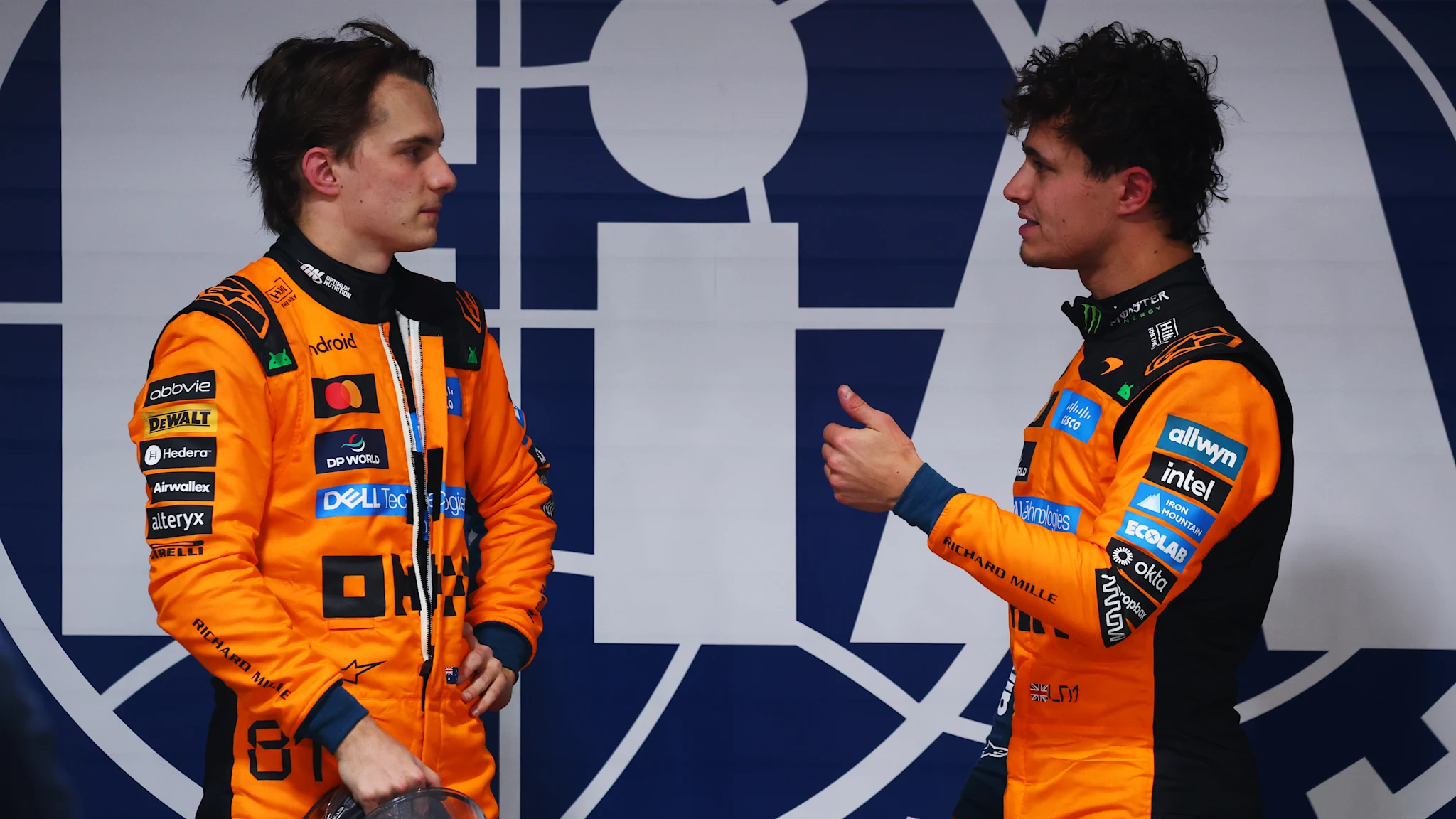
McLaren’s performance at the Las Vegas Grand Prix, resulting in second and third place finishes for Lando Norris and Oscar Piastri, highlighted the team’s ability to extract maximum performance from the MCL40 despite inherent car limitations. Team Principal Andrea Stella credited the results to a combination of exceptional driving and focused engineering efforts, suggesting that the drivers significantly outperformed the package provided by the car.
Technical Limitations of the MCL40 Package
Andrea Stella pinpointed several key areas where the MCL40 package presented challenges. One significant factor was the car’s inherent top speed, which Stella noted was constrained by excessive aerodynamic drag, a characteristic shared across all HPP cars. Furthermore, the team faced issues related to the transmission, specifically citing the eighth gear as being too short. This ratio problem was particularly detrimental when following another car, as it caused engine revs to climb too high, leading to a subsequent drop in power output.
The team’s response to these constraints involved intensive collaboration between the drivers, the HPP department, and McLaren’s engineers. The focus of this work was optimizing the deployment of the power unit and refining basic race strategies, including how the driver utilized the available buttons. Stella emphasized that the engineers worked more than ever before this season to fine-tune these operational aspects.
Intended Performance Impact and Driver Exploitation
While the technical limitations were clear, the intended performance impact derived from the drivers’ ability to compensate for these deficits. Stella noted that the team was concerned about the car’s raceability, specifically due to the top speed and gear ratio issues. However, Norris and Piastri demonstrated an advanced understanding of race craft, even in compromised conditions. They showed an acute awareness of when to use the slipstream and when to avoid it, recognizing that overtaking maneuvers might not be viable given the car’s characteristics.
The ability of the drivers to manage these complex variables—maintaining control, monitoring mirrors, and anticipating race flow while operating within the car’s limitations—was highly praised. Stella stated that the ratio between the final result achieved and the potential the car offered was among the best for both drivers, indicating a high level of exploitation of the available performance envelope.
Competitive Context
The strong showing by Norris and Piastri was particularly impressive given the competitive landscape of the Las Vegas Grand Prix. The race initially appeared poised for domination by drivers from Red Bull and Mercedes. The fact that Piastri managed to fight his way to the front of the field from a starting position of P17, compounded by a power unit grid penalty, underscores the magnitude of the effort required. Norris also faced early difficulties, tumbling out of the top ten before rallying back into contention.
Season Implications and Development Trajectory
For Oscar Piastri in particular, the Las Vegas race provided a significant boost as the season draws to a close. Stella noted that Piastri has been working closely with his engineering team to maximize the car and power unit’s potential. This effort appeared to pay dividends on the low-grip circuit of Las Vegas. Stella observed that Piastri has developed confidence and assertiveness in his driving, suggesting he is becoming deeply attuned to the car’s characteristics. This development is viewed as highly promising for both the remainder of the season and the planning for the next.
The focus on power unit utilization and driver feedback suggests that the team’s development direction is heavily centered on maximizing efficiency and mitigating the aerodynamic drag issues through software and operational adjustments, rather than solely relying on raw hardware upgrades.
What to Watch Next
As the season progresses, the focus will remain on how McLaren translates this driver-aided performance into consistent results. Upcoming races will be crucial in validating whether the gains made in power unit deployment and driving confidence can be maintained across different track types. The ongoing data validation phase will be key to seeing if the fixes implemented address the fundamental limitations of the MCL40, particularly concerning the gear ratios and high-speed stability.
Considering the team’s focus on driver-car synergy overcoming technical compromises, how much of the MCL40’s performance ceiling is truly limited by the current aerodynamic design versus the operational parameters the team can fine-tune?
