



























Potapova Insists Her Heart Remains Russian After Switching to Austria
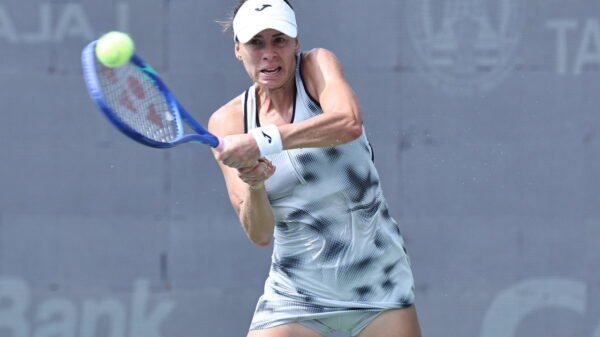
Anastasia Potapova has stated that despite switching her sporting nationality to Austria, she still considers herself Russian. The 25-year-old athlete made this assertion in an interview with the Russian news agency TASS, framing the change as a practical necessity.
Stance on Nationality
Potapova told TASS, “In my heart, I’m still a Russian.”
She explained that the shift in nationality was required to simplify travel and access tournaments. She added, “All reasonable people understand why I had to change [sporting] nationality to make it easier to travel and get to tournaments. I have said this repeatedly, but it does not change who I am as a person, my habits or where I come from.”
She further commented that one cannot take the country out of a person, stating, “As they say, you can take the girl out of the country, but you can’t take the country out of the girl.”
Context of Player Switches
Potapova’s decision aligns with a trend involving several Russian players who have changed their national affiliations since 2022. This period saw Russian and Belarusian athletes competing as neutrals without displaying their flags or anthems following the invasion of Ukraine.
For the world No. 28, her ability to compete at major events made the logistical case for switching clear, which she has consistently emphasized.
Challenges Faced by Russian Players
Russian and Belarusian players encounter several difficulties, including competitive bans from national team competitions such as the Davis Cup and the Billie Jean King Cup. They also face travel restrictions, visa issues, and associated prejudice.
Potapova’s Career Details
Potapova is a decorated player, having been a former junior world No. 1 and winning Wimbledon’s girls’ event in 2016. She has also secured three WTA singles trophies, including the Transylvania Open in February 2025.
She is the ninth Russian athlete to switch nationality since 2022, following compatriots who have moved allegiances to nations like Uzbekistan and Australia while navigating the administrative burdens of neutral status.
Reactions to the Change
When Potapova initially announced her move, she described Austria as “a place I love” where she felt “totally at home,” expressing a desire for Vienna to become a second base.
Her application for Austrian citizenship was approved under provisions granting naturalization to those who achieve outstanding sporting accomplishments. However, her recent declaration of being fundamentally Russian has caused some friction among Austrians.
Divided Opinions
The comments provoked strong reactions in Austria. Economist Florian Ederer posted on social media that her Austrian citizenship should be “immediately” revoked, reflecting unease from some regarding a new citizen professing loyalty to their country of birth.
Criticism was also directed at her within Russia. Former world No. 1 Yevgeny Kafelnikov, a vice-president of the national federation, questioned what Potapova had “ever won for Russia” before wishing her “good riddance.”
Additional scrutiny arose because she recently attended a Gazprom-sponsored exhibition in St. Petersburg. Furthermore, she was accused of borrowing wording from Daria Kasatkina, who made a similar switch to Australia last year and publicly criticized the comparison online.
Potapova’s response highlights the complex nature of these decisions for Russian athletes navigating the altered sporting environment; her message suggested that changing flags did not equate to changing her identity, attempting to address both her new and former home countries.