






















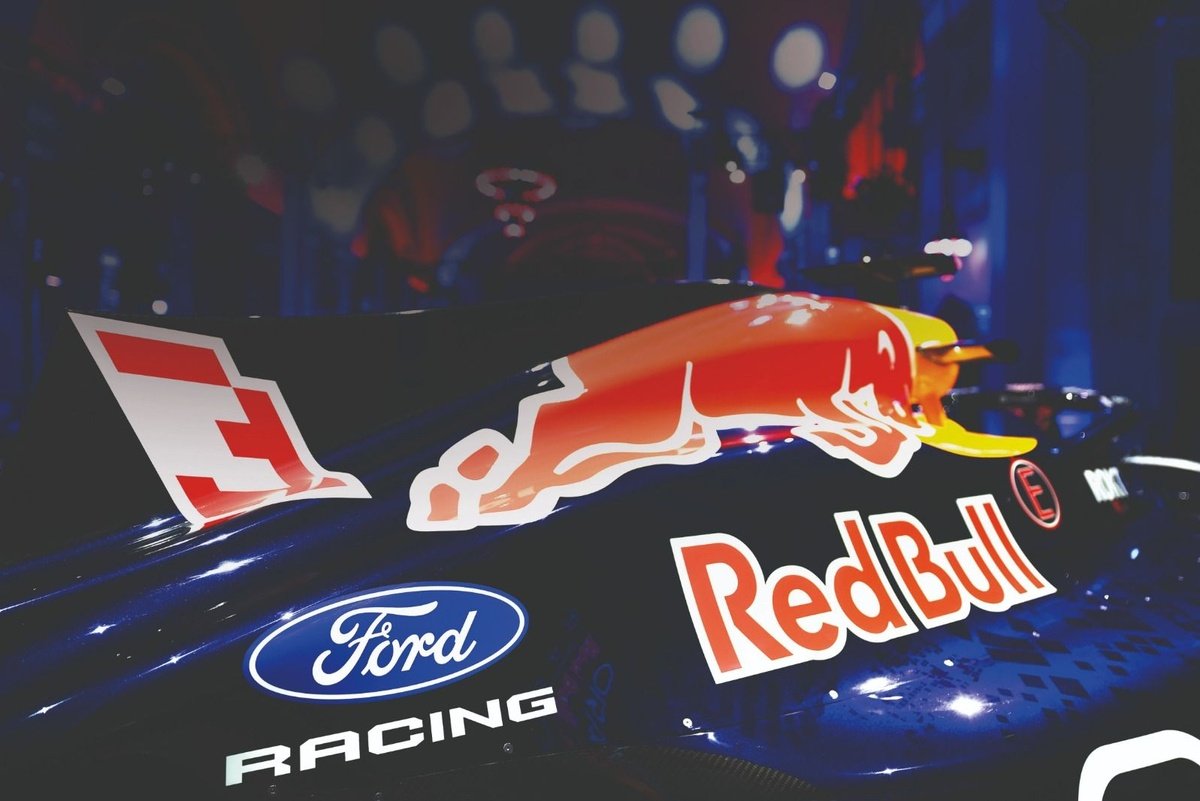
The Speed of Partnership: Red Bull and Ford Powertrain
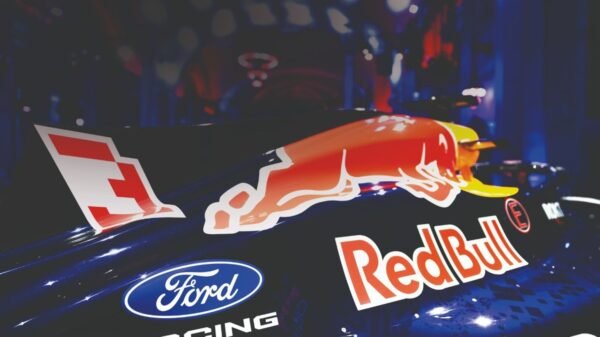
The collaboration between Red Bull and Ford on the powertrain has demonstrated rapid development, leading to competitive results despite a challenging start to the 2026 season.
Christian Horner revealed that early recruitment for the powertrain project began in 2021. This period saw intense internal competition as Red Bull recruited key personnel, mirroring past rivalries in Formula 1.
Recruitment and Expertise
Many of the initial hires into the core leadership team were former Mercedes staff. These included technical director Ben Hodgkinson, alongside Steve Blewett, Omid Mostaghimi, Pip Clode, Anton Mayo, and Steve Brodie. Their responsibilities span design, production of the internal combustion engine, electrical systems, and control electronics.
Red Bull also secured chief engineer Phil Prew, whose background includes time at Ricardo and McLaren, where he race-engineered Lewis Hamilton to a 2008 world championship.
The Ford Technical Alliance
The decision to build the powertrain in-house followed Red Bull scrapping a potential collaboration with Porsche after deeming its facilities insufficient. This move also created friction with Oliver Mintzlaff, who had championed the Porsche deal.
Ford entered the partnership in 2023 with a different structure than Porsche’s desire for equity and hands-on development. The Ford arrangement is described as a straightforward technical partnership, allowing Red Bull Powertrains access to Ford’s extensive accumulated knowledge.
“It’s a very open relationship, and the scope is not hemmed in at all,” says Prew. “And that’s one thing that we’re able to leverage very much, the deep expertise that exists in Ford across just any topic. We make a phone call, ‘Do you have somebody who knows about a bearing or a specific component?’ And within a couple of hours, literally, we’re talking to an expert in that field.”
Mark Rushbrook, Ford Racing’s global director, noted how much the employees value involvement. He stated that while Formula 1 is highly specialized, expertise is often shared across fields.
“And while Formula 1 is very specialised, the expertise of these things is very much shared, and we’re able to solve problems together. And that’s on such a broad field of topics. I don’t know what the topic will be the next time I phone up, but with the experience and the breadth of Ford’s history it means that we often talk to the expert.”
Rushbrook also mentioned the excitement among Ford employees when they could contribute to an F1 program, noting how special it was for them to be part of a win in F1 again.
Development and On-Track Evolution
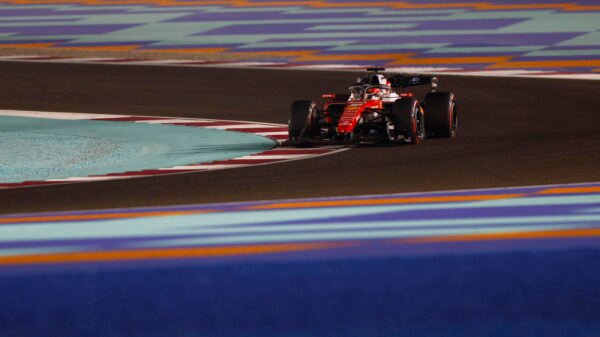
Following podium finishes in Italy, Spain, and Azerbaijan, Max Verstappen achieved breakthrough victories in Malaysia, followed by a sprint and grand prix sweep in Singapore. The RB22 did not appear as a winning car at the season’s outset, but development has since improved its competitiveness.
“Where you spend that energy around the lap is critical to lap time. You can come up with a numerical optimal in simulation world, but as soon as you put it into the car, interactions with the drivers, interaction with the car requirements, high-speed corners, tyre management, all of these things… that’s been a constant evolution”
From an external perspective, separating car and engine performance is difficult, especially given Verstappen’s tendency to critique every aspect of the package when it does not meet his expectations.
Initially, the RB22 lacked sufficient downforce compared to the class-leading Mercedes and could not match Ferrari’s SF-26 in slow corners. The team has declined to detail a peculiar performance drop observed during race conditions, which is understood to stem from underlying structural issues.
At Monza, where he secured a podium finish, Verstappen commented that the car felt like it was “made of paper”. He has also voiced concerns regarding the power unit, though these comments often blend with his broader criticism of the current technical regulations.
Power Unit Usage and Regulations
Despite occasional issues with the Red Bull-Ford power unit, it has not been terminally flawed. Before the Sao Paulo GP, Verstappen had not exceeded his allocation of PU components for the year. In contrast, Kimi Antonelli and George Russell have both incurred grid drops for surpassing the annual limit.
Other drivers in the Red Bull setup have also seen usage figures that are not extreme when compared to other manufacturers under the new technical regulations: Isack Hadjar is on his seventh internal combustion engine (ICE) of the year, Liam Lawson his fifth, and Arvid Lindblad his sixth.
The latest power units, featuring a near 50:50 split between ICE power and electrical energy, have forced all manufacturers to operate publicly. The initial three rounds exposed teething problems across the grid before a month-long break due to race cancellations in Bahrain and Saudi Arabia.
Challenges with New Formula Elements
In Australia, Verstappen was eliminated in Q1 after being caught by an unexpectedly aggressive engine braking maneuver into Turn 1, causing him to spin. He and Lawson subsequently experienced slow starts.
Launches have been a significant discussion point since pre-season due to an unforeseen outcome of the new technical rules: turbo lag. This was previously mitigated by the MGU-H element in the hybrid system, which is now banned.
Addressing turbo lag at the start requires precise management of engine modes, target revs, and clutch control, remaining a challenge for some teams. Launches are central to driver complaints about the new formula, alongside the necessity of managing energy output for optimal lap times rather than simply maximizing grip in every corner.
Evolving Power Unit Development
The integration of increased electrification presented a major shift under the current regulations, according to Prew. He noted that optimizing where energy is deployed around the lap is crucial for lap time.
While simulations can yield numerical optima, translating this into the actual car involves constant evolution due to interactions with drivers, car requirements, high-speed corners, and tire management. This learning process continues daily during track sessions.
Optimizing the Internal Combustion Engine
The development of the internal combustion engine itself has focused on placing it in its optimal operating range across various launch and cornering conditions. Challenges such as turbo lag have been part of this ongoing refinement.
The goal is to ensure the power unit operates at the very limit of its capability, which requires continuous interaction with the car while racing to maximize engine utilization.
Future Development
Simultaneously, development work in Milton Keynes for the 2027 engine aims to expand this operational envelope to achieve greater performance. This presents a constant challenge for the team.
Facility and Partnership Advantages
The Red Bull-Ford project benefits from the fact that the Milton Keynes facility was designed after the budget cap and its limitations were established, incorporating foreknowledge of the 2026 electrification changes.
This facility offers advanced dyno capabilities alongside space for extensive rig testing of ancillary components to verify reliability before they reach the dyno. The baseline requirement for dyno hours is currently 710, which can be supplemented based on customer numbers and qualification under the FIA’s Additional Development and Upgrade Opportunities framework (ADUO).
Due to the tight timeline for the 2026 grid entry, Red Bull utilized Ford’s Dearborn facilities to address specific needs, such as proving the turbocharger design while Milton Keynes infrastructure was being finalized. This led the partnership beyond its initial scope of sharing electrical system and prototyping technology.
Ford’s Increased Involvement
Mark Rushbrook stated that Red Bull did not seek control over the team, referencing a previous ownership situation where it was unsuccessful. Red Bull demonstrated its ability to consistently win races and championships, leading Ford to contribute to the power unit development challenges.
The initial contribution list focused on electrification, but this has expanded significantly. In Dearborn, Ford manufactures advanced or additive manufacturing parts using various materials.