




















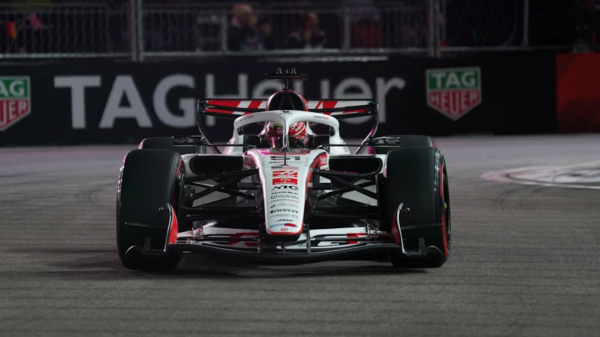












The Las Vegas street circuit presents a unique technical challenge for Formula 1 teams, one that goes far beyond the spectacle of the night-time racing. The confluence of cold night-time conditions, extended straights, and the critical need to manage tire performance creates a complex puzzle. For teams, the uncertainty surrounding how their car package will behave in these specific conditions makes the initial practice sessions vital, transforming them from mere preparation into crucial data-gathering exercises.
Technical Details of the Las Vegas Challenge
The technical hurdles at Las Vegas are multifaceted. Foremost among these is the management of tire performance in cooler environments. As Max Verstappen has noted, the difficulty in predicting the competitive order stems from how differently cars react when the track is cold. A car that struggles to bring its tires up to the optimal operating window will inevitably lack confidence and performance. Beyond the tire aspect, the circuit features a significant long straight. Under the framework of the 2026 regulations, energy management becomes a central component of lap performance. Engineers and drivers must meticulously decide how to deploy energy across the lap, balancing the demands of achieving high top speed on the straight against the need to maintain competitiveness through the other sections of the track.
Intended Performance Impact
The intended performance impact of these technical considerations is centered on balance, tire longevity, and overall energy efficiency. The cold weather directly impacts how tires behave, demanding precise setup adjustments to ensure they reach their peak operating window. Regarding the long straight, the energy deployment strategy becomes paramount. Drivers may need to employ careful management of the slipstream and fine-tune their power unit deployment along the straight to maximize efficiency without compromising the car’s overall balance through the tighter sections. While specific lap time gains are not the focus here, the goal is achieving a consistent, predictable performance envelope despite the variable environmental inputs.
Competitive Context
This technical environment places unique pressure on rivals. A setup that performs optimally in warmer conditions may falter dramatically in the cooler night-time air, leading to unpredictable results. The long straight, while seemingly favoring specific aerodynamic or power unit approaches, cannot be isolated. The overall lap time is a composite measure, heavily dependent on the car’s ability to manage tire temperature and execute energy deployment flawlessly through the circuit’s varied sections. The uncertainty in tire behavior means that initial performance indicators are less reliable than they might be at other venues.
Season Implications
The Las Vegas event underscores the ongoing development trajectory of the teams. The necessity for rapid adaptation in unfamiliar conditions highlights the importance of robust data acquisition during practice. Teams must interpret session data collected under conditions that closely mirror the race and qualifying scenarios, all while operating under limited practice time. This places a high premium on the quality of the data gathered on Friday, as a strong session does not guarantee Saturday’s success if track temperatures or tire characteristics shift unexpectedly. Resource allocation must be heavily weighted toward simulation and real-world validation in these challenging thermal environments.
What to Watch Next
As the weekend progresses, the focus shifts to how quickly each team can adapt to the specific demands of the Las Vegas night. The upcoming races will serve as the ultimate test of a team’s adaptability—not just which team arrives with the most aggressive pre-season expectations, but which team can adjust its package fastest when faced with unfamiliar variables. The data validation phase during the race weekend will be crucial in determining which setup proves most resilient across changing conditions.
Given the emphasis on tire management in the cold and the complexity of energy deployment on the long straight, how effectively can teams balance aggressive power delivery with conservative tire preservation throughout a night-time race stint?
