












Russell Secures Pole Position for Second Time in 14 GPs
George Russell is set to start the race from pole position for the second time in the last fourteen Grands Prix.
This marks his first pole since the Azerbaijan Grand Prix in September, though even that was complicated by Andrea Kimi Antonelli’s qualifying exit. This result represents Mercedes securing its first one-two finish since the Canadian Grand Prix in May.
Russell’s Form and Recent Performances
The balance of power shifted toward Antonelli around the time Russell began showing strong form, which came after admitting to a post-title hangover. Russell noted his close calls in recent races.
He stated that in Mexico, he missed pole by 0.009s. Regarding Brazil, he mentioned fighting Lando Norris and having a lap abandoned where he felt he could have achieved pole. In Vegas, he commented that Kimi delivered a strong performance at the end.
Russell remarked that his pace has been consistently strong across these races, suggesting he hasn’t been chasing results but rather staying close to contention. He added that while things haven’t worked out perfectly, he was not disappointed with prior outcomes.
He concluded by saying that the current race ran smoothly and might compensate for missed opportunities in Brazil and Mexico.
Qualifying Margins Between Teammates
Despite Russell’s pole drought, the qualifying margins between him and Antonelli have been very small this season. On average in dry conditions, they are separated by only 0.2 places and 0.123s.
Antonelli leads the head-to-head count against Russell at 12-10. The Italian has been dominant on Sundays, where he has beaten his teammate to build his championship margin.
Russell noted that in the last six races, he had not finished on the podium, while Antonelli secured four trophies during that period, including a victory and the world title. He mentioned needing to convert Saturday afternoon performances into Sunday results, stating, “It’s been a good couple of races on the Saturday afternoons for me, so I just need to try and convert it tomorrow because the Sundays have been pretty rubbish.”
Qatar Circuit Dynamics
Practice one indicated that the battle would be exclusively between the Mercedes teammates. Qatar is noted as an outlier circuit, heavily favoring medium- and high-speed performance where downforce and aero efficiency are critical.
Russell commented on the car’s package after five or six races, saying they did not start well with it, but he believes this specific circuit suits their car perfectly. He stated, “We definitely didn’t hit the ground running with it … but I think this circuit just hits all the right spots for our car.”
Antonelli led all three practice sessions and was expected to control qualifying, as he had done during Mercedes’s strong period earlier in the season. However, Russell surpassed him in Q1, Q2, and Q3, preventing Antonelli from taking pole.
Antonelli’s Qualifying Frustration
Frustration began for Antonelli before his final flying lap when he was released from pit lane at the front of the field, slipstreaming everyone else. He radioed to the team, stating, “We need to talk about this, because if I ask something, please do it,” after failing to improve his time.
He later disclosed that he had requested to be last on track. Antonelli said, “We just need to review with the team, because that last run I wanted to go at the back, but they sent me first. We just need to review that.”
Although he acknowledged to Sky Sports that Russell performed better, Antonelli indicated the situation had a mental impact, saying the frustration “definitely [had] a little bit of an impact, because it’s also a little bit on the mental side.” He added, “I wanted to go last just to give myself the best shot. But obviously it didn’t happen, so we need to review with the team why they took the decision.”
Mercedes boss Toto Wolff stated that the team would not risk cars missing the flag in a high-stakes situation, referencing a near miss in Las Vegas where both drivers were close to failing to set a final lap due to late Q3 dawdling.
Wolff explained the need for balance: “We need to just seek the right balance between accommodating the drivers’ wishes, right or wrong — but you know drivers have a mindset; they’re going out and they think, ‘I’m not in the right position,’ [and] that may annoy them — then, on the other side, us being on the right side of the thought of having a proper out-lap and crossing the line in time.”
Regarding the Grand Prix, Wolff indicated that while Mercedes is determined to get Russell into second place in the championship, Antonelli would not be asked to relinquish a win if he moved ahead at any point. The team will give Russell the maximum opportunity to succeed while he is in good form.
Piastri and Norris Battle
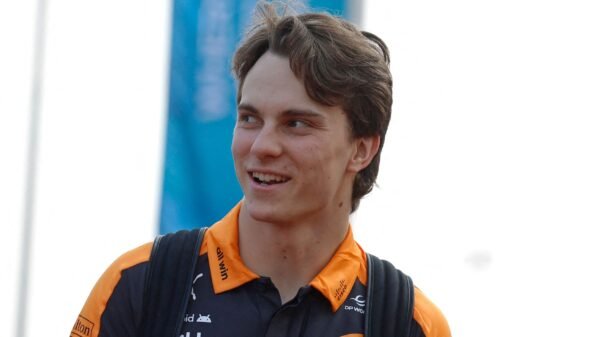
Oscar Piastri was close to his teammate Lando Norris during qualifying, even though Qatar is considered one of McLaren’s strongest circuits. The two drivers finished on the second row, with Norris securing third place by a margin of just 0.07s.
This represents the fifth closest margin between the pair this season and is the tightest since Malaysia, where they were separated by only 0.005s.
Significantly, this breaks a streak of half-second qualifying defeats for the Australian. Piastri stated he felt reasonably good that weekend, noting that while Vegas was strong, Qatar has always been an enjoyable track for him and was encouraging.
Piastri was only 0.037s behind Norris after their initial Q3 laps. However, a lack of top speed on the front straight and a mistake exiting turn 1 cost him 0.177s by turn 2, which he spent recovering from.
He commented that while he would have preferred to be higher, the issue with turn 1 on the final lap was not surprising. He added that as a team, they found good performance over the weekend and hoped to maintain it.
The presence of McLaren in the second row was unexpected, given Red Bull Racing appeared comfortably second quickest up until Q3, with Max Verstappen even splitting the Mercedes drivers in Q2. McLaren boss Andrea Stella told Sky Sports that they believed they were only 0.1s or 0.2s behind Red Bull before qualifying, stating, “But somehow in qualifying I have to say we had a very well executed session.”
McLaren’s Performance and Track Characteristics
Lando Norris stated that both Lando Piastri and Oscar Piastri drove very well and precisely during the session. He suggested that McLaren managed to finalize setup details effectively.
Norris noted that the session felt relatively smooth, allowing both drivers to improve by 0.1s or 0.2s per lap, which contributed to them being ahead of Red Bull Racing.
It was observed that once McLaren found its rhythm, both cars moved ahead of Red Bull Racing. This outcome was not unexpected given the nature of qualifying at Qatar.
The high-speed, high-downforce track tends to group teams closely in performance order, limiting significant differentiation once the cars reach their optimal settings.
Mercedes, McLaren, Red Bull Racing, Williams, Aston Martin, and Cadillac all secured rows, with drivers positioned alongside each other. Ferrari’s cars were notably separated by Racing Bulls, though they remained closely matched overall. The Alpine cars also qualified only two places apart; only the Haas and Audi teammates showed a greater separation.
Norris commented on the track characteristics, mentioning the long corners: “I think you have these such long corners; the characteristics of the cars show quite a bit.”
He added that most drivers can reach a good level by the end of FP1, FP2, and FP3. Regarding their own car balance, Norris said, “The car balance for us has not changed the whole weekend. We struggled with the same things.”
Norris further explained the limitations on this type of circuit: “There’s not a lot I can do here. At certain other tracks I’m able to manipulate the car a lot with driving style and balance with my feet and my hands, and this kind of track is a lot more just dependent on car balance and downforce.”
Race Strategy Implications
The track characteristics could also suggest challenges for the race. The cars are already starting in pace order.
Although Pirelli determined that high wear rates were not a structural issue, teams anticipate difficulty achieving 27 competitive laps from the tires. This suggests significant tire management will be necessary during the race.
Consequently, there is an expectation of minimal strategic divergence, with stops likely occurring around lap 19 and lap 38, barring any safety car intervention. A three-stop strategy seems highly improbable in a straightforward race due to Qatar’s pit lane time loss being the greatest on the calendar.
Antonelli acknowledged the difficulty of overtaking: “It’s very hard to overtake here. I think it’s going to be a pretty straightforward race strategy-wise.” He added, “We just need to see with the degradation and the pace what we can do.”
Ferrari’s Season Struggles
Ferrari is positioned to secure second in the constructors’ championship following what appears to be its least competitive weekend of the season.
Despite Charles Leclerc qualifying seventh and Lewis Hamilton ninth—an improvement over their double Q2 elimination in Las Vegas—this represented the car’s worst pace in qualifying across all conditions.
Leclerc was 1.26 seconds slower than Russell in Q3. While this is slightly less in raw terms than the wet session in Brazil, it is a greater percentage difference when considering the circuit length.
Ferrari’s issues extend beyond this single weekend; the team has been more than 1.1 seconds off pole position in each of the last three weekends. These performances followed the team’s sole pole position of the season at Mexico.
Ferrari boss Fred Vasseur told Sky Sports that they had decent expectations heading into Doha. However, he stated, “But from the beginning of the weekend we have been struggling with the conditions, mainly to put the tyres in the right spot with the very high [pressures] prescription.”
Vasseur added that this was not an excuse, as everyone faced similar issues: “But it’s not an excuse, because we all have the same and we are struggling to fix it. When you don’t put the tyres in the right window, you are 1s off, and we were struggling from the beginning.” He concluded that this was “the worst of the season clearly in terms of pace.”
Leclerc indicated that the problem was deeper than just achieving the correct tire temperature range, suggesting it could pose a risk for the team next season. Per The Race, he stated, “Even though the tarmac obviously plays a part in the tyres, we don’t think that our tyres are not in the right window this time.”
Leclerc highlighted a unique aspect of the circuit: “There’s one thing that is quite unique and different here: it is the tarmac characteristics — it is extremely smooth, and there’s a tendency for us to struggle more on smooth tarmac.”
He noted that this track was smoother than any other on the calendar: “This is a lot smoother than anything in the calendar, and it’s definitely a standout for us. We’ve tried very different things on the car, but there’s just something that is not working.”
Leclerc stressed the need for future development: “We need to dig a little bit into that and make sure that for next year we take that into account, these tracks, because to be champion we need to be good in those tracks as well, and at the moment we are extremely far.”
The final races of the season were always focused on positioning for 2027. Ferrari has identified significant areas needing attention in Qatar and across recent races if it aims to be a competitive force in 2027.
