









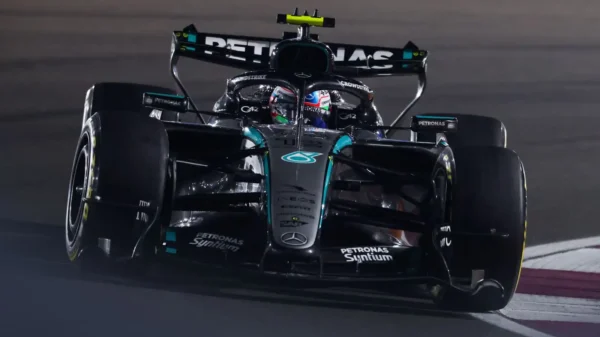
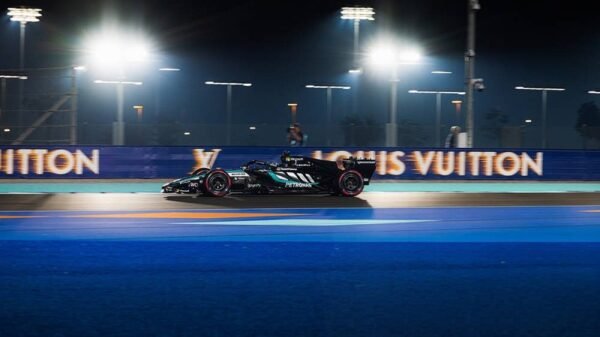
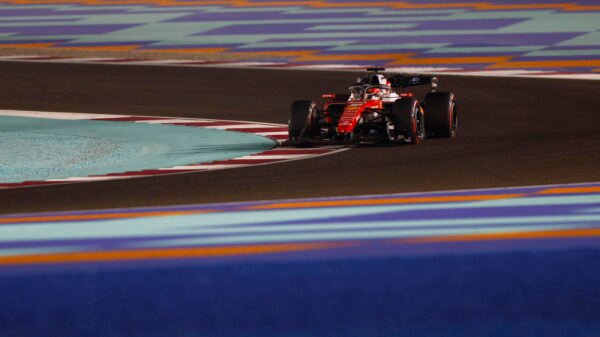











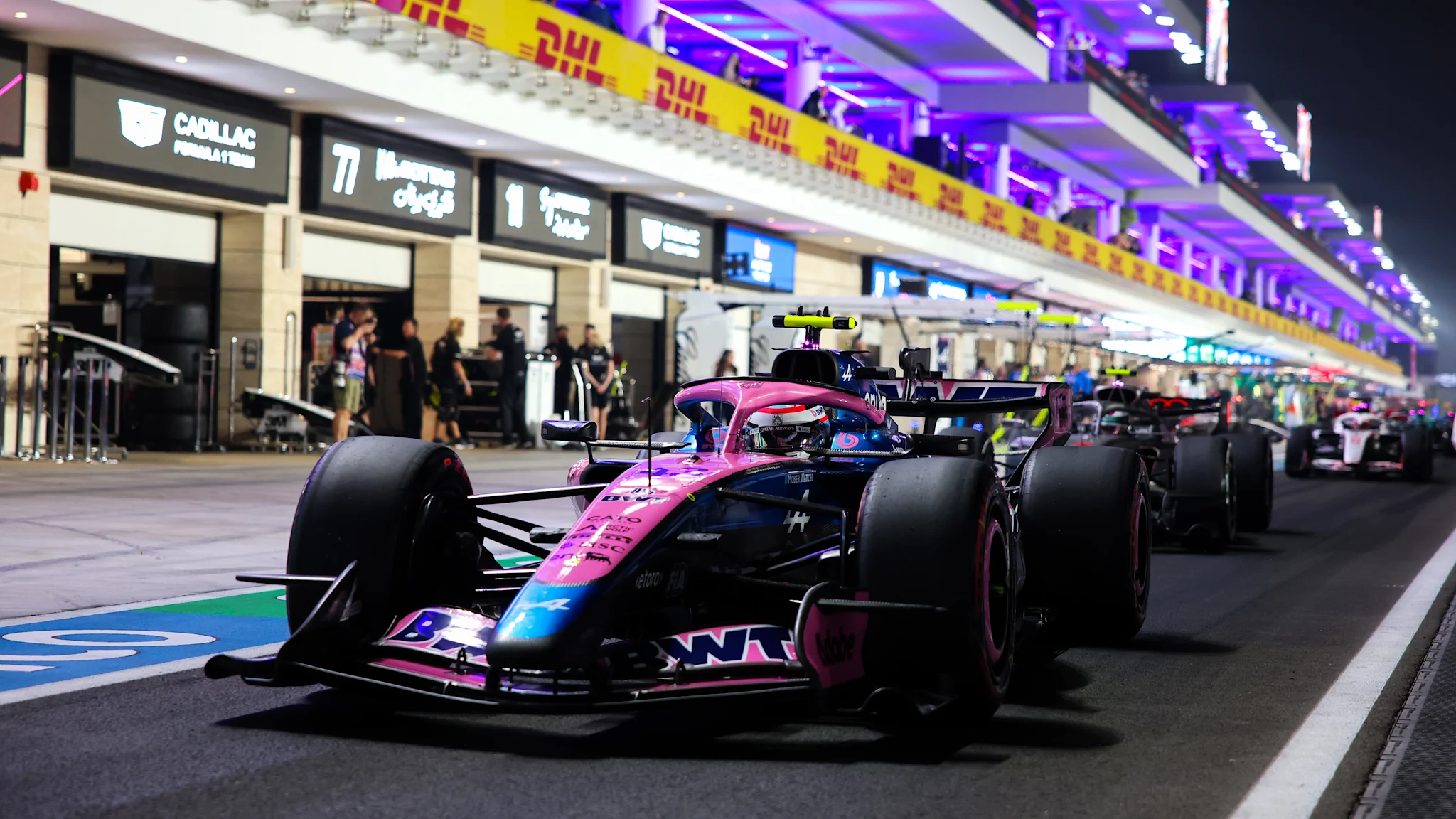
Kimi Antonelli led Mercedes in the opening session, finishing half a second ahead of his teammate. The team reported that while both drivers showed pace, there remains significant work to be done as they prepare for qualifying.
Mercedes Performance
In Free Practice 1 (FP1), Antonelli set his lap on the mediums, unable to match the pace on the soft tyres. George Russell struggled with grip on the slightly dirty racing line during FP1.
Both drivers did not complete a clean lap in FP2 on the softs due to multiple red flags; their times were recorded on the mediums. Antonelli again topped the timesheets, with Russell closing the gap in second place.
- Kimi Antonelli: FP1: 1:23.217, P1; FP2: 1:23.077, P1
- George Russell: FP1: 1:23.724, P2; FP2: 1:23.204, P2
Driver Feedback
Antonelli stated that the day was positive overall and he felt good in the car from the initial laps. He noted that testing various setups provided a lot of understanding for overnight work.
“The car has been feeling strong, but there is still a lot of work to do. The front-left tyre is taking quite a lot of energy and that is going to be an important factor through the weekend. It also looks very close at the front. McLaren made a good step between the two sessions, and we know Red Bull are likely to be competitive as well. We need to keep improving overnight and make sure we are ready for qualifying tomorrow.”
Russell described Friday as solid overall. He mentioned that FP1 was more challenging, but things felt much better in FP2 after implementing good changes.
“It’s encouraging to see both cars near the top of the timesheets, but we know things can change quickly from Friday to Saturday. McLaren and Red Bull both look competitive and I expect it to be very close tomorrow. We’ve put ourselves in a decent position though and, if we can make another small step overnight, hopefully we can be in the fight at the front in qualifying.”
Team Analysis
Andrew Shovlin, Trackside Engineering Director, commented that it was one of their better Fridays. The car appeared to work well out of the box on the Medium tyre.
“We didn’t get the most out of the Soft tyre in FP1, but that gave us some useful information heading into the second session. We didn’t make any major changes between the sessions and, whilst George was a little happier and Kimi a little less comfortable with his car, the pace still looked strong for both drivers.”
Shovlin added that because of red flags in FP2, they focused on long-run work. He noted that race pace appeared reasonable, gathering useful data particularly concerning the front-left tyre’s energy consumption.
McLaren Developments
In FP1, Piastri outperformed Norris when both used hard tyres, but Norris reversed this advantage on the soft tyres. McLaren was among the few teams to secure clean laps in FP2 on the C3 rubber, with both drivers setting flying laps before the first red flag.
This performance lifted them up the order, placing Norris third and Piastri fourth. However, their soft tyre times were slower than Mercedes’ medium tyre runs, indicating further work is needed overnight.
- Lando Norris: FP1: 1:24.067, P4; FP2: 1:23.522, P3
- Oscar Piastri: FP1: 1:24.077, P5; FP2: 1:23.549, P4
McLaren Statements
Norris stated that their baseline pace seemed comparable to Red Bull and Ferrari, though Mercedes appeared stronger at the moment.
“We estimate we’re around seven tenths off the lead cars, so we know a single change is unlikely to close the whole gap. But we’ll put our upgraded floor on tomorrow and see what we can gain. Even a small improvement will help, even if it won’t entirely close the gap to the front.”
Piastri mentioned that their pace looked reasonable overall and the car felt decent, though more work is required in longer runs.
“Mercedes seem to be a step ahead of everyone at the moment, so we’ll need to find a little more pace to be able to catch them. We’ll get our heads down overnight and see what we can do tomorrow.”
Team Strategy
Randy Singh, Senior Director, Racing, reported that the day was productive for gathering tyre behaviour information. McLaren chose to prioritize the Medium over the Hard for the race due to similar degradation rates, noting the C2 delivered better lap times.
“In terms of performance, Mercedes clearly look the favourites: they’re very strong, especially in the high-speed corners of the final sector. As for the rest, I think that we, Red Bull and Ferrari are all very close, as has always been the case this season.”
Singh also mentioned that tomorrow they will fit the underbody introduced in Las Vegas, which is expected to provide more downforce.
Red Bull Updates
Hadjar secured third place in FP1, despite a pit lane mishap that resulted in a fine from the stewards. Verstappen appeared to struggle with tyre degradation during the first session, similar to his teammate.
In FP2, Verstappen was involved in an incident with Hamilton late in the session while running different programmes; the stewards took no further action, and Verstappen finished fifth, ahead of Hadjar.
- Max Verstappen: FP1: 1:24.133, P6; FP2: 1:23.576, P5
- Isack Hadjar: FP1: 1:23.878, P3; FP2: 1:23.583, P6
Driver Perspectives
Verstappen expressed dissatisfaction, stating the car’s overall balance was not yet correct, which cost lap time.
“That was a little bit of a difficult day for us. The overall balance of the car is not quite there yet, which is costing us lap time, so we are not happy. At the moment the Mercedes are pretty far ahead in the short and the long run – hopefully we can close that gap tomorrow. This track is unique and not an easy one to get all the things right, but of course we will try and work hard as always.”
Hadjar suggested that balance limitations were common across teams due to the circuit’s characteristics. He noted improvements in FP2 but acknowledged the gap to Mercedes.
“At the moment, our goal is the second row, but we always make progress right up until Qualifying, so we can’t be counted out yet. Definitely a strong first day and there’s more to come.”
Pierre Wache, Technical Director, was also present during these sessions.
Mercedes reported that finding the correct balance for both drivers was their primary focus, noting that understeer proved more significant than anticipated during Free Practice 1 (FP1). While Max struggled more with this issue than Isack, the team felt they made progress heading into FP2, despite having to accept some compromises. They stated that matching Mercedes in the high-speed corners will present a major challenge.
Ferrari Updates
In the opening session, Charles Leclerc managed to beat Lewis Hamilton by a tenth, indicating an even contest between the two drivers. However, during FP2, things did not go as planned for the Scuderia.
Leclerc spun into the gravel and sustained damage to his floor, causing him to miss part of the session while the team replaced the component. Later in the session, Hamilton stopped due to a power deficiency, requiring recovery, which could lead to late-night diagnostic work by the team.
Leclerc recorded times of 1:24.473 (P7) in FP1 and 1:24.099 (P7) in FP2. Hamilton clocked 1:24.575 (P8) in FP1 and 1:24.216 (P8) in FP2.
Regarding the competition, Leclerc commented that his rivals appeared very strong, noting that the current gaps were unusual. He added that the team would analyze all the data that night to prepare for qualifying the following day.
Hamilton stated that FP1 was relatively straightforward and the car felt acceptable. After making minor adjustments before FP2, he noted that the second session was more difficult, concluding early due to an issue during a long run. He confirmed they would review everything overnight to identify improvements for tomorrow.
Racing Bulls Performance
Arvid Lindblad started strongly in the opening session, finishing in the top 10 after recovering from his Las Vegas disappointment. Liam Lawson faced power issues in FP1 but returned to the top 10 during FP2, beating his teammate by a tenth.
Lindblad set a time of 1:24.601 (P9) in FP1 and 1:24.547 (P10) in FP2. Lawson recorded 1:25.593 (P14) in FP1 and 1:24.425 (P9) in FP2.
Lindblad described the first day as solid, acknowledging that Qatar is a fast circuit presenting different challenges than Las Vegas. He expressed satisfaction with the strong baseline setup provided by the team but cautioned that tire management would make the race challenging. He stated he felt they were in a good position and looked forward to the next day.
Lawson mentioned that it had been a decent day, noting their fast car was positive. He indicated that significant changes between FP1 and FP2 put the car in a good spot. Lawson added that there wasn’t a large difference between tire compounds at this venue, suggesting race performance might hinge more on other factors. He noted the midfield looked strong and anticipated seeing how everyone performed in Qualifying.
Alan Permane, Team Principal, reported a solid day overall. He mentioned a minor Power Unit issue with Liam in FP1, which was resolved for FP2 when he regained pace. Permane confirmed that balance changes between sessions made both drivers feel much more comfortable. He noted their long run pace looked encouraging and that they aimed to have a strong race while fighting for P5.
Alpine Session Review
Alpine initially appeared within the top 10, with Pierre Gasly in 10th and Franco Colapinto in 12th during FP1. However, Gasly experienced a high-speed spin in FP2 after running on the kerbs, which caused him to miss some track time while the team assessed the damage.
Gasly’s times were 1:24.874 (P10) in FP1 and 1:24.764 (P12) in FP2. He explained that the spin occurred after entering Turn 14 at high speed, where he ran wide onto the kerb. Gasly noted they had some damage to the floor but was confident it would be fixed for tomorrow. He observed that Alpine seemed slightly behind Racing Bulls in terms of running and stated they aimed to secure a Q3 spot.
Colapinto clocked 1:25.409 (P12) in FP1 and 1:25.733 (P15) in FP2. He described the day as up and down, struggling with balance and rhythm due to session delays preventing performance laps. Colapinto pointed out that tire wear appeared high across teams and noted they needed to examine the performance difference between Medium and Soft tires, as many competitors seemed to extract more from the Medium.
Steve Nielsen, Managing Director, stated that it had not been their best day, pointing to limitations in the car at this track, particularly in high-speed sections. He confirmed both drivers were unhappy with the car balance. Nielsen noted that while they have improved over the season, high speed remains a difficulty, citing Pierre’s incident at Turn 14. He mentioned the floor required replacement but felt the outcome could have been worse given the speed. He concluded that there was pace in the car and they were competing tightly for the final Q3 spots.
Audi’s drivers had a measured opening practice session, though neither managed to secure a top-ten finish. The team utilized varied strategies across sessions, with Hulkenberg running on hard tyres while Bortoleto used mediums during FP2. Despite the results, both drivers remained just outside the top ten.
Audi Updates
Nico Hulkenberg recorded a time of 1:25.437 in FP1, placing P13, and clocked 1:24.871 in FP2, also finishing P13.
Hulkenberg stated that Friday was fairly straightforward for the team, noting that Qatar presents a circuit very different from recent venues due to its high-speed corners. He mentioned that the team would review everything overnight to plan improvements for the following day, observing that the field remains tightly contested and small details will be crucial.
Gabriel Bortoleto posted 1:25.053 in FP1 (P11) and 1:24.614 in FP2 (P11).
Bortoleto described the Friday as positive, noting a clean day where he felt he put together good laps. He added that more pace is needed to enter the mix, and both he and the factory team are working hard on finding it. He stressed the importance of track position in Qatar, requiring strong qualifying and a setup that aids tyre management during the race.
Williams Practice Summary
During FP1, both Albon and Sainz had moments where they ran wide, kicking up significant dust. The team used this session primarily to test components for 2027 rather than focusing on lap time improvements. In FP2, neither driver maintained clean laps as gravel was kicked onto the track.
Despite the challenging conditions, Albon managed a greater number of laps and was noted as the standout performer for Williams on Friday.
Alex Albon recorded 1:25.692 in FP1 (P16) and 1:25.276 in FP2 (P14).
Albon commented that the tyres were tricky, suggesting this might be a universal issue. He focused on the long run, noting that tyre graining is difficult for all cars and persists. He expressed hope that solutions could be found for tomorrow, acknowledging the difficulty in balancing the needs of the qualifying car versus the race car.
Carlos Sainz recorded 1:25.992 in FP1 (P18) and 1:25.839 in FP2 (P16).
Sainz indicated that Friday was relatively straightforward, but noted the track does not typically suit their car. He mentioned the tricky balance between pushing on the rough surface and preserving tyres. He reported struggles with lap balance causing snaps in corners, but felt fine-tuning could extract more performance, planning to work on it overnight for qualifying.
Paul Williams, Chief Trackside Engineer, stated that graining is expected to dominate the weekend, observing its harsh effect on the front left tyre through Turns 4 and 5, and particularly into the sequence of Turns 12, 13, and 14 in FP1. The team adjusted their approach for FP2 by limiting low-fuel running to maximize learning on high fuel. He confirmed that while all teams use the same tyre compounds, managing them effectively is key. Williams noted that coming to this circuit, they anticipated it would be more challenging than the previous week due to its medium-to-high speed corners, and the team has work planned for the evening.
Haas Performance
Bearman indicated that the track may pose challenges for the car. Both drivers were placed lower in the order during FP1. However, Camara managed to complete numerous laps and gained experience with the VF-26 under more typical track conditions. The second session was similar, with Camara running behind his teammate as Haas tested a ‘flip-flop’ rear wing, the future use of which remains undecided.
Oliver Bearman recorded 1:25.766 in FP1 (P17) and 1:25.996 in FP2 (P18).
Bearman described the day as tough, stating that finding good car balance on both low and high fuel was difficult. He felt progress was made by FP2, noting his lap on soft tyres before the red flag felt decent. He mentioned carrying over tyre damage from run one due to graining on high fuel but concluded that the car was definitely better than in FP1, indicating progress.
Rafael Camara recorded 1:25.685 in FP1 (P15) and 1:25.962 in FP2 (P17).
Camara reported two clean sessions where the team completed its program. He found the sessions very productive, gaining significant knowledge for tomorrow. While acknowledging it is not an easy track, he feels more accustomed to it with each session and can take more risks due to wider run-off areas. He stated that continuous work is needed to improve the car, and he himself has many things to observe.
Ayao Komatsu, Team Principal, said Friday was challenging because the car’s limitations here differ from other tracks. He felt the setup in FP1 was too far off, but both drivers managed what they could, and noted an improvement for FP2, particularly with Ollie. The team tested several things in the garage and believes they can learn from each other. Komatsu stated that while improvements are still necessary, he feels better after FP2, noting they need to work on race pace, though the session was trouble-free and all data was collected.
Aston Martin Session Details
Jak Crawford drove in FP1, replacing Alonso. The rookie performed well, surpassing Stroll initially. Fernando Alonso returned for FP2 but immediately ran wide, damaging his car and requiring pit time. When he rejoined, he managed to beat his teammate as Stroll also ran wide, kicking up gravel.
Fernando Alonso posted 1:26.046 in FP2 (P19).
Lance Stroll recorded 1:26.416 in FP1 (P20) and 1:26.648 in FP2 (P20).
Jak Crawford clocked 1:26.306 in FP1 (P19).
Stroll commented that Qatar was a difficult day, noting it is a very different circuit from Vegas with warmer temperatures. He mentioned the high-speed corners require pushing to the limit and stated there are things to work on tonight to bring the car into a better window for this track.
Crawford said his practice session was good and possibly his favorite, describing the track as fun in an F1 car. He regretted that the Las Vegas FP1 did not happen due to weather but felt he learned about the car with every run. He added there is work to do overnight to optimize the car’s window.
Mike Krack, Chief Trackside Officer, described the afternoon and evening as tricky practice sessions in Qatar. He noted it is a punishing high-speed corner circuit featuring aggressive kerbs and gravel traps, leading to many cars going off track during both sessions. Krack mentioned that repairs were conducted between and during sessions, and work remains for overnight. He was pleased to see Jak gain important mileage in FP1 before Fernando returned for FP2 and will continue through the weekend.
Tyre Wear Concerns Highlighted at Qatar Circuit
The Qatar circuit continues to present significant challenges regarding tyre durability, as confirmed by simulations run during today’s second free practice session. Tyre wear and degradation were evident across the board, emphasizing the critical nature of tyre management for teams heading into Sunday’s race.
Tyre Degradation Observations
Graining was particularly noticeable on the front-left tyres. This issue was attributed to a combination of the dirty track surface and the high aerodynamic load present at the venue. The graining accelerated tyre wear, causing several tyres to reach very high levels of degradation.
Performance degradation was also noted as being high, especially concerning the front axle. Teams observed that even without specific limitations introduced for this event to preserve tyre integrity, a two-stop strategy would likely have been the most competitive approach.
Compound Performance Review
Regarding the compounds used, the Soft tyre showed competitiveness over a single lap, though some teams reported difficulties in maximizing its potential. The Hard compound also proved noteworthy; despite being utilized by only a small number of teams, it displayed remarkable consistency in performance.
This consistency presents a strategic possibility for teams that have retained two sets of C1 tyres, offering them an interesting option for the race.