


















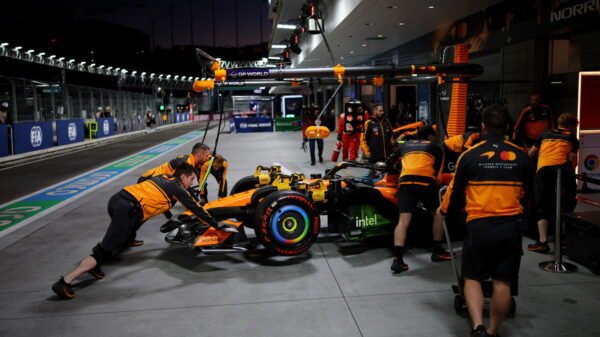

















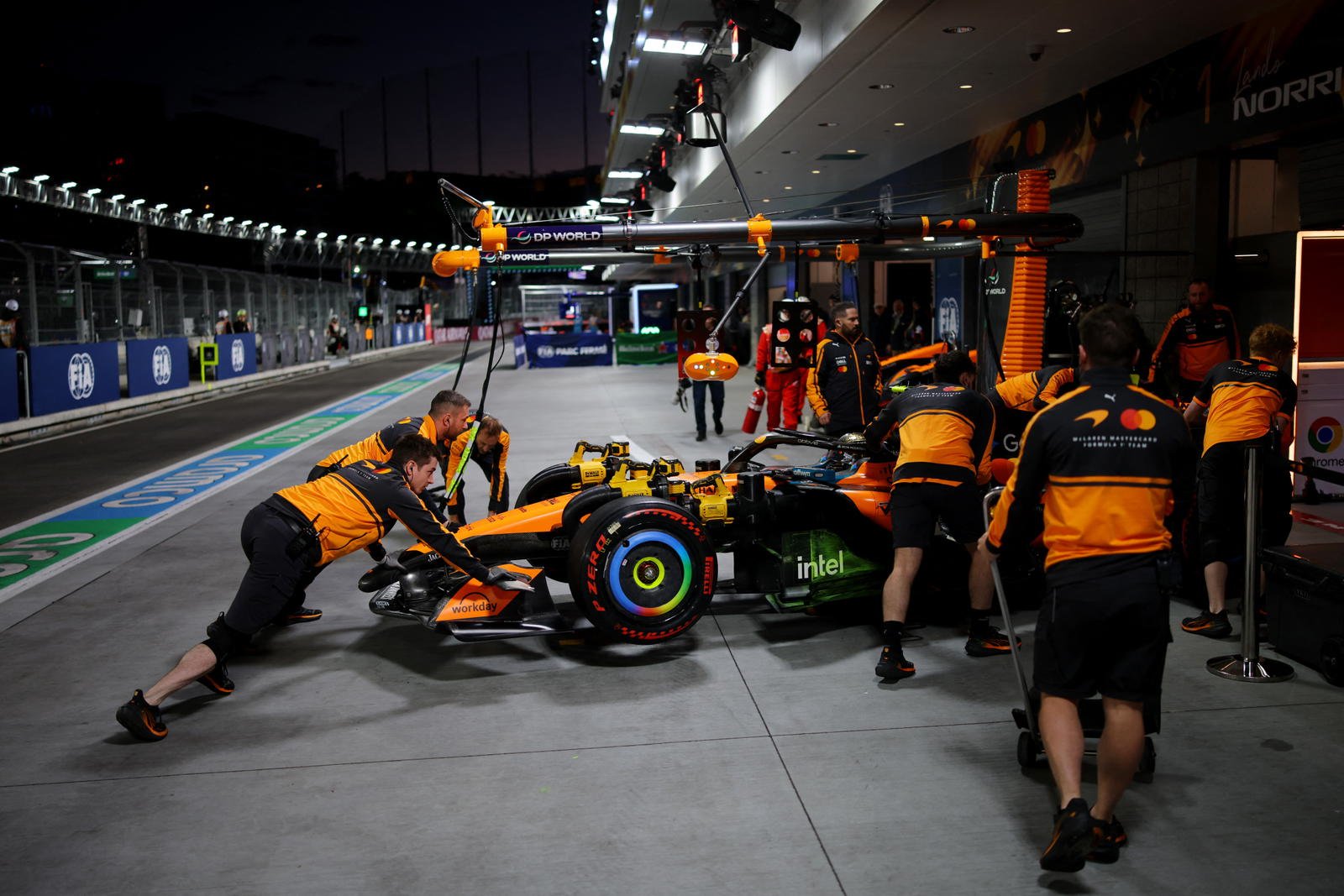
McLaren has introduced a significant technical update to the MCL40 for the Las Vegas Grand Prix, featuring a new floor and various aerodynamic pieces. This upgrade package is crucial as the team seeks to maintain momentum in its pursuit of third place in the constructors’ championship, where they currently trail Red Bull by 17 points. The immediate challenge, however, has been the unpredictable weather, which has prevented the team from properly evaluating the performance of these new components in representative conditions.
Technical Details of the MCL40 Update
The core of the McLaren update package lies in the introduction of a redesigned floor and several associated aerodynamic pieces. While the team has not provided overly technical jargon for the public, the focus of these changes is clearly aimed at enhancing the overall performance envelope of the MCL40. Lando Norris emphasized the importance of these components, stating that the team needs to test these new parts to make informed decisions regarding the car’s setup.
The team’s objective is to validate how these newly designed elements interact with the car’s aerodynamics and ground effect under race-like conditions. The presence of these specific components suggests a targeted effort to improve efficiency and downforce generation, areas that are always under intense scrutiny in modern Formula 1 design.
Intended Performance Impact
The primary intention behind deploying a new floor and aerodynamic elements is to improve the car’s overall balance and efficiency. In the challenging environment of Las Vegas, characterized by low grip and low temperatures, finding the correct balance is paramount. The updates are designed to help the MCL40 perform optimally across different track conditions, particularly when the track dries out.
The team is looking to see how these changes affect tire wear and how effectively the car can generate downforce without compromising its ability to manage the slick urban asphalt. The data gathered during the upcoming dry sessions will be critical in determining if these parts provide the necessary performance uplift to compete at the front of the midfield battle.
Competitive Context
This technical push comes at a critical juncture for McLaren. Following a strong result in Interlagos, the team is aggressively targeting a top-three finish in the constructors’ championship. The gap to Red Bull remains significant, making every performance gain vital. The success of this update package will directly influence McLaren’s standing relative to its rivals. The ability to extract maximum performance from the MCL40 in these complex, low-grip conditions is what separates the contenders from the chasing pack.
Season Implications
The focus on validating these specific components in Las Vegas highlights the ongoing development trajectory for the MCL40. The team is clearly in a phase of iterative refinement, using race weekends as high-stakes testing grounds. The resource allocation is heavily focused on aerodynamic optimization, which is a hallmark of modern F1 development. If these updates prove successful, it signals a positive momentum for the remainder of the season. Conversely, if the validation is inconclusive or negative, it will necessitate a strategic pivot in the development roadmap moving forward.
What to Watch Next
The third free practice session is positioned as the ultimate litmus test for these upgrades. With the forecast pointing towards dry weather, FP3 offers the first real opportunity for McLaren to move beyond the wet-weather limitations seen earlier in the weekend. The data collected during this session will be used to fine-tune the car’s setup in preparation for qualifying. Fans should closely monitor how the team manages the data analysis between sessions, as this will dictate the car’s performance in the decisive qualifying runs.
Given the low temperatures and unforgiving nature of the Las Vegas circuit, the ability of the MCL40 to handle the transition from damp to dry conditions will be a key indicator of the update’s success.
Considering the team’s reliance on dry data to confirm the effectiveness of the new floor and aero pieces, how much risk is McLaren willing to take in the setup for qualifying if the FP3 data shows only marginal gains?