

















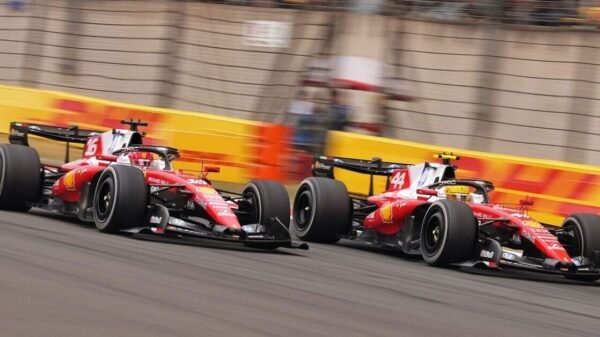
















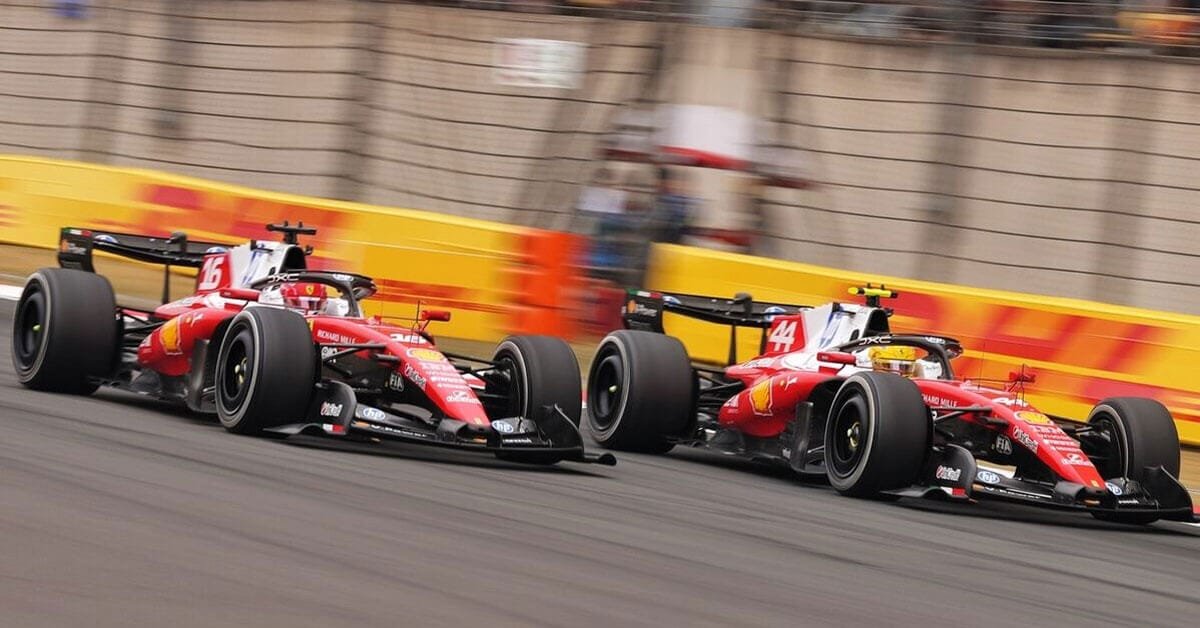
Ferrari’s approach during the 2026 Las Vegas Grand Prix qualifying session has drawn significant attention, particularly concerning the decision not to utilize slipstreaming between its drivers. Following a challenging session where both Charles Leclerc and Lewis Hamilton were eliminated in Q2, Leclerc provided insight into the team’s priorities. The focus, as revealed, was heavily skewed toward tyre temperature management rather than maximizing straight-line speed gains achievable through drafting. This technical consideration underscores a persistent area of vulnerability for the SF-26.
Technical Details: Tyre Temperature as the Priority
Slipstreaming is a known tactic on circuits featuring long straights, allowing the trailing car to benefit from reduced aerodynamic drag, thereby boosting straight-line velocity. However, for Ferrari, this potential advantage was superseded by the critical need to maintain optimal tyre operating temperatures. Leclerc confirmed that the discussion around coordinating a tow between the two cars did not even take place. The team’s primary directive was ensuring the tyres remained within their correct temperature window. This requirement was particularly stringent, demanding continuous pushing from the SF-26, even during laps that are typically used for tyre management or cool-down procedures. The team acknowledged that tyre behaviour remains a recognized weakness of the SF-26.
Intended Performance Impact: Managing the Window
The core technical challenge revolves around tyre thermal management. When a car struggles to keep its tyres at the correct temperature—even during preparatory or cool-down laps—any deviation from the planned driving rhythm becomes highly detrimental. Attempting to coordinate a slipstream strategy would have introduced an additional layer of complexity onto an already delicate tyre-management situation. The decision reflected a calculated prioritization: preserving tyre performance and keeping them within the operational window was deemed more vital than chasing a marginal gain in straight-line speed derived from drafting.
Competitive Context: Rival Approaches
The contrast with other teams utilizing the slipstream highlights the divergent technical challenges facing the grid. While competitors leveraged the drafting effect to enhance their performance on the long straights, Ferrari’s operational constraints forced a different strategic calculus. This situation places Ferrari’s development focus squarely on thermal stability, suggesting that while rivals may be optimizing for outright pace, Ferrari is currently battling fundamental operational limitations related to tyre performance in the specific conditions encountered at Las Vegas.
Season Implications: Development Trajectory
The difficulties encountered in qualifying point towards ongoing development priorities for the Scuderia. The need to maintain high tyre temperatures even during non-peak running phases suggests that the aerodynamic and thermal efficiency of the SF-26 needs refinement. Beyond the tyre issues, the team also faced complications related to traffic management and communication, including reported GPS irregularities during earlier sessions. Leclerc noted that if the issues stemmed from internal execution, the team requires rigorous analysis and improvement, especially during decisive qualifying moments. These setbacks mean that the Scuderia must allocate significant resources not just to raw pace, but to refining operational consistency and managing complex on-track scenarios.
What to Watch Next: Data Validation and Execution
As the season progresses, the focus will remain on how Ferrari addresses these operational hurdles. The upcoming races will serve as crucial proving grounds to see if the team can stabilize tyre performance under varying conditions. Furthermore, the team’s ability to manage traffic and execute flawless pit wall communication in high-pressure moments will be under intense scrutiny. The data validation phase following these events will be critical in determining if the team’s current focus on tyre temperature is yielding tangible, sustainable improvements.
Given the persistent issues with tyre management and the operational hiccups observed, how quickly can Ferrari translate its deep understanding of tyre thermal needs into consistent, race-winning pace without compromising the delicate balance of the car?