
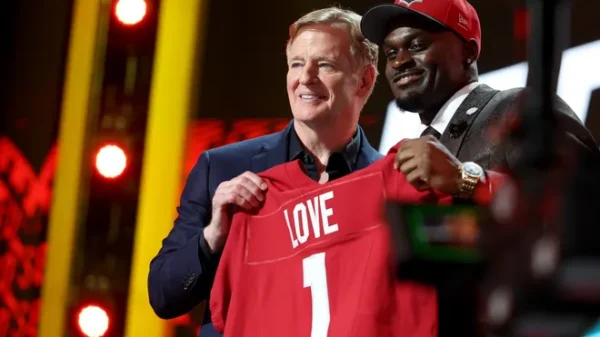





























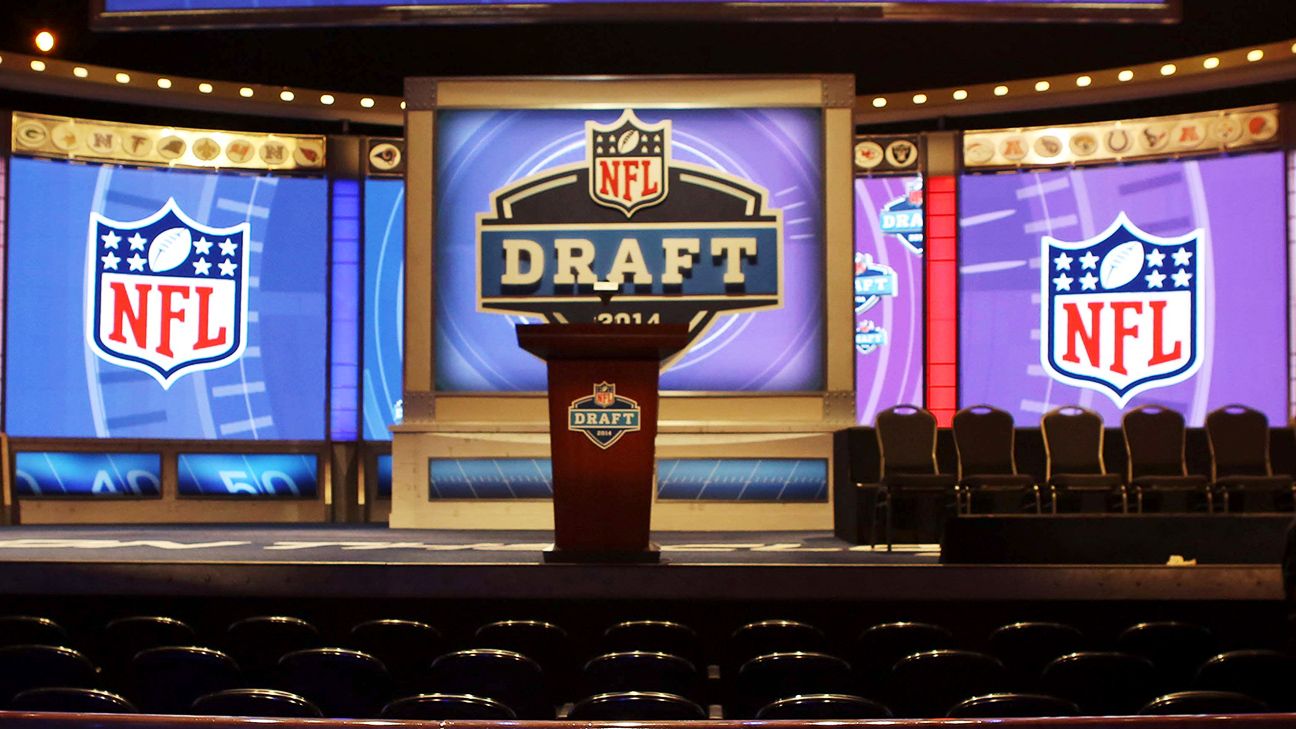
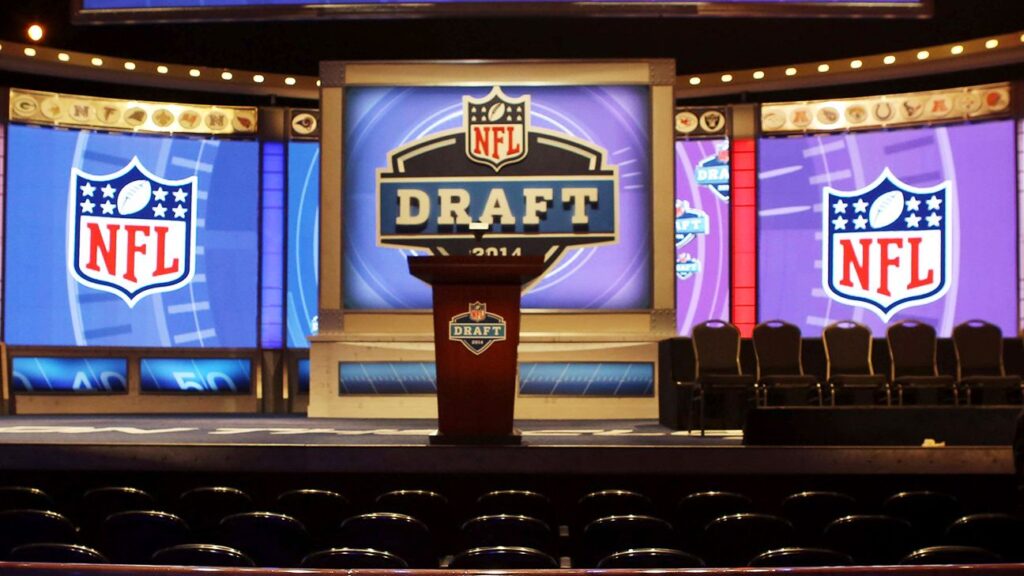
The mock drafts stop mattering the second the commissioner reads the last name in the seventh round. For the kind of fan who spends February through April updating a personal big board, cross-checking pro-day splits against game tape, and arguing about a Morgan State running back nobody else has watched, that final pick opens a strange hole in the calendar. Rookie minicamp is a rumor, training camp is a summer away, and the forums that were on fire in March go quiet. The people most addicted to the process are the ones who feel the dead months hardest, because the ritual they built their winter around simply switches off.
Something has been quietly filling that hole in 2026, and it is not another wave of way-too-early mock drafts. A slice of the draft-obsessed audience has folded regulated online casinos into the same offseason routine that used to be all board-building and film study. If that is a habit you are curious about, a reference like PlayUSA online casino resources is a saner starting point than a search bar full of ads, because PlayUSA catalogs which sites hold real state licenses and how their terms actually read rather than pushing whichever brand paid the most for the banner. The same instinct that makes you distrust a highlight reel is the one that should be running when a casino promises you a four-figure welcome offer.
One factual guardrail before any of this makes sense. Real-money online casinos are legal in only a small group of US states, so if you live somewhere that never passed an iGaming law, the sites described here are not open to you for cash, and geolocation software will block the deposit anyway. The free-to-play sweepstakes model you may have seen advertised is a separate category with its own rules, and it is not the same thing as a licensed casino. This piece is written for the draft diehard who wants to understand the offseason habit clearly, not for anyone in a state where the question does not apply.
The dead months on a draft fan’s calendar
Every serious draft follower runs on a private schedule that has almost nothing to do with the NFL’s official one. The busy season starts around the Senior Bowl, peaks at the Combine, and burns hot through the pro-day circuit until the three-day event in late April. Then comes the drop-off. May and June are for depth-chart guesses and undrafted-free-agent tracking. July is a desert. By the time real football returns, the fan who lived on prospect grades has spent close to four months with the engine idling.
That idle energy has to go somewhere. For years it went into offseason content: rewatching last cycle’s tape, drafting way-too-early rankings, and reading the small-school breakdowns that this site treats as a core mission rather than an afterthought. If you want a sense of how deep that rabbit hole runs, the small-school scouting spotlights this site runs on Class of 2027 talent are the kind of thing a diehard reads in June for fun, long before any of those names trend nationally. That appetite for detail, for finding the player before everyone else does, does not vanish when the calendar goes quiet. It looks for a new target.
For a growing number of fans in 2026, one of those targets has become the licensed online casino. It scratches a few of the same itches at once: a steady stream of small decisions, the pull of probability, and a scoreboard that updates in real time when the draft board has gone dormant. Understanding why the fit is so natural is the first step to keeping the habit in its lane.
Why a prospect-ranking brain drifts toward online casinos
Draft obsession and casino play borrow from the same mental wiring, which is exactly why one can slide into the other so smoothly. Both reward pattern recognition. A scout trains to see the trait that separates a fourth-rounder from a franchise left tackle, and a casino player is constantly reading streaks, odds, and payout structures that may or may not mean anything. The brain that enjoys ranking twenty-two edge rushers by get-off is the same brain that enjoys weighing options, and a casino is nothing but a machine for offering options.
Both activities also run on delayed payoff. You do not know if your favorite sleeper was right until he plays a down in September, and the draft fan learns to sit with that uncertainty for months. That tolerance for waiting, for trusting a process whose result is out of your hands, maps a little too cleanly onto games of chance. The danger is that a casino resolves the wait in seconds instead of seasons, and fast feedback is far easier to overdo than a draft board you can only update once a week.
The healthiest way to hold the parallel is to keep the parts that transfer and drop the ones that do not. The transferable habit is discipline: writing down your criteria before you look, refusing to react to surface flash, and respecting sample size. The trap is assuming that because you are good at evaluating players, you have an edge at a casino. You do not. The house math does not care how many mock drafts you have published.
What regulated really means when you are clicking around late at night
The word regulated does a lot of quiet work, and a fan filling an idle July evening should know what it covers. A licensed online casino operates under a specific state gaming authority, which means the games are tested for fairness, the operator has to hold customer funds properly, and there is an actual government office you can complain to if something goes wrong. That oversight is the entire difference between a legal site and an offshore one wearing a similar coat of paint.
Legality is also stricter than most advertising implies. Real-money online casino play is authorized in only a handful of states, roughly a seventh of the country, and three of them, Michigan, New Jersey, and Pennsylvania, account for the large majority of the national total. Everywhere else, a real-cash casino is either off-limits or simply not offered, no matter how polished the website looks. This matters for a draft audience specifically because it is national. A reader in Texas or Florida is going to hit a geolocation wall, and California is a pointed example where the games are not legal at all.
The practical move is to confirm your own state before you get attached to any brand. A site can look excellent and still be closed to you. Because the geolocation check blocks an out-of-state deposit regardless, verifying the map first saves you from building a shortlist you can never use. Treat that check the way you would treat a prospect’s eligibility: it does not matter how good the profile is if he cannot actually be on your roster.
Building an offseason routine that treats a casino like any other hobby
If the habit is going to exist, the fans who handle it best treat it like a scheduled part of the offseason rather than a thing that expands to fill every quiet night. That means giving it a budget, a calendar slot, and a hard stop, the same way you would ration film study so it does not eat your whole weekend. The timeline below lines up the draft fan’s natural offseason rhythm against the way a casual casino habit tends to show up, plus one guardrail for each stage.
Offseason stretch
What the draft fan is doing
How a casino habit tends to creep in
A guardrail to set now
Post-draft (May)
Undrafted tracking, roster math
Idle curiosity, first sign-up
Deposit only what a game ticket would cost
Early summer (June)
Way-too-early boards, tape rewatch
Weekly sessions become routine
Pick a fixed weekly cap and log it
Deep summer (July)
The dead zone, forum silence
Boredom-driven daily play
Schedule sessions like any other hobby
Camp season (late July)
Reports return, focus shifts
Habit competes with football again
Let camp crowd out the calendar slot
Preseason (August)
Depth charts firm up
Momentum from summer carries over
Reset the budget monthly, never roll it
The point of the table is not to script anyone’s summer. It is to show that the offseason has a shape, and a habit that respects that shape stays a hobby. The version that ignores the calendar, that fills the July desert with daily sessions and carries the momentum into a busy autumn, is the version that turns entertainment into a problem. Deciding the rules in May, while you are still calm and the board still has your attention, is far easier than deciding them at midnight in the dead of summer.
Reading the terms the way you read a prospect’s medical file
Draft diehards already know that the flashy number is rarely the important one. A blazing forty time means little next to a red flag on the medical, and the same discipline applies to a casino’s promotional copy. The four-figure welcome offer is the highlight reel. The wagering requirement, the game weighting, the withdrawal timeline, and the maximum cashout are the medical file, and they sit several clicks below the headline for a reason.
Start with the wagering requirement, because it is the single figure that decides whether a bonus is real value or theater. A requirement that asks you to bet a bonus twenty or thirty times before you can withdraw changes the entire calculation, and the way different games count toward that total can quietly stretch it further. Slots usually count in full, while table games often count for a fraction or not at all, which means the same offer behaves very differently depending on how you play.
Then check how money leaves, not just how it arrives. Deposits are instant everywhere because the site wants your action, but withdrawal times, identity-verification steps, and cashout caps vary widely and tell you how a platform behaves when you are the one collecting. A site that makes its terms easy to find is signaling something, and so is one that buries them. The effort a casino puts into hiding its fine print is itself a scouting note worth writing down.
The sweepstakes wrinkle and why California rewrote the rulebook
A lot of the confusion in this space comes from a category that looks like a casino but legally is not. Sweepstakes and social casinos run on a dual-currency setup, one coin with no cash value for regular play and a second promotional coin that can sometimes be redeemed for prizes. Because you can play without paying, these sites have operated in many places where real-money casinos are banned, which is exactly why fans in non-legal states so often run into them first.
That workaround is now under direct pressure. California passed Assembly Bill 831, signed in October 2025 and effective January 1, 2026, which bans online sweepstakes games built on that dual-currency model and, notably, extends liability to the vendors and partners that support them, from payment processors to media affiliates. California is not a legal online casino state to begin with, so for a reader there, both the licensed real-money option and the sweepstakes substitute are now off the table or sharply restricted. Treating the two models as interchangeable was always a factual error, and the law has made the distinction expensive to ignore.
For the draft fan, the takeaway is simple. Know which of the two things you are actually looking at, because they carry different rules, different protections, and in a growing number of states, different legal status. A free-to-play coin game and a state-licensed casino are as different as a preseason exhibition and a playoff game, even if the uniforms look alike.
What 2025’s revenue numbers say about the trend
The reason all of this is even a conversation is that the money has gotten big. Reported figures put nationwide iGaming revenue near 10.7 billion dollars for 2025, up close to 28 percent in a single year, and industry trackers noted the first quarter of 2026 crossing three billion dollars in a single quarter for the first time. In two of the biggest markets, online casino revenue passed what land-based casinos brought in, which is a genuine shift in where the industry’s center of gravity sits.
Those numbers explain the marketing pressure a fan runs into, but they should not be read as a green light. A long-running review of state gambling revenue from the Rockefeller Institute makes the sober point that expansion delivers real gains at first, then tends to flatten as markets saturate, while the social costs keep accruing. The industry growing fast is a statement about supply and demand, not about whether any individual should be playing. A record revenue year is the casino’s win column, not yours.
Held against a draft fan’s instincts, the framing lands cleanly. You already distrust a stat that is presented without context, and a giant industry-growth figure is exactly that kind of stat. It tells you the games are popular and heavily marketed. It tells you nothing about your own odds, your own budget, or whether folding this into your offseason is a good idea for you specifically.
Keeping the offseason habit from swallowing the fun
The whole appeal of the draft offseason is that it is a hobby with a natural rhythm, one that gives you something to think about without demanding anything you cannot afford to lose. A casino habit is healthy only as long as it stays inside that same frame, treated as entertainment with a fixed price rather than a second income or a way to feel productive during the dead months. The moment it starts feeling like work, or like chasing, the comparison to fandom breaks down.
A few habits keep it in bounds. Set a deposit limit and a session length before you start, and use the responsible-gaming tools that every licensed site is required to offer, including cooling-off periods and self-exclusion. Never play to recover a loss, because chasing is the behavior that turns a hobby into a hole. And keep the money separate from anything that matters, the way you would never bet the rent on a sleeper prospect no matter how sure you felt in March.
The fans who get this right tend to be the same ones who are good at the draft process for the right reasons: patient, honest about uncertainty, and allergic to hype. If the offseason casino habit is going to exist for the diehard crowd, that is the temperament to bring to it. Enjoy the small decisions, respect the math, and remember that the point of the exercise, like the point of the offseason itself, is to have something fun to do while you wait for football to come back.
Frequently Asked Questions
Is playing at an online casino legal for me if I live outside a licensed state?
Only if you are physically located in one of the states that has passed an iGaming law. Real-money online casinos are authorized in just a handful of states, and licensed sites use geolocation software that blocks deposits and play from outside those borders. If your state has not legalized iGaming, the legal answer is no, regardless of what an advertisement suggests.
A regulated casino operates under a state gaming authority, uses real money, and is tested for fairness with government oversight behind it. A sweepstakes or social casino runs on a dual-currency, free-to-play model and is legally a different product. California’s AB 831, effective at the start of 2026, banned the dual-currency sweepstakes model in that state, which shows how differently the two categories are treated under the law.
Does being good at evaluating draft prospects give me any edge at a casino?
No. Prospect evaluation is a skill built on studying tape and data, but casino outcomes are governed by house math that no amount of football knowledge changes. The useful crossover is the discipline, setting criteria in advance and ignoring hype, not any predictive advantage. Treat any belief that your fandom gives you an edge as a warning sign.
What single term in a bonus offer matters most before I deposit?
The wagering requirement, which is how many times you must bet a bonus before you can withdraw anything from it. A high multiplier can make a large headline offer nearly worthless, and the way different games count toward that requirement can stretch it further. Reading that number first tells you more than the size of the welcome bonus ever will.
How do I keep an offseason casino habit from becoming a problem?
Give it a budget and a schedule before you start, the way you would ration any hobby, and treat the money as entertainment you can afford to lose. Use the deposit limits, cooling-off periods, and self-exclusion tools that licensed sites are required to provide, and never play to chase a loss. If the habit starts competing with money or time that matters, step away and use those tools.
Meta Title: NFL Draft Fans and the 2026 Online Casino Offseason
Meta Description: How draft diehards fill the dead months in 2026, why regulated online casinos fit the offseason routine, and how to keep the habit legal and fun.

NFL Draft Diamonds was created to assist the underdogs playing the sport. We call them diamonds in the rough. My name is Damond Talbot, I have worked extremely hard to help hundreds of small school players over the past several years, and will continue my mission. We have several contributors on this site, and if they contribute their name and contact will be in the piece above. You can email me at nfldraftdiamonds@gmail.com
