


















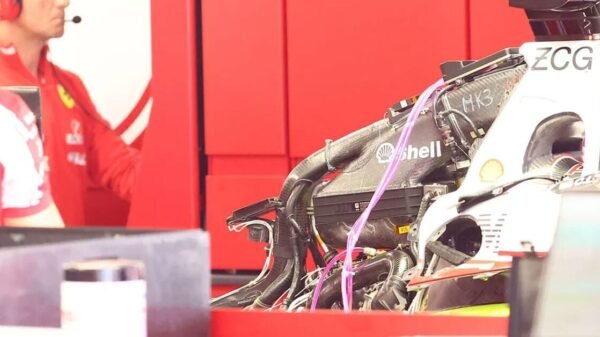














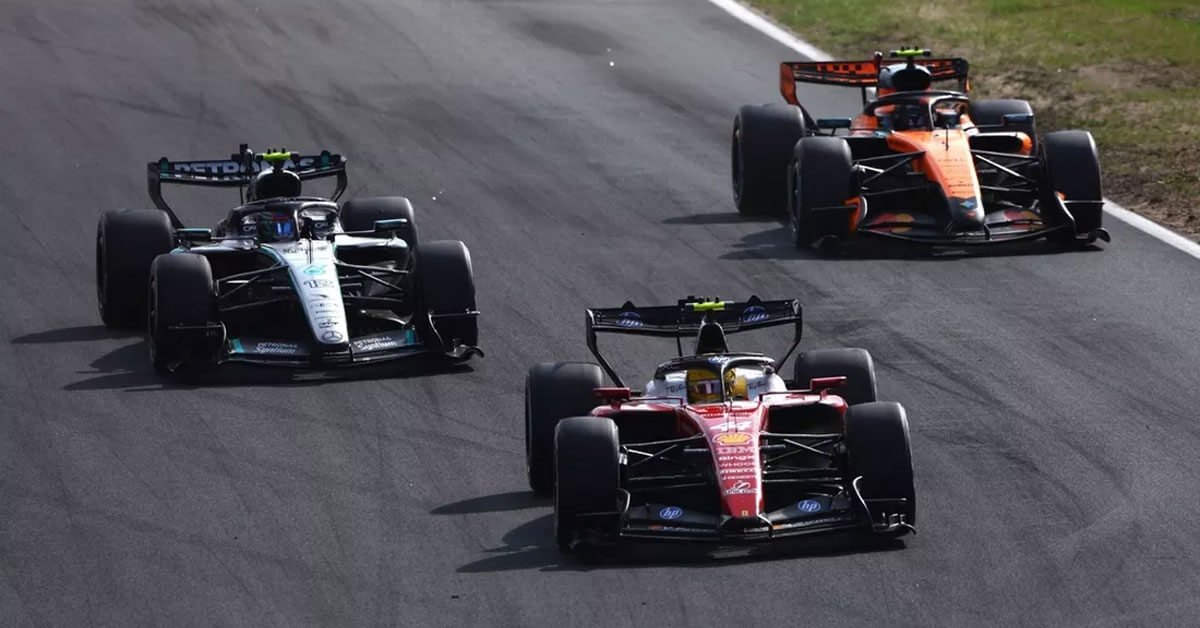
The 2026 Qatar Grand Prix presents Ferrari with a technical challenge at the Lusail International Circuit. The circuit’s high-speed nature could highlight strengths of the SF-26 while simultaneously exposing limitations in its power unit. Finding the correct technical compromise will be essential given the demanding track and championship battles for second place.
Tyre Demands and Race Structure
The tyres are expected to face extreme stress throughout the entire lap, particularly on the front-left tyre. Pirelli has supplied the three hardest compounds available.
In agreement with the FIA, a maximum limit of 27 laps per tyre set has been established for the race, which is scheduled for 57 laps. This means no driver will be able to complete the race with fewer than two pit stops, regardless of team strategy.
Lusail Circuit Characteristics
The Lusail International Circuit measures 5.419 kilometres and features 16 corners. The Grand Prix will cover a total distance of 308.611 kilometres over 57 laps.
The first sector is 2,090 metres long, ending at the braking zone for Turn 6. On the main straight, speeds reach 327 km/h before drivers brake from 321 km/h to 175 km/h at Turn 1.
The second sector is described as the most technical and demanding in terms of speed changes. It includes the Turn 6 hairpin, which is the slowest point of the lap at approximately 99 km/h.
The final sector requires drivers to remain on full throttle from Turn 12. Between Turn 11 and the braking zone for Turn 16, speeds do not drop below 250 km/h over about one and a half kilometres.
High-Speed Cornering Stability
Success at Lusail is noted as not being determined exclusively by straight-line performance; high-speed cornering stability is particularly important. Turn 6 is the only location where traction on corner exit becomes genuinely decisive, leading Pirelli to assign the circuit a traction rating of three out of five.
With approximately 60% of the lap distance covered above 250 km/h, and nearly three-quarters of the lap requiring full throttle, aerodynamics and mechanical set-up are expected to matter more than acceleration out of slow hairpins.
The Front-Left Tyre Challenge
Lusail has ten right-hand corners and six left-handers. In a right-hand corner, load transfers toward the car’s left-hand side tyres, causing the front-left tyre to absorb significant lateral loads throughout much of the lap.
Pirelli rates Lusail with a maximum rating of five for both tyre stress and lateral forces. The circuit’s smooth asphalt offers little opportunity for recovery from continuous high-speed corners.
The three fastest corners—Turns 12, 13, and 14—are three consecutive right-hand bends at between 280 and 291 km/h. This section involves about 400 metres where the front-left tyre receives virtually no respite.
Compromise in Tyre Management
The core technical compromise is balancing aggressive loading of the front-left tyre through high-speed corners against the need to protect it over a stint. Teams that find the most effective balance will achieve the strongest long-run performance.
Pirelli introduced a maximum lap allowance rather than increasing tyre pressures, which should allow drivers to push without dedicating entire stints solely to tyre management. However, if graining occurs on the front-left tyre, the maximum stint length will not prevent performance loss.
Team Technical Considerations
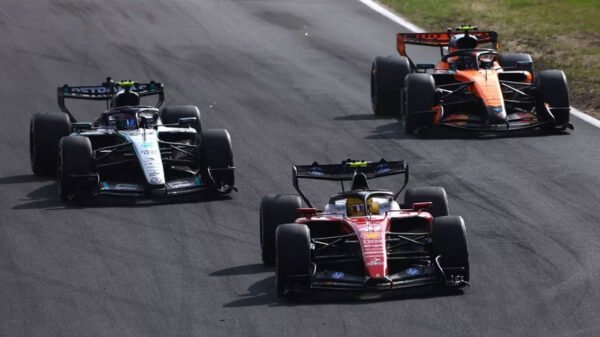
McLaren is noted as losing performance on the straights despite using the same power unit as Mercedes. Andrea Stella stated that “the power unit was not optimised during the race,” while technical director Neil Houldey admitted McLaren uses shorter gear ratios than Mercedes.
At Lusail, excessive aerodynamic drag could be costly because 60% of the lap is above 250 km/h and about one and a half kilometres are covered at full throttle. For Lando Norris and Oscar Piastri, competitive performance through Turns 12, 13, and 14 will be particularly important.
What Practice Sessions Will Reveal
Friday’s practice sessions must address how long the front-left tyre can maintain its performance. Attention during long runs will focus on initial signs of graining and how many laps the Medium and Hard compounds can sustain consistent lap times for, as the race is expected to revolve around three stints averaging about 19 laps each.
Electrical energy management is another area of investigation; observing when cars stop accelerating before a braking zone can reveal which cars have begun recovering electrical energy.
Given that the minimum number of pit stops is fixed by arithmetic and straight-line speed alone will not secure a result, what technical compromise will prove most effective at Lusail?
