
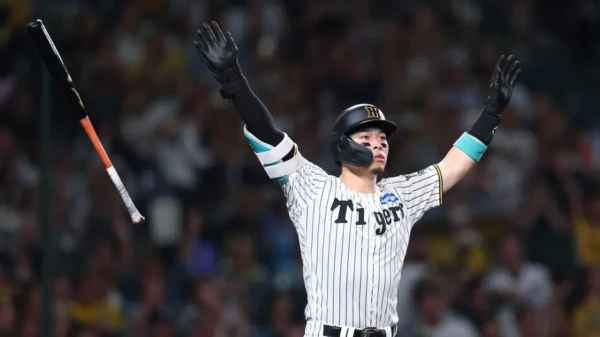








The Chicago Cubs are undergoing a significant overhaul of their pitching staff ahead of the 2027 season, facing a crisis after the 2026 season saw the team surrender 231 home runs. Despite adding Teruaki Sato as a corner outfielder and bringing in Tyler Rogers, MLB insider Steve Phillips suggests the front office still has substantial work ahead to address the pitching deficiencies.
Focusing on Pitching Rebuilding
The Cubs’ pitching staff experienced a collapse in 2026, with five of their seven primary starters hitting free agency, including Imanaga, Gausman, Boyd, Peterson, and Holmes. Furthermore, several internal pitchers are returning from major surgeries or injury-plagued seasons. Justin Steele missed all of 2026 recovering from elbow surgery, while Cade Horton is rehabbing from elbow surgery until mid-2027, and Ben Brown is recovering from neck/spinal surgery.
With Sato and Rogers now in place, the Cubs have shifted focus to acquiring additional starting pitching. Steve Phillips stated, “I think they’re going to look at another starting pitcher, then you’ve got to start to feel comfortable to focus on the bullpen. I love spending the Cubs’ money… Get me Clay Holmes or Logan Webb in a trade, and I love where the Cubs are going next year,” per MLB Network on X.
Evaluating Potential Pitching Acquisitions
Clay Holmes, who declined his $12 million player option for 2027, is seeking a multi-year deal. His mid-season trade from the Mets to the Cubs in 2026 provides Chicago a financial advantage because he is ineligible for a qualifying offer, meaning the Cubs will not lose draft picks to sign him. Holmes is projected to fetch around $50 million for three years.
Logan Webb, with a 4.31 ERA in 2026 with the San Francisco Giants, presents a case based on durability, having logged 980.2 innings since 2022, the most in MLB. His elite ground-ball rate of 51.8% in 2026 could align well with Chicago’s top-ranked defense. Conversely, Holmes leads active starters in career ground-ball rate.
Tyler Rogers offers Chicago a strong left-handed frontline arm, posting a 2.90 ERA over his final 20 starts in 2026. However, Rogers is noted as a fly-ball pitcher rather than a traditional workhorse. Pairing a right-handed ground-ball specialist like Webb or Holmes with Rogers would balance the rotation’s handedness and keep the ball on the ground in front of the elite infield defense.
Offensive Outlook and Positional Changes
In the outfield, Teruaki Sato, a Gold Glove third baseman from Japan, has joined the Cubs as a corner outfielder. With Alex Bregman locked in at the hot corner, Sato will occupy one corner outfield spot. This leaves the remaining corner outfield and DH spots to young players such as Matt Shaw, Pedro Ramírez, and Kevin Alcántara.
While Shaw is the front-runner for regular at-bats, adding another proven bat, either by re-signing Happ/Suzuki on a shorter deal or targeting a free agent like Randy Arozarena, could protect the lineup if Sato requires an adjustment period against MLB pitching. Sato contributed massive left-handed power in 2026, hitting 39 homers with a .991 OPS, though he also carries a 27% strikeout rate. To balance the middle of the order, which already features prominent left-handed bats from Pete Crow-Armstrong and Michael Busch, adding a right-handed bat with high on-base skills would be beneficial.
Next Steps for the Cubs
The Cubs’ pursuit of pitching help is complicated by the financial demands of potential targets. Webb has two years and $47 million left on his five-year extension ($23 million in 2027 and $24 million in 2028, plus a $1 million trade assignment bonus). The Giants would likely require a steep baseball return for him, potentially including multiple top-10 organizational prospects like right-handers Brooks Caple, Cade Townsend, or Jaxon Wiggins, or outfielder Kane Kepley, unless top prospect Josiah Hartshorn is included.
Despite the prospect cost, the deserted look of the Cubs’ pitching staff suggests that giving away prospects may still be considered a positive move. However, the source indicates that “the Cubs need to shop more this offseason.”
Given the ongoing pitching rebuild and lineup adjustments, what role will the Cubs’ current prospects play in these potential trades?
