
















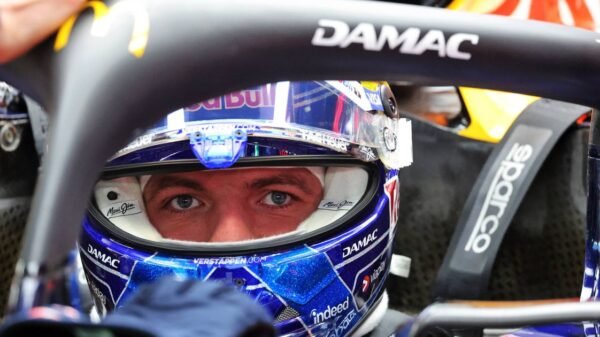












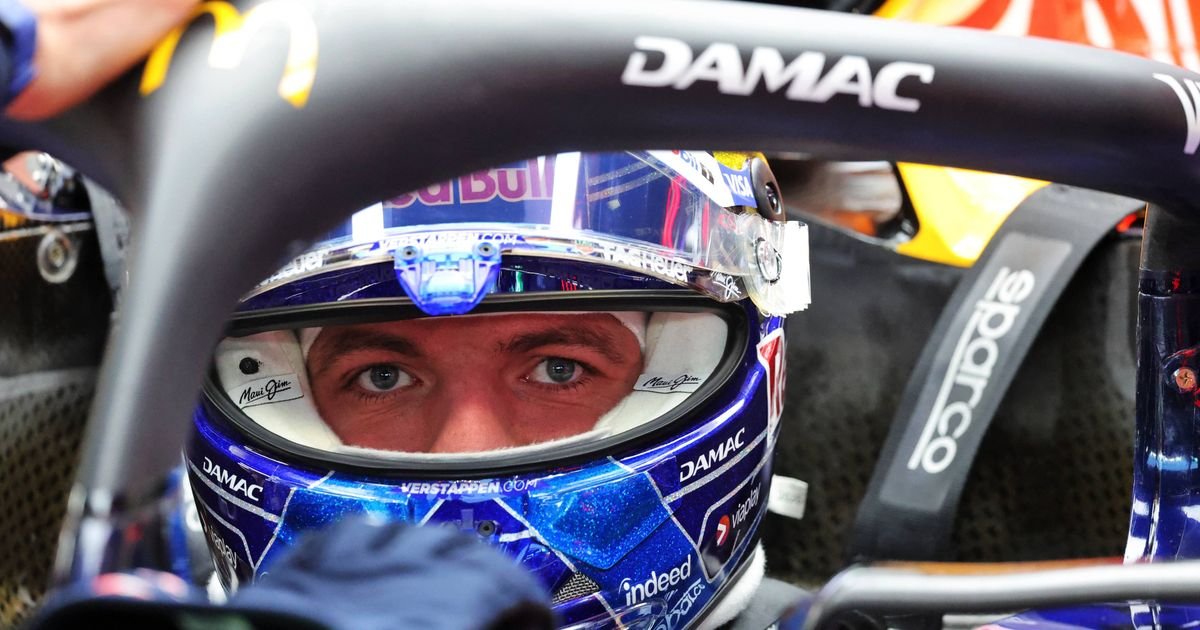
The Red Bull RB22 has been grappling with persistent and baffling performance issues, a situation that has been a source of frustration for Max Verstappen and the team. While the car showed some marginal improvements following the summer break, several underlying “quirks” continue to plague the chassis. These issues, which first manifested in Brazil and reappeared in Las Vegas, are proving difficult for the team to diagnose and rectify, significantly limiting the car’s potential.
Technical Details of the Persistent Issues
Verstappen has been candid in explaining the nature of the problems, distinguishing them from typical car degradation. When questioned about whether the issues related to balance, he firmly stated that they do not. Instead, he described the situation as a fundamental flaw within the car itself—a problem that the team recognizes but cannot currently resolve. He noted that this recurring issue is not a simple matter of setup adjustments; rather, it is an inherent characteristic of the RB22 that resists easy fixing.
The team’s technical understanding has been challenged by the sudden onset of these problems. Verstappen described the issue in Brazil as having “come out of nowhere,” a sentiment echoed in Las Vegas. He explicitly differentiated this from the rear axle degradation he had previously discussed, confirming that the current problem is entirely distinct. Despite the technical uncertainty, Verstappen has been focused on maximizing the performance from the car as it stands, acknowledging that he has done his best to mitigate the limitations.
Intended Performance Impact
The ongoing technical difficulties have a direct impact on the car’s overall performance envelope. While the team has not provided specific lap time projections, the inability to resolve these “quirks” suggests a constraint on the car’s ability to operate consistently at its peak. The issues are not simply about finding the perfect balance, but rather about the car behaving unpredictably or sub-optimally in certain operational zones. This compromises the ability to extract consistent performance across the entire race distance and through all corners.
Competitive Context
The performance struggles of the RB22 place it in a challenging competitive context. While the team has been able to implement upgrades, such as the package introduced in Baku, which allowed Verstappen to attack corners more aggressively, the underlying issues are preventing the car from realizing its full potential across all circuits. Verstappen noted that even with the upgrades, the problems become more pronounced in specific locations on the Las Vegas circuit, indicating that the limitations are not uniform across the track layout.
Season Implications
With only two races remaining after Las Vegas, the focus shifts heavily towards the final stages of development. The persistence of these fundamental issues suggests that the development direction must pivot from incremental setup tweaks to addressing a core mechanical or aerodynamic characteristic of the RB22. Resource allocation within the team is clearly being heavily dedicated to diagnosing this persistent anomaly, as the current state prevents the team from achieving the desired level of competitive advantage.
What to Watch Next
The upcoming races will be critical in determining the trajectory of the RB22. Fans will be watching closely to see if the team can stabilize the car’s behavior. The data validation phase following these races will be crucial; any significant change in the car’s behavior or a clear pattern emerging from the data could point towards the root cause of the persistent problems. The team’s ability to find a solution before the season concludes will be the ultimate measure of their engineering prowess.
Given the persistent nature of these unexplained issues, how much of the car’s performance ceiling is truly limited by the current state of the RB22 versus the driver’s ability to adapt to its inherent quirks?