



















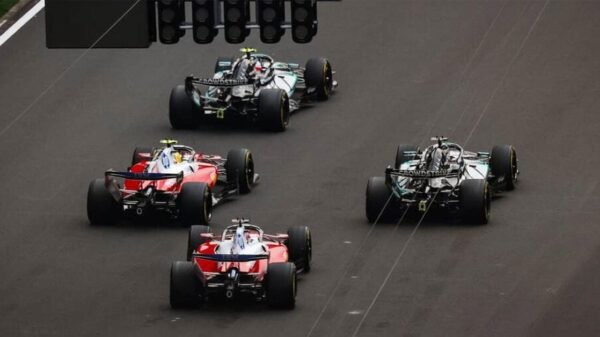
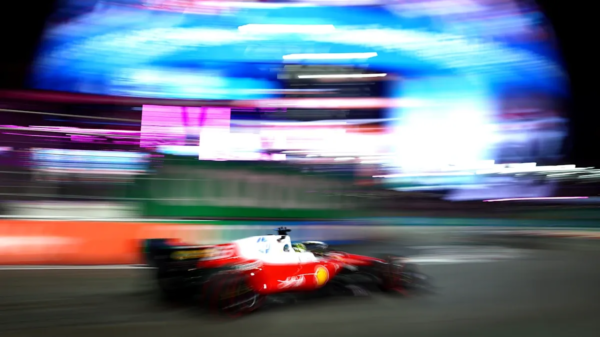
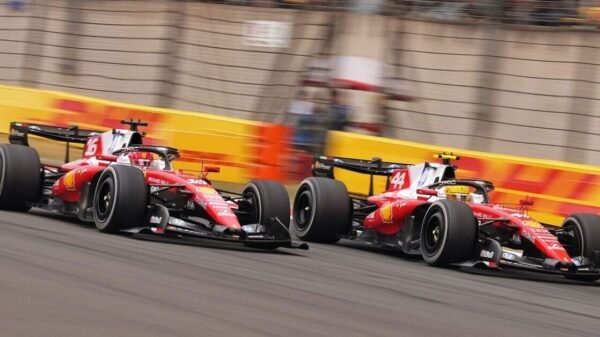















Ferrari’s aerodynamic modifications have proven insufficient to resolve the SF-26’s significant performance shortcomings at the 2026 Las Vegas Grand Prix. The team continues to contend with excessive drag and a power unit deficit, placing Charles Leclerc and Lewis Hamilton behind Mercedes and Red Bull. Despite implementing changes to the floorboard and rear-view mirror supports, the Maranello team remains notably disadvantaged on the circuit’s lengthy straights, with issues stemming from both aerodynamic inefficiency and combustion engine performance and electrical energy deployment.
Technical Details of the Updates
The technical adjustments introduced by Ferrari centered on refining airflow management. One of the most visible changes involved the floorboard, which now incorporates a single vertical element. This configuration was initially trialed exclusively on Charles Leclerc’s car during Free Practice 1 before being removed for Free Practice 2, but the revised arrangement was reintroduced on both Ferrari cars from Free Practice 3 onward. Furthermore, the team has reshaped the rear-view mirror supports, adopting a solution that mirrors the refinement seen on the Mercedes car. These changes are framed by the team as attempts to refine airflow management and mitigate the aerodynamic resistance inherent in the SF-26.
Intended Performance Impact
The primary goal of these aerodynamic revisions was to improve efficiency and reduce drag. However, the intended performance uplift has not materialized sufficiently to counteract the car’s underlying issues. The struggle with excessive drag is particularly costly on a circuit characterized by long straights. Beyond aerodynamics, the SF-26 is hampered by a power unit deficit. On the combustion side, the engine lacks the outright horsepower of some competitors, a disadvantage magnified during sustained acceleration. Additionally, the electrical energy deployment is constrained, leading to insufficient energy availability on the longest straights. This creates a dual challenge: increased resistance from drag combined with a lack of power to overcome it.
Competitive Context
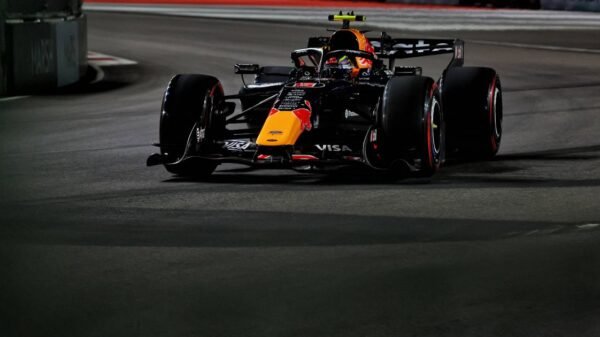
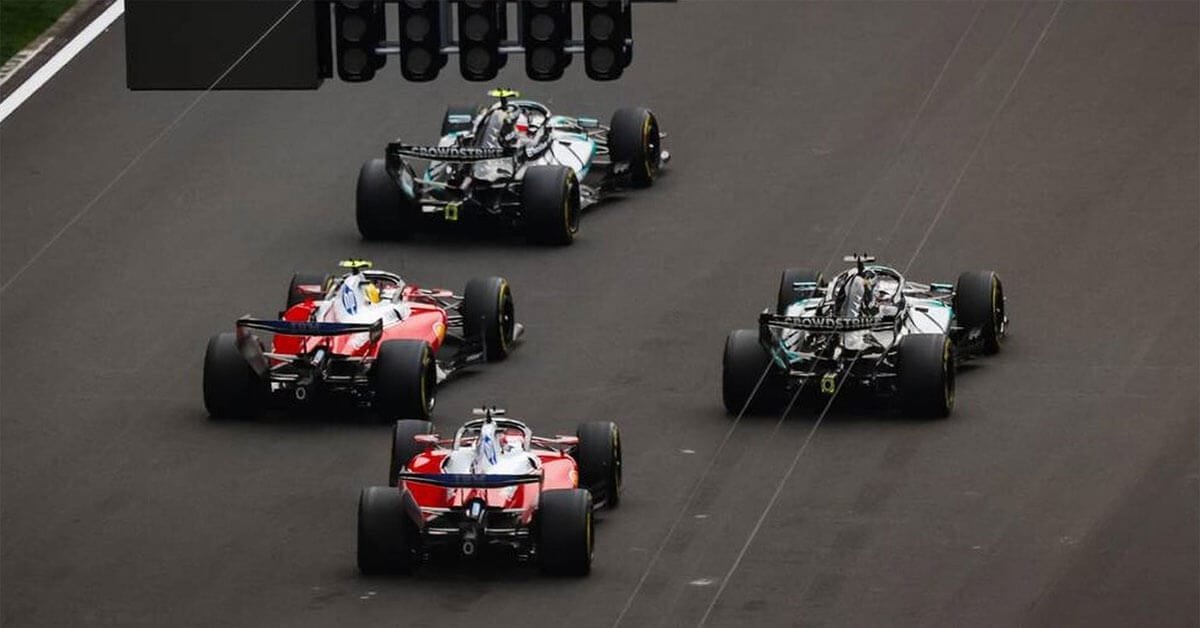
The technical comparison at Las Vegas highlights distinct strategic approaches among the leading teams. Mercedes has demonstrated particular aptitude for the circuit’s characteristics, leveraging a low-drag aerodynamic package alongside a powerful engine. The German team has made specific modifications, such as removing several flaps from the rear wing and certain aerodynamic appendages around the diffuser, and utilizing a tightly packaged engine cover to maximize efficiency. Red Bull and Racing Bulls have also focused on drag reduction; Red Bull has revised its endplate specification, lowering and shortening the diveplane to stabilize airflow, while Racing Bulls has shortened front-wing profiles and reduced floorboard flap sizes. McLaren is also improving aerodynamic efficiency while benefiting from the Mercedes power unit, using modifications to the outer floor area to manage airflow and reduce drag on high-speed sections.
Season Implications
Ferrari’s current situation underscores the limitations of the SF-26 package against rivals who have found greater synergy between low drag and robust power unit output. The focus on floorboard and mirror support revisions suggests an ongoing, iterative approach to aerodynamic optimization. The persistent power unit deficit indicates that while aerodynamic fixes can improve efficiency, they cannot fully compensate for fundamental limitations in the combustion or electrical performance compared to the leading competitors. This suggests that future development cycles for the Scuderia must address the powertrain as critically as the chassis aerodynamics to bridge the performance gap.
What to Watch Next
As the season progresses, the next races will serve as crucial validation points for these technical developments. The data gathered from the Las Vegas event will inform the direction of future upgrades. Teams will be closely scrutinized on how effectively they can balance drag reduction with power unit deployment across varying track conditions. The ability of Ferrari to find a more holistic balance between its chassis and engine package will be the key metric to watch as they move into subsequent competitive outings.
Given the emphasis on straight-line efficiency at Las Vegas, how much of the current performance deficit is attributable to the absolute power output of the combustion engine versus the aerodynamic penalties incurred?
