
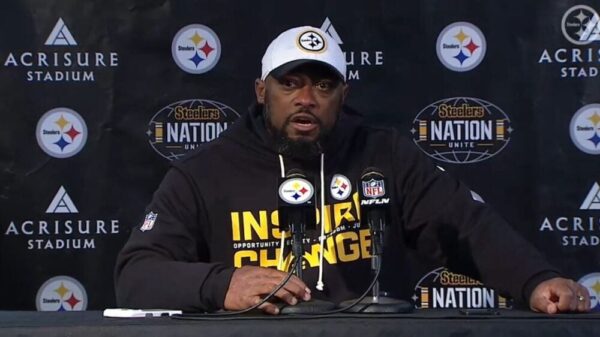














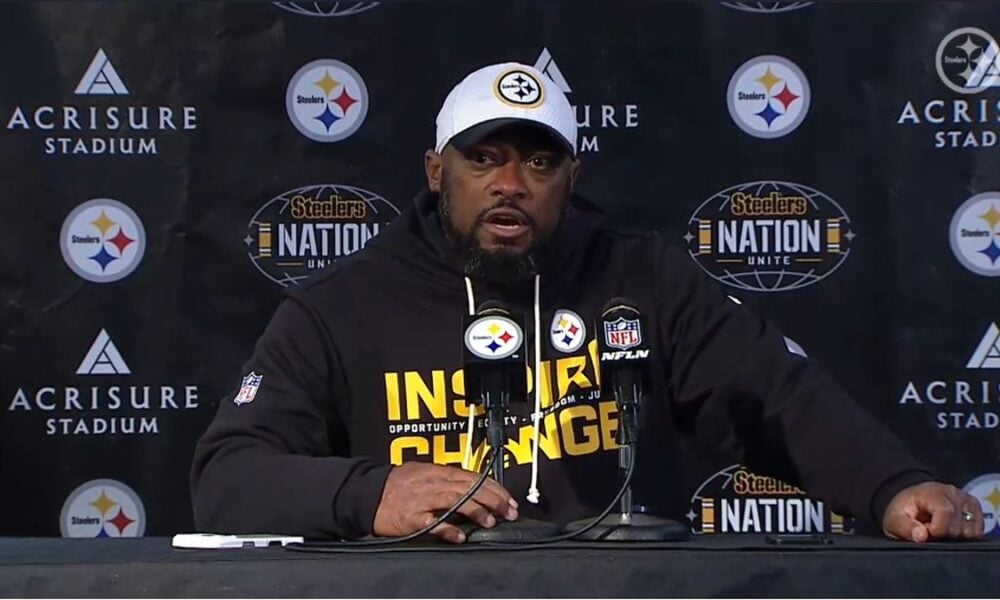
Kevin Colbert worked closely with Mike Tomlin for more than 15 years, and the former GM doesn’t think we have seen the last of Tomlin on an NFL sideline.
Colbert’s own experience, however, is the ultimate qualifier.
He felt the same way while working as the Steelers’ director of football operations when Bill Cowher resigned as Pittsburgh’s head coach after the 2006 season.
Cowher was still months away from his 50th birthday.
“Twenty years later, he has developed a great second career in television,” Colbert told Steelers Depot Monday after an annual lunch for legendary Western Pennsylvania Interscholastic Athletic League (WPIAL) football coaches. “I do think, like Bill, Mike’s a coach at heart. That’s been his life.”
It had been his life in Pittsburgh until mid-January. The day after the Steelers’ latest playoff loss, Tomlin resigned almost two decades after taking over for Cowher. No one was more shocked than the players in his own locker room. Since then, Tomlin has largely receded from the public eye.
That will change soon enough.
Tomlin will become one of the faces of NBC Sports as a studio analyst for its “Football Night in America – Sunday Night” show. His charisma, way with words, and insight figure to make the cameras – and viewers – love him.
“I know Mike will be great at TV,” Colbert said at Grandview Golf Club, just outside of Pittsburgh, “and people are going to see a side of Mike they might not have seen.”
Players saw a side of Tomlin that the public generally did not, and that was by design. He kept the focus on football, the moment. He largely eschewed any talk, especially about himself, outside of the game.
That worked when he won a Super Bowl in his second season and took the Steelers to another one two years later. But when the postseason success dried up, the “Tomlinisms” were no longer clever and humorous. They were tiresome, emblematic of a coach who had grown stale.
Tomlin never had a losing season, never lost a locker room, and won as many games (193) as Chuck Noll – in four fewer seasons.
Yet, Steelers fans never fully embraced him, as they did Cowher (to be fair, he was one of them, given his roots and accent). And Tomlin did not build up as much capital as Noll, his more stylistic match, did while transforming a perennially losing franchise into a dynasty.
Those outside of Pittsburgh widely consider Tomlin an all-time great. It’s a little more complicated when it comes to Steeler Nation, especially since Tomlin’s final playoff win happened nearly a decade before he resigned following 19 seasons as the Steelers’ head coach.
“People will talk about the recent failures in playoff football. That’s real, and it’s something Mike would always own,” said Colbert, who resigned as Steelers GM in May of 2022. “He’d own that more than the success that he had because he’d never talk about those. He’d never really talk about the failures unless asked about [them] and he would own it, and that’s just the way he was.
“I don’t know if he’s underappreciated [by fans]. I do know that within the organization, he was extremely respected for what he was able to do year in and year out. You just look at his numbers and they’re phenomenal, and they’re not matched by many in that profession. Mike never ran away from a challenge, and he was always appreciated in our building because we knew what he stood for and how he went about his business.”
That business is now discussing football, not coaching it. Maybe Tomlin is so good at it – and likes seasonal work that pays millions of dollars and keeps him close to the game but far from its unrelenting grind – that he has coached his last NFL game.
Like Cowher.
Or maybe Tomlin will yearn to return to the sideline after he has sufficiently recharged.
Like many thought would happen with Cowher.
“Mike could do either, and I wouldn’t be shocked,” Colbert said. “I would be shocked if he wasn’t great at the next venture.”
