

















In the end, the Los Angeles Dodgers simply made the best offer.
One of the three players they traded for Tarik Skubal, outfielder Zyhir Hope, ranked 26th on Keith Law’s list of the top 70 prospects. Another, right-hander River Ryan, was 41st. FanGraphs ranked Ryan as the top prospect moved at the deadline and Hope sixth. Baseball America had Hope third and Ryan ninth.
The third player that went to Detroit, right-hander Brady Smith, isn’t as highly regarded, but also helped satisfy the Tigers’ desire to balance their position-player prospects with more pitchers. The Tigers recently drafted right-hander Cameron Flukey 22nd overall out of Coastal Carolina with the same idea.
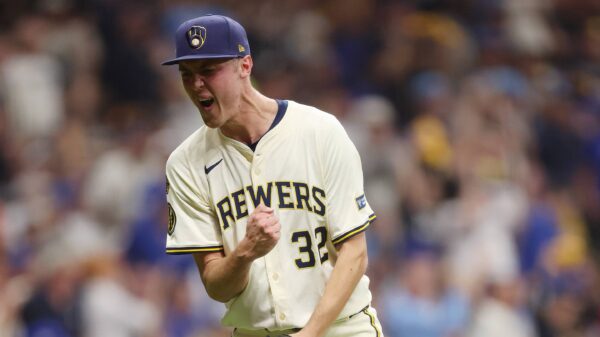
The exact offers for Skubal are not known. But executives from multiple teams in the talks, who spoke on the condition of anonymity for their candor on details of the process, offered a rough overview of the conditions that allowed the Dodgers to prevail over other suitors, which included the Atlanta Braves, Tampa Bay Rays, New York Yankees, Chicago Cubs and Milwaukee Brewers.
Rather than making pitching a requirement in any deal, the Tigers prioritized pursuing the greatest overall value. If the Brewers offered infielders Jesús Made and Luis Peña, Law’s No. 2 and 22 top prospects, respectively, then sure, the Tigers would have done it. The Brewers would have been foolish to part with both for a rental, even one as good as Skubal. But they were serious in their proposals.
Rather than one set proposal, the Brewers gave the Tigers multiple paths to consider. Some of those paths included pitching. Some included Peña and outfielder Alexander Frias, who later went to the St. Louis Cardinals in a trade for right-hander Dustin May and lefty reliever JoJo Romero. Some included infielder/outfielder Jett Williams, whose stock among some evaluators is not as high as it was last offseason when the New York Mets included him in their trade for righty Freddy Peralta.
The Braves never got close to a deal for Skubal, even though they made virtually all of their young players available, including right-handers AJ Smith-Shawver and JR Ritchie. The same was true for the Chicago Cubs. Infielder Jefferson Rojas, the prospect they sent to the New York Mets for right-hander Clay Holmes and outfielder Tyrone Taylor, is not at the level of Hope.
Yankees general manager Brian Cashman said he would not part with a “certain player” the Tigers wanted for Skubal. That player almost certainly was shortstop George Lombard Jr., who has been a revelation defensively since making his major-league debut this week.
The Rays, too, did not appear to be a major factor. They were prepared to offer a high quantity of prospects for Skubal, but most would have been further away from the majors than Hope and Ryan. The Tigers wanted players who were closer.
How Tarik Skubal strengthens the Dodgers’ repeat bid
Katie Woo and Jeshua Kidd
How the Dodgers had an edge
Skubal technically was correct when he said, “every team could trade for me.” Unlike in free agency, the best proposal of talent determined the outcome, not the highest monetary bid. That said, several executives said the Dodgers’ vast financial resources made a difference in which players they could offer, ultimately giving them an advantage.
The Dodgers have four high-priced starting pitchers — Shohei Ohtani, Yoshinobu Yamamoto, Blake Snell and Tyler Glasnow — giving them greater flexibility to trade prospects such as Ryan and Smith. The reason they could include Michael Busch as part of a four-player deal for Hope in January 2024 was that they had Freddie Freeman, a free-agent acquisition, at first base.
The Brewers operate differently. As an example, if they knew they could sign shortstop Jeremy Peña as a free agent after next season, perhaps they would have been more comfortable trading one of their infield prospects and more for Skubal. But small-market teams generally don’t make such moves, fearing that an expensive mistake can be crippling.
The lingering question, however, is whether the Brewers, in this particular case, could have been more aggressive. The way teams resist trading prospects, it’s almost as if they assume every one of them will become a star. The hit rate on such players isn’t nearly that good. And when a team’s system is as deep as the Brewers’, the risk of being caught short on young talent isn’t as great.
Why Ryan intrigued the Tigers
River Ryan, who turns 28 on Aug. 17, is older than Juan Soto. He has pitched more than 60 innings in a season only once in the past decade as a collegian and professional. His combined innings total for the last three seasons is 56 2/3.
What, then, was the Tigers’ fascination with him?
It came down to his stuff.
Ryan’s five pitches all rate as above-average to elite. The Stuff+ model ranks him second in Triple A only to righty Luis Perales, the pitcher the Boston Red Sox sent to the Washington Nationals last December for lefty Jake Bennett.
His upside, then, is enormous.
Ryan had a 1.33 ERA in four starts for the Dodgers in 2024 before undergoing Tommy John surgery and missing all of last season. His more recent issues are with his right hamstring, not his arm. And he is under club control for four additional seasons, adding to his appeal.
What about threading the needle?
The Tigers’ run differential is second-best in the AL. Since June 1, it’s a major-league best (plus-119 according to STATS Perform). Trading Skubal for a big return made sense at a time when their playoff odds were 20 percent and their odds of winning the World Series 1.2 percent. But considering they were only 2 1/2 games back in the AL wild-card race, why did they part with right-hander Casey Mize, too?
Obviously, the Tigers liked the return from the San Diego Padres for Mize and utilityman Gage Workman — left-handed pitching prospect Kash Mayfield and lefty Jackson Wolf. They were high on Mayfield in the 2024 draft, but took Bryce Rainer at No. 11 before Mayfield went to the Padres at No. 25.
Mayfield, like Ryan, Smith and first-round pick Flukey, helped bolster the Tigers’ core of pitching prospects. But the Tigers, according to a person briefed on their thinking, also felt the return this weekend of righty Jackson Jobe from Tommy John surgery and the move of right-hander Drew Anderson to the rotation would enable them to continue competing for a postseason berth.
The Tigers last offseason signed Anderson to a one-year, $7 million free-agent contract with a $10 million club option for 2027, intending for him to be a starter. Anderson had strikeout rates of 31.9 and 35.3 percent the past two seasons in Korea, and he’s at 27 percent this season while pitching mostly out of the bullpen. He moved into the Tigers’ rotation Wednesday night and threw 3 2/3 scoreless innings against Seattle.
Who won and lost the MLB trade deadline?
Andy McCullough and Johnny Sweet
Preller on the prowl, as always
It was just like the Padres to trade for rental starters Mize and left-hander Robbie Ray despite playoff odds below 25 percent. But actually, the moves represented something of a departure for Padres president of baseball operations A.J. Preller.
With the exception of reliever Tanner Scott in 2024, almost all of Preller’s big trades in recent seasons were for players under at least one additional year of club control.
This time around, Preller was in a tricky spot. The Padres’ rotation was in shambles. The sale of the club was not yet complete. And the team’s 8-1 run prior to the deadline came against three sagging opponents — the Miami Marlins, Colorado Rockies and San Francisco Giants.
Forever undaunted, Preller traded three of his better prospects while taking on just under $5 million in salary. He listened to the end on top relievers Mason Miller and Adrian Morejon, according to a person briefed on his discussions. The Yankees, among other teams, kept calling. But rival clubs never got the impression Preller intended to trade either one.
The only way Preller would have moved Miller or Morejon was if he could acquire enough future value to sacrifice the present. And for the Padres, the present remains vitally important. Manny Machado is 34, Xander Bogaerts 33. Eventually, some type of pivot will be necessary. Until then, Preller will keep trying to win.
For the most part, he has succeeded. The Padres have made the playoffs four times in the past six years. And for all their troubles this season, they entered play on Thursday just two games back in the National League wild-card race.
What the Braves were thinking
Back in February, I wrote: “Alex Anthopoulos, the Atlanta Braves’ president of baseball operations, isn’t just playing with fire when it comes to his starting rotation. He’s staring at flames that already are starting to flicker, and risking the Braves’ season going up in smoke.”
That take proved too hot, considering the Braves entered Thursday with the second-best record in the NL and third-best rotation ERA. But in the wake of Anthopoulos’ failure at the deadline to add anyone but righty Tyler Mahle, the question remains:
Who would start Game 2 in a playoff series behind Chris Sale?
Perhaps the answer will be right-hander Bryce Elder, who has recovered from a six-week slump to produce a 1.88 ERA in his last four starts. Perhaps it will be Smith-Shawver, who is back with the club after recovering from Tommy John surgery. Anthopoulos passed on every trade option but Mahle.
Time will tell if Anthopoulos was correct to exercise restraint in all of his pursuits except those of Skubal and righty Jacob deGrom. For Skubal, Anthopoulos was prepared to dig into his farm system. For deGrom, he was willing to take on a sizable portion of the pitcher’s remaining salary — about $11 million this season and $37 million next season.
After the deadline, I cited a source in writing:“The Rangers told deGrom if he wanted to waive his no-trade clause for Atlanta, they would make a deal happen. But deGrom said no, explaining that he wanted to win in Texas.”
After that story appeared, two executives said a trade almost certainly was in place. The execs, who spoke on the condition of anonymity for their candor, pointed out that teams do not approach players about waiving no-trade clauses so close to the deadline unless something is done.
The Braves also were involved in discussions for right-hander José Soriano and other starters, according to a person briefed on their talks. But other than Skubal and deGrom, they did not view those pitchers as difference-makers, or even better than what they had.
Perhaps Anthopoulos’ inactivity will haunt him. Or perhaps his refusal to settle for anything but an impact starter will go down as the correct call.
Which MLB teams did the most?
Levi Weaver and Madison Eades
Around the horn
• OK, so the Brewers didn’t get Skubal. Their pitching staff still is in pretty good — and maybe very good — shape.
Brewers officials viewed May and Kevin Gausman as the only starters besides Skubal capable of starting a playoff game. May held the Pittsburgh Pirates to two runs in six innings Wednesday in his Brewers debut. He should fit in well with a rotation that includes Jacob Misiorowski, Kyle Harrison, Logan Henderson and Shane Drohan.
Antonio Senzatela, acquired in a deal from the Rockies, joins Trevor Megill and Abner Uribe as key right-handed options in the bullpen. JoJo Romero, acquired from the Cardinals, is expected to return later this month from an appendectomy. He, DL Hall and possibly Robert Gasser could serve as left-handed counters to the Dodgers’ Ohtani, Freeman and Muncy in a postseason series.
• The Seattle Mariners, knowing they can play Colt Emerson at third if J.P. Crawford departs as a free agent, were one of the teams to show interest in Los Angeles Angels shortstop Zach Neto, according to people briefed on their conversations.
The teams never exchanged names. The Mariners never even got a price. Neto remained with the Angels, just as fellow shortstops CJ Abrams remained with the Washington Nationals and Otto Lopez with the Miami Marlins.
The Mariners’ discussions involving righty George Kirby, in the words of one club official, never advanced past the 50-yard line. The team can always revisit those conversations, and others involving right-hander Emerson Hancock, during the offseason.
• Some executives are in favor of pushing the deadline back to mid-August, saying it would give teams in an uncertain state more time to determine their trading strategy.
The expanded postseason allows for more teams to contend. The closeness of this year’s races left few outright sellers. Teams since the elimination of the August waiver period prior to the 2019 season are unable to make moves after the deadline. Pushing it back would be a way of meeting in the middle.
The problem with a mid-August deadline is that trades would be less impactful. Then again, blockbusters still might occur — remember Justin Verlander to the Houston Astros on the final day of August in 2017? And with more sellers, more players might spring loose.
• Often lost in the debate over the Dodgers is just how much they are subsidizing their small-market brethren with the amount of money they pay in revenue sharing and luxury tax.
The Dodgers are expected to contribute more than $200 million in revenue sharing this season, according to a recent report from Sportico. Their tax bill last season was $169.4 million.
Half of the money from luxury-tax proceeds goes to a commissioner’s discretionary fund distributed among teams eligible to receive revenue-sharing money, which have grown their non-media local revenue. The other half goes to player retirement funds.
• The Rays’ big additions were Peralta and catcher Liam Hicks. But right-handed reliever Tyler Wells, under club control for one additional season, could be an under-the-radar coup.
Rays senior advisor Brandon Hyde, Wells’ former manager with the Baltimore Orioles, gave his new team a strong recommendation.
“I’m a big fan of Tyler as a pitcher and a person,” Hyde said. “He’s a huge presence on the mound and extremely competitive. In his career, he’s been versatile and has had success in different roles. He’s a great teammate, well liked by all, and will fit in well to the Rays’ winning clubhouse and culture.”
• And finally, I wrote in June that, “the griping from rival executives about dealing with Scott Harris, the Tigers’ notoriously exacting president of baseball operations, would be as entertaining as the Skubal sweepstakes themselves.”
I heard no such griping.
“They handled it great. Zero issues,” an exec from one of the involved teams said.