


























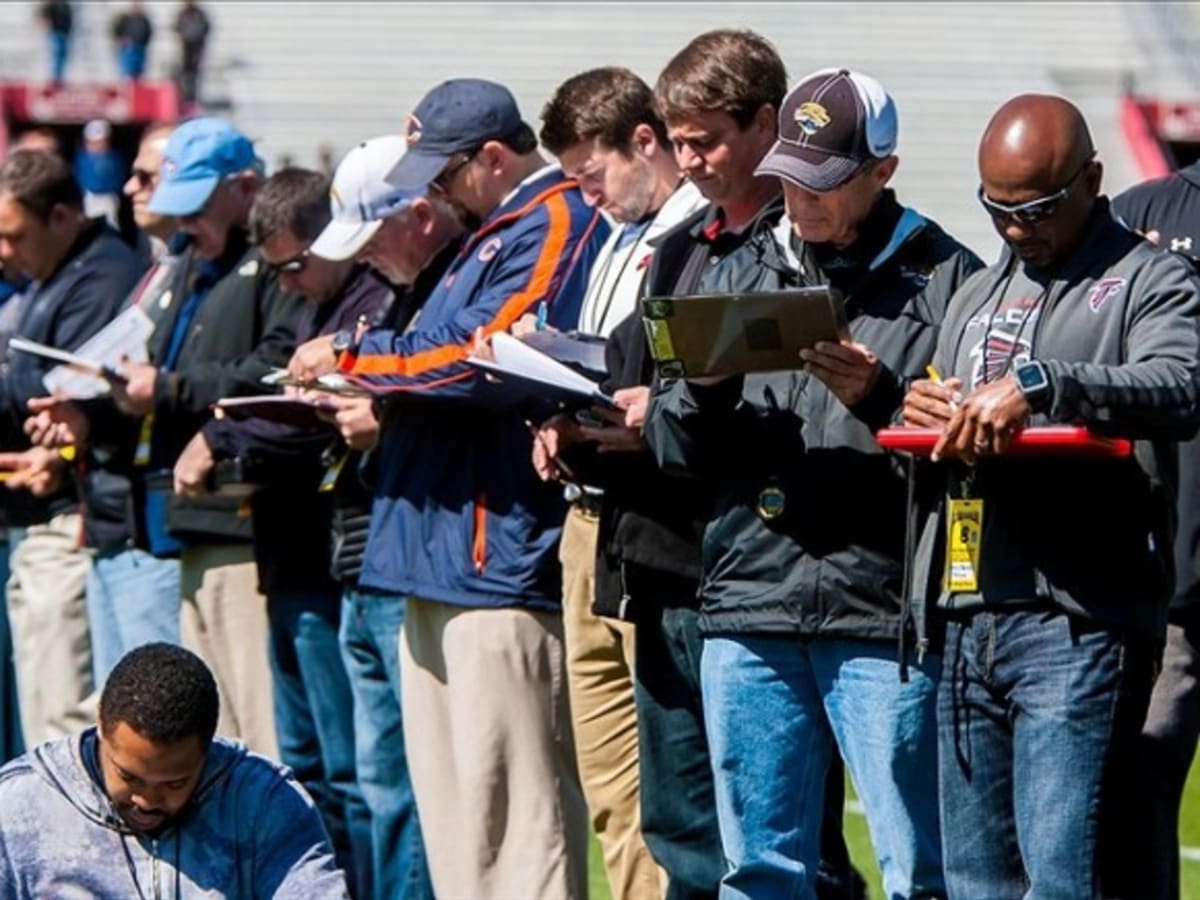

There was a time when scouting an NFL Draft prospect came down to a coach sitting alone in a dark film room, scribbling notes on a legal pad and going with whatever his instincts told him after enough tape. If the kid had good size and ran a decent 40, that was usually enough to move him up or down the board. Nobody questioned the process much because nobody had a better one to offer.
Over the past decade, however, data has taken over almost every corner of pro football. And the draft is no exception. Teams, fans, and even casual followers are now leaning on numbers to back up what the eye test tells them. The shift has been quiet but it has been real.
The Old Way Had Real Limits
Ask anyone who has covered the draft for more than a few years and they will tell you the same thing. Scouts used to operate in silos, where one guy would fall in love with a receiver out of a small school nobody had heard of while another was convinced that a highly ranked prospect from a Power Five program was a bust waiting to happen. There was no clean way to settle the argument, so you went with whoever had the most seniority or the loudest voice in the room, and the decision got made the way most decisions got made back then, on feel and reputation rather than evidence.
The problem was that the results kept exposing the gaps. Top ten picks flamed out while undrafted free agents made Pro Bowls, and the people running these evaluations had very little to point to that explained why things went wrong or how to stop it from happening again.
Numbers Started Filling the Gaps
Advanced stats changed things gradually. When ESPN and Pro Football Focus started publishing metrics that went beyond yards and touchdowns, front offices began to pay attention. Suddenly you could look at a prospect’s pressure rate, route win percentage, or yards after contact in a way that meant something beyond the basic box score.
Small school players especially benefited from this. Sites like NFL Draft Diamonds have spent years arguing that production at lower levels deserves serious consideration. Data helped make that case. When you can show that a Division II linebacker was statistically dominant against his competition in ways that translate to the next level, it is harder to dismiss him just because of where he played.
Vegas Got Into the Game Too
Here is where things get interesting for fans who follow the draft closely.
The betting market started pricing draft outcomes years ago. Odds on which position goes first overall, which player lands in the top five, how many quarterbacks come off the board in round one. Vegas does not set lines without research. And the public lines started reflecting a lot of the same analytical thinking that front offices were using internally.
That crossover matters. When the market and the scouts are reading the same data signals, the lines tend to be tighter and more accurate. When they diverge, that is usually when something interesting is happening behind the scenes.
What Fans Can Use Right Now
Most fans do not have access to proprietary team databases. But the public tools have gotten much better. Prediction models that track line movement, historical trends, and real time odds shifts are no longer just for the pros.
One platform that reflects where things are headed is Shurzy’s AI sports predictions tool, which pulls live odds from all the major sportsbooks into a single view and layers AI driven picks on top of them without charging anything for access. For a fan who wants to understand how the market is reading a prospect’s stock in the weeks before the draft, or just wants a second opinion before making a call, it is the kind of resource that used to feel out of reach for anyone outside a front office. The interface stays out of your way and lets the data do the talking, which is really all most people are looking for.
Scouting Is Still a Human Job
None of this means the film room is dead. Far from it.
Data can tell you a receiver dominated in routes at the intermediate level. It cannot always tell you if he can handle the mental load of an NFL playbook, or if he will compete hard on a cold night in December when nothing is going his way. Those answers still come from the grind of real evaluation.
What data does is sharpen the conversation. It gives scouts and fans a shared language. When someone on a draft podcast says a prospect’s efficiency numbers do not match his draft ranking, that means something now. Three years ago it would have been dismissed. Today it changes how people think.
The Amateur Scout Has Never Had More
For the readers who have spent years grinding film on undrafted free agents and small school sleepers, this moment is yours.
The tools that used to live only inside team facilities are now in your hands. Prediction markets, advanced metrics, AI powered models, all of it is accessible and most of it is free. The fan who puts in the work can now make a data informed argument that holds up.
That is a real change from where things were even five years ago.
The draft has always rewarded the people who did their homework. Now doing your homework means more than watching tape on a loop. It means knowing how to read what the numbers are telling you and understanding where the market agrees or disagrees with your own eye.

NFL Draft Diamonds was created to assist the underdogs playing the sport. We call them diamonds in the rough. My name is Damond Talbot, I have worked extremely hard to help hundreds of small school players over the past several years, and will continue my mission. We have several contributors on this site, and if they contribute their name and contact will be in the piece above. You can email me at nfldraftdiamonds@gmail.com
