














The Upgrades of Red Bull Racing: A Deep Dive into their Technical Evolution
In the competitive realm of Formula 1, where fractions of seconds can define championships, Red Bull Racing has recently announced significant updates to their RB19 chassis as they aim to stay ahead of the pack. This update not only highlights their continuous pursuit of performance excellence but also underscores their ability to effectively adapt to the rapidly changing landscape of F1 technology. In this article, we will break down these upgrades, exploring the technical changes made, the anticipated performance impact, competitive positioning, and what this means for the rest of the season.
SECTION 1: Technical Details
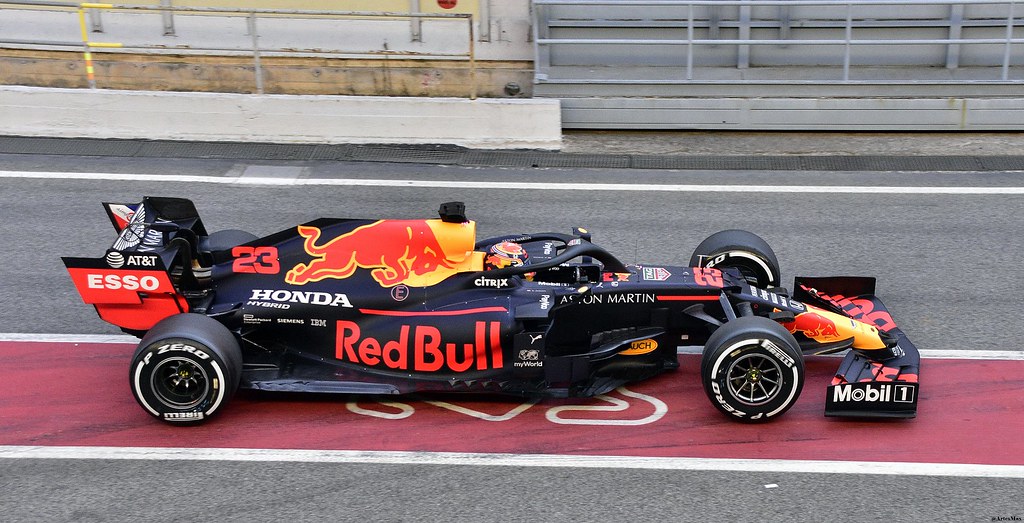
Red Bull Racing’s latest upgrade to the RB19 revolves around a refined aerodynamics package. This upgrade includes a reworked front wing and alterations to the underbody design, specifically targeting enhanced airflow management. The front wing alterations provide increased downforce and better responsiveness to driver inputs, while the underbody tweaks focus on optimizing ground effect; both are critical for maximizing the car’s cornering performance.
In technical discussions, the team has described these changes as a "synergistic approach," where the interaction between various aerodynamic components has been holistically re-engineered. The updates help to reduce drag while maintaining balance—crucial for both high-speed straights and tight corners. The use of computational fluid dynamics (CFD) and wind tunnel testing has seen extensive development, ensuring that the new components are rigorously validated before hitting the track.
SECTION 2: Intended Performance Impact
The purpose of these aerodynamic updates is twofold: improving the car’s balance and extending tire life. With the new design features, the team hopes to achieve a better weight distribution and a more predictable handling characteristic. Consequently, this refined balance is expected to minimize tire wear during longer stints and enhance overall efficiency, allowing the drivers to push harder as the race progresses.
While Red Bull Racing refrains from making explicit lap time claims, the goal is to incrementally lower race times through enhanced cornering speeds and improved straight-line acceleration. The focus is on consistency and reliability, aspects that have become vital in a season that has already seen unexpected outcomes and competition—a reminder that long-term performance rather than instant gains remains the priority.
SECTION 3: Competitive Context
This aerodynamic upgrade places Red Bull Racing in a compelling position relative to their rivals, notably Ferrari and Mercedes, who have also been in relentless pursuit of improvement this season. Historically, Red Bull has been known for their innovative approaches and their capacity to learn quickly from data—a strategy that has paid off handsomely.
In the current season context, with Ferrari struggling with car handling and Mercedes’ ongoing adjustments to their own setups, the RB19’s refined aerodynamics could provide Red Bull with the edge they need to maintain or expand their championship lead. While teams like McLaren have also shown promise, the efficiency and effectiveness of Red Bull’s updates may well ensure a gap in performance that is challenging for others to close, at least in the short term.
SECTION 4: Season Implications
Looking towards the remainder of the season, this upgrade signals Red Bull Racing’s commitment to continuous development and innovation. Particularly, they are emphasizing significant improvements from race to race, even as the calendar shifts to tracks demanding different characteristics from their cars.
The update also hints at resource allocation strategies within the team. With the 2023 season nearing its midpoint, Red Bull Racing’s focus on aerodynamic refinements indicates that they are fully committed to finding performance gains in areas that can yield consistent results, rather than merely bolstering raw horsepower at the expense of other key performance areas.
Moreover, this commitment aligns with their goal of securing both Drivers’ and Constructors’ Championships—a dual objective that is increasingly demanding as other teams ramp up their own development programs.
SECTION 5: What to Watch Next
As we approach subsequent races, particularly at circuits that heavily emphasize chassis performance such as the Circuit de Barcelona-Catalunya and the street circuit in Monaco, the upcoming weeks will be critical for validating these upgrades. Pay close attention to the RB19’s performance in qualifying sessions to gauge whether the new aerodynamic package translates into competitive advantages on the track.
Moreover, data gathering will be crucial as the team monitors tire performance in various conditions. We’ll be watching for the impact of these updates on tire degradation, particularly during critical race situations such as slow-speed corners and high-load straights, providing insights into how well the car adapts to different track types.
Finally, as the championship race heats up, keep an eye on how other teams respond to Red Bull’s advancements. When one team shows enhanced pace, others will not be far behind in striving to match or exceed those performance metrics—creating a thrilling and competitive dynamic as the season progresses.
In conclusion, with this new aerodynamic upgrade, Red Bull Racing has reaffirmed its status as a leader in Formula 1 technology and performance. As fans of the sport, we can’t help but wonder: How will these updates hold up as the season progresses, especially under the pressures of diverse track conditions and rival teams’ counter-strategies?
