



The Milwaukee Bucks suffered a disheartening 132–129 loss to the Philadelphia 76ers on Saturday, marking their thirteenth consecutive defeat. This staggering losing streak has positioned the Bucks as one of the most difficult stories in the NBA, threatening to match the franchise’s longest-ever losing run. For a team that celebrated an NBA championship just a few years prior, this collapse is alarming, suggesting that the issues facing the organization run far deeper than just a single rough patch.
How the Game Unfolded
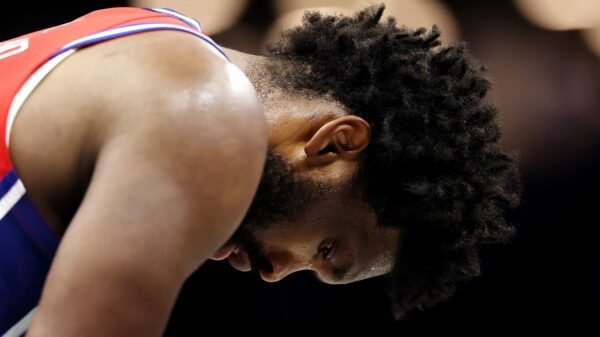
Saturday’s contest against the 76ers was a microcosm of Milwaukee’s current struggles. Despite a monumental individual effort from Tyler Herro, the Bucks could not secure the win. Herro delivered a career-high 50 points, complemented by 11 rebounds and seven assists, showcasing the offensive talent that remains within the squad. The game featured several tense moments, including a desperate late-game surge by Milwaukee. With just over two minutes left, the Bucks trailed by ten points, but they managed to rally. Brayden Burries hit a corner three-pointer with 4.8 seconds remaining, narrowing the deficit to just one point. The game seemed poised for a dramatic conclusion, with Joel Embiid making two free throws, and Herro appearing to force overtime with a remarkable three-pointer. However, replay confirmed the shot did not count as time expired, sealing the heartbreaking loss.
The narrative of the game underscored a critical theme: even extraordinary individual performances are insufficient to salvage the team’s overall performance. The Bucks have won only one of their first 17 games, and the string of defeats has left them firmly at the bottom of the Eastern Conference standings.
Turning Points and Organizational Shifts
The context surrounding the Bucks’ current state cannot be separated from the massive offseason decision to trade franchise superstar Giannis Antetokounmpo to the Miami Heat. This blockbuster transaction fundamentally altered the team’s identity and the foundation upon which their championship success was built. While Tyler Herro is undeniably an excellent offensive player, the expectation that he could seamlessly replace the multifaceted production of Giannis—his scoring, rebounding, defensive pressure, and overall impact—is viewed as unrealistic.
The early results suggest that the roster has yet to establish a cohesive winning identity following the trade. Beyond the personnel changes, the team has shown significant defensive vulnerabilities. The Bucks have allowed at least 124 points in three consecutive contests, a level of scoring that is simply unsustainable for a contender.
Head coach Taylor Jenkins is inheriting a profoundly challenging situation. While no one can claim that rebuilding after losing a superstar is easy, thirteen consecutive losses demand accountability from every facet of the team. Jenkins must find immediate ways to improve defensive execution and instill greater consistency, as coaching alone cannot overcome fundamental roster weaknesses.
Standout Performances Amidst the Collapse
Tyler Herro was the undeniable standout, putting up a sensational performance that kept the Bucks in the fight until the very end. His 50-point night demonstrated his capacity to take over games when necessary. Beyond the star power, the contributions of players like Brayden Burries, who provided crucial late-game scoring, and the efforts of Nate Ament and Kasparas Jakučionis, suggest that there is promising young talent within the organization.
However, the team appears caught in a precarious limbo—struggling to decide whether to compete immediately with the current roster or commit fully to a long-term rebuild. This lack of clear organizational direction is a major hurdle. The front office faces serious scrutiny regarding roster construction: does the team possess sufficient defensive talent, and is there a realistic plan in place for competing after such a massive personnel shift?
Standings Context and Future Hurdles
The implications of this slide extend beyond the immediate standings. The Bucks are dangerously close to matching their franchise’s longest losing streak of 15 games from the 1995–96 season. Furthermore, the rebuilding situation is complicated by the fact that the Bucks do not control their 2027 first-round draft pick, meaning losing games does not automatically guarantee the high draft selection needed to fuel a turnaround.
As other Eastern Conference teams solidify their status as serious contenders, the window for a quick recovery for Milwaukee appears to be closing. While the team has shown flashes of competitiveness, as evidenced by the close finishes, these “moral victories” are meaningless when the team has won only one game in seventeen attempts. Milwaukee requires tangible results: improved defense, smarter roster decisions, and a unified organizational vision.
What Comes Next
The Bucks must move past the narrative of individual heroics and focus on systemic improvement. The path forward requires more than just hoping for a better outcome in the next contest; it demands accountability from the top down. The team needs to demonstrate measurable progress in defense and consistency to begin convincing fans and analysts that a turnaround is possible.
Considering the team’s current trajectory and the looming schedule, what single change—be it a coaching adjustment, a roster move, or a philosophical shift—do you believe is most critical for the Bucks to implement to halt this slide?
