





















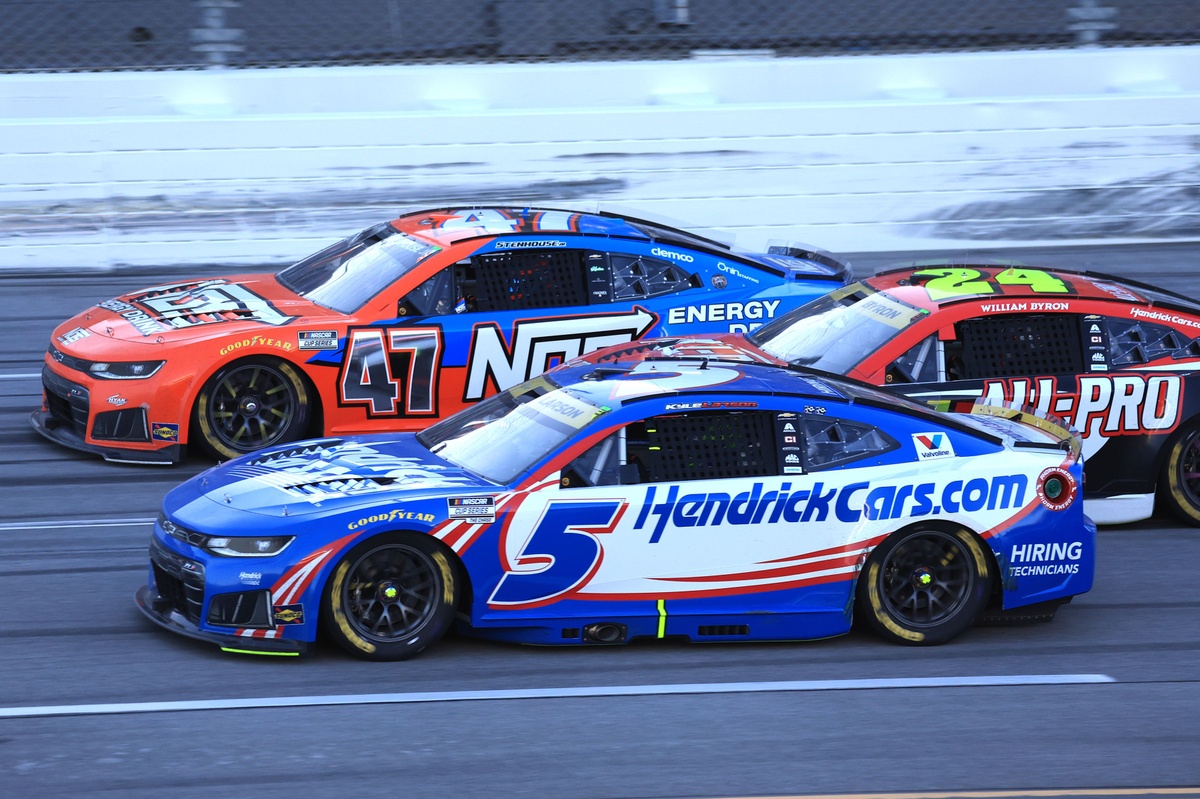
NASCAR threatened a good portion of the field during the first stage of Sunday’s Cup Series race with a black flag if they did not pick up the pace and meet minimum speed.
In the name of fuel saving, everyone except the three RFK Racing drivers began puttering around the 2.66-mile superspeedway, and that triggered race control with automatic notifications of cars that were below minimum speed.
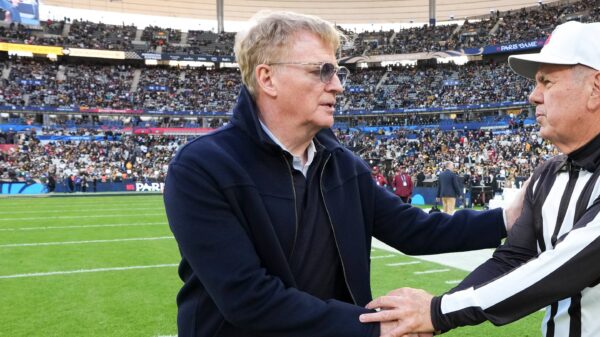
Thus, NASCAR vice president of racing communications Mike Forde said race control worked to get that corrected. He explained this on Wednesday during an episode of the Hauler Talk podcast he shares with Senior Director of Racing Communications Amanda Ellis and veteran reporter Nate Ryan.
“We can IM individual teams or the entirety of pit road,” Forde said. “And so, we IM’d all of pit road and said, ‘Hey, there are X amount of cars that have not reached minimum speed. If you guys don’t pick it up, then we’re going to have to step in.’ And soon after, they picked it up. So that message was delivered, and that’s why we did not black flag anybody.”
At Talladega, minimum speed is within 12.5 percent of the pole time. Forde also explains that the timing of a black flag is within NASCAR’s discretion but drivers are usually given a lap or two.
The teams responded by picking up the pace and that was that.
“We’re not looking to put cars out of the race,” Forde said. “There are sponsors paying good money to be part of our sport. And there are fans that come to the race and want to see – even if their driver’s not in contention and might not win – they’d like to see them at least on the race track. So we’re not in the business of putting cars out. We’re going to keep them out there on the race track for the fans.”
Larson and the Double Line
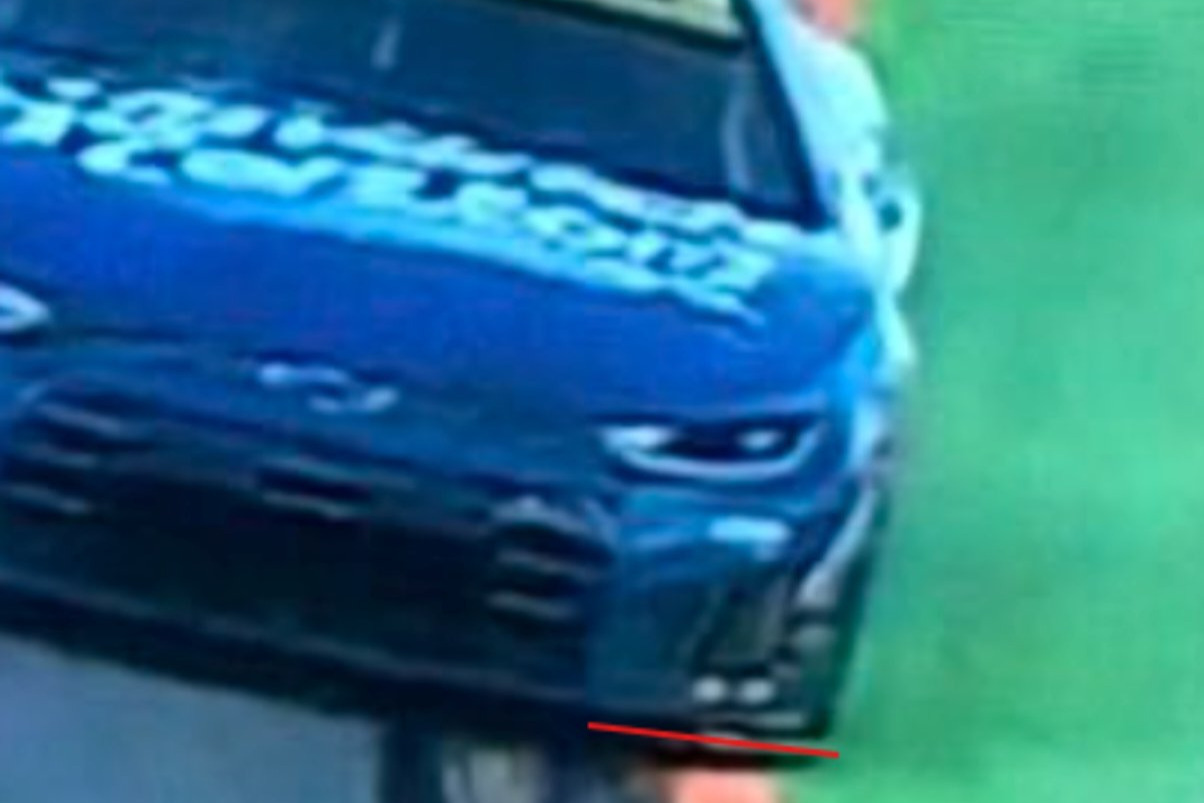
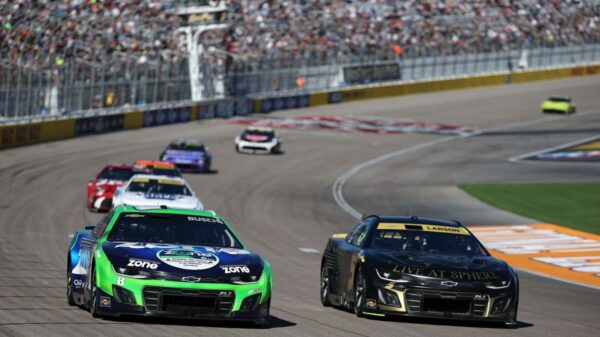
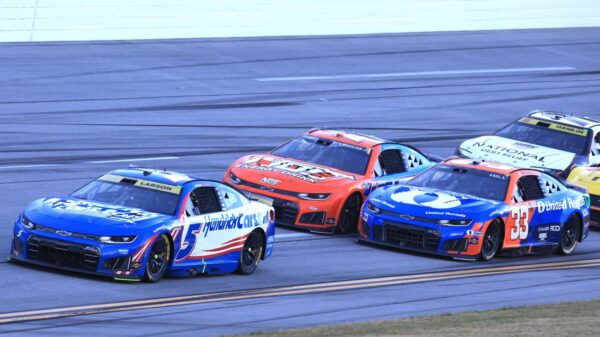
It was close, but ultimately, NASCAR’s position was that Kyle Larson stayed in bounds while completing his final lap pass on Todd Gilliland to win the race.
It was something race control took time to review in the minutes after the race.
“There was a little bit of time,” said Forde. “We were reviewing it. The tire has to go fully below the yellow line. So if there is even a half an inch that remains on that yellow line, we’re not going to call a penalty. So in our judgment, we felt that was pretty clear.
“So that’s kind of where the conversation ends as far as NASCAR goes. It’s, do we feel there were tires below the yellow line? No. Okay. That’s it.”
Forde says NASCAR has effectively a flow chart philosophy of how to decide if a penalty is warranted in going below the double yellow line to complete a pass on a superspeedway style track.
“Where you have a question and if it’s yes, go here. If it’s no, go here. So in this case, we’ll go for the reality. And then a hypothetical reality: were Kyle’s tires below the yellow line?
“No. And to point to no, no penalty. If it’s yes, then you have to look at: do you improve your position? If that is also yes, then you look at whether you were forced down. And if the answer is yes, that would be a penalty.
“If the answer is no, then no penalty. So there’s, to get a penalty, there’s almost three different things have to happen. To get a penalty, you have to be below the yellow line, you have to improve your position. And then, in our judgment, did you get shoved down there? So none of that played a part in this conversation. So you’re saying, ‘Oh, maybe they didn’t call it because he had already passed the 34.’ So that’s not part of the part. … It was just simply in our judgment; his tire was still on the line, and we move on. Yeah. All right.”
Denny Hamlin has responded to the comments on Hauler Talk, saying on social media: “My goodness. This is horrible officiating or horrible comms. I think it might be both.”


Full throttle to the line
Given the narrative all day that Chevolet teams had something of an edict to support Larson all race to give him the best chance to collect stage points, win the race and put away the Cup Series championship, there was some concern from the fans that both Ricky Stenhouse Jr. and William Byron intentionally slowed on the frontstretch.
In their minds, this is how Larson was able to win from so far back.
Forde put that to rest too, and did so on Sunday, by saying that veteran crew chief turned official Scott Miller was in remote race control in Concord, North Carolina and saw nothing that drew his suspicion.
Further, no teams brought any concerns to NASCAR either. After all, teams have access to SMT data too and would have seen it had there been anything suspicious.
Forde said some teams came to NASCAR with questions about Larson’s tires and the double yellow line rule, but not about any last lap off-throttle shenanigans to benefit Larson and Hendrick Motorsports.


We want your opinion! What would you like to see on Motorsport.com?
– The Motorsport.com Team