














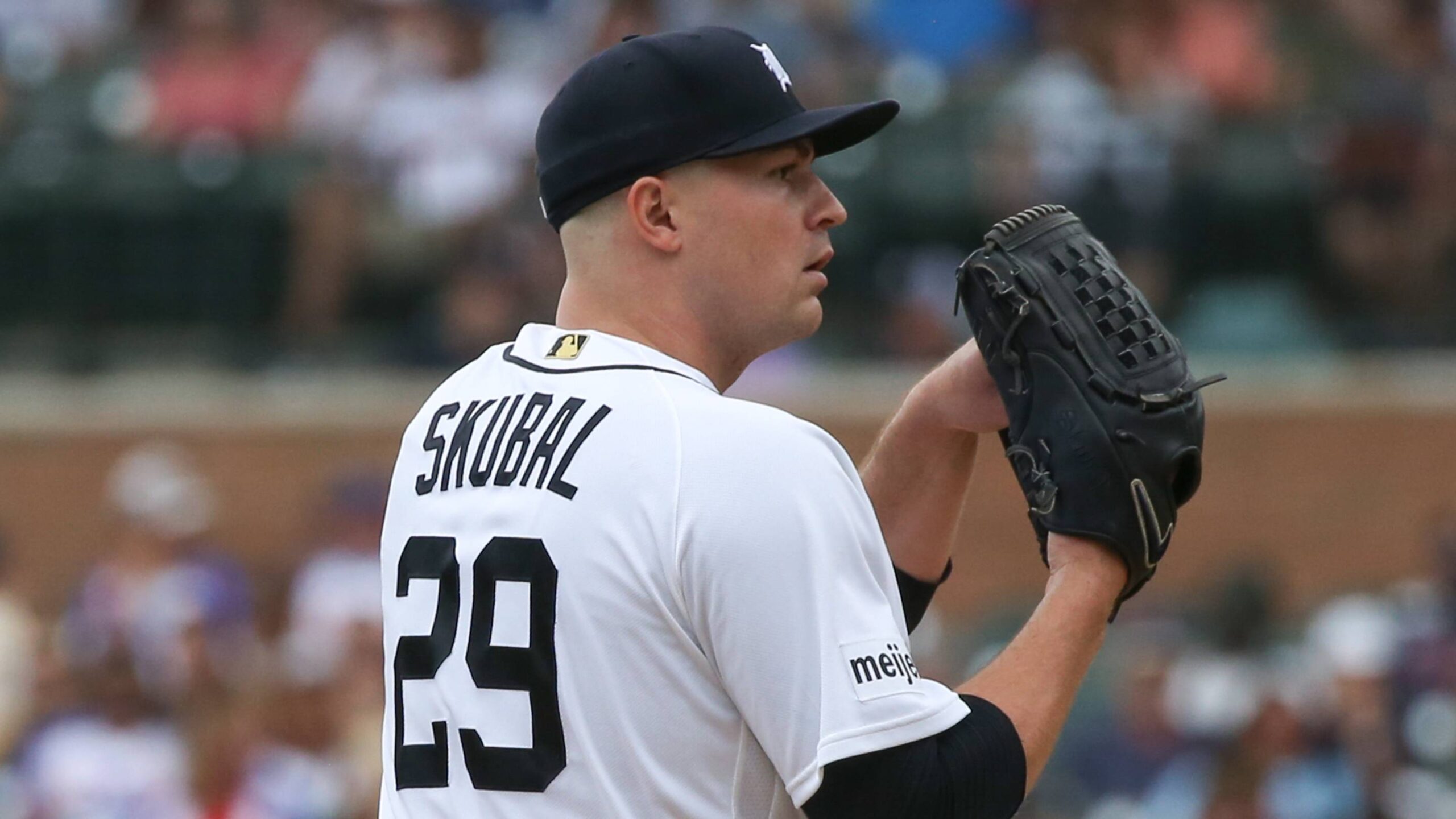
With the Aug. 3 MLB trade deadline right around the corner, trade chatter is reaching peak frequency across the league. Several marquee names are floating in the rumor mill, from two-time AL Cy Young winner Tarik Skubal, to 2026 All-Stars such as Hunter Goodman, Adley Rutschman and Otto Lopez.
The balance of power in MLB could shift over the next 48 hours and change. Here are projected destinations for the top 10 trade candidates in baseball, as determined by FanSided scribe Chris Landers.
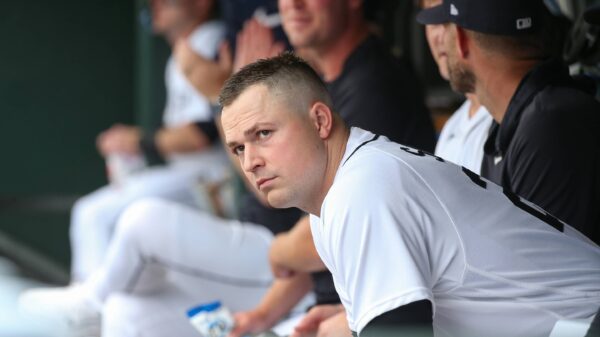
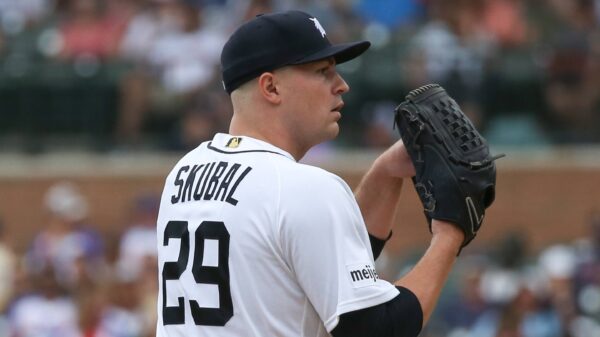
LHP Tarik Skubal: Detroit Tigers → Los Angeles Dodgers
Detroit blew a seven-run lead in Tarik Skubal’s final start and, in the process, appeared to seal his fate ahead of the trade deadline. The American League is bad enough to keep the Tigers’ postseason hopes alive, but keeping Skubal — who can return a massive prospect haul, even as a three-month rental — would be irresponsible. There is zero intention from the Tigers to pay him as a free agent this coming winter.
Unfortunately for the other 29 teams, the Dodgers are in the best position to strike, equipped with a couple valuable, controllable pitchers and an abundance of hitting prospects to throw at the Tigers front office. Los Angeles simply does not care about public perception. The chance to add a Cy Young-caliber talent to their depleted rotation, furthering the divide between L.A. and the rest of a crowded National League field, is too juicy to pass up.
RHP Hunter Greene: Cincinnati Reds → Cincinnati Reds
Hunter Greene certainly represents Cincinnati’s best chance to land a haul at the deadline, but why would the Reds trade a future Cy Young candidate with two additional years of club control? Greene’s numbers since returning from injury aren’t great — 6.53 ERA and 1.37 WHIP in 27.2 innings — but the stuff is electric and the metrics point to an imminent return to form.
This season has gone belly up for the Reds in incredibly frustrating and disappointing fashion, but Greene is 26 years old and one of the most exciting pitching talents in MLB. Cincy was in the Wild Card a year ago and the front office should sense an opportunity to crack the postseason in 2027 with any level of investment in the roster around Greene. If next season mirrors this season, it’s not like the Reds can’t net a similar haul a year from now. There’s zero incentive to make this trade now.
SS Zach Neto: Los Angeles Angels → Boston Red Sox
The Angels are finally ready to tear everything down to the studs, with reports suggesting that interim GM John Mozeliak has received word from up high to see what Zach Neto’s trade market produces. It’s rare for shortstops with Neto’s age, contract situation and unique power-speed intersection to become available midseason. The farm system in Anaheim is dire. A Neto trade represents their best opportunity to reset for the future.
The Red Sox are still in the market for a premium infielder after the Curtis Mead trade, especially since he’s out for 6-8 weeks with a broken wrist. Neto is a massive upgrade over Trevor Story at shortstop, with room to keep growing at 25 years old. He’s an annual 20-20 threat with more defensive range than he gets credit for. If the Red Sox are all-in, this feels like their most logical big swing.
C Hunter Goodman: Colorado Rockies → New York Yankees
The Rockies are finally taking steps in the positive direction. Trading Hunter Goodman, a two-time All-Star with three additional years of club control, who’s on pace for 40-plus home runs at the catcher position, would come as a massive letdown to fans. Still, the Rockies’ farm system isn’t as strong as you’d suspect for a team that’s picking so high in the MLB Draft every year.
Goodman is not without his warts, primarily as a defender. He also strikes out a ton. Colorado could view this as an opportunity to sell high, with the sustainability of Goodman’s production far from guaranteed. The Yankees never shy away from pop, even at the expense of defense, and Austin Wells’ dire campaign has left New York with a gaping void behind home plate.
LHP Reid Detmers: Los Angeles Angels → Tampa Bay Rays
Tampa Bay’s rotation has vastly outperformed its collective metrics all season long. With Shane McClanahan on the IL, there’s newfound pressure to beef up the pitching staff. The American League is right there for the taking, and the Rays have a unique opportunity to claim the No. 1 seed, in turn gaining home field advantage on their side of the bracket.
The Angels, again, are ready to tear it down. Next to Neto, Detmers is their most valuable trade chip as a 27-year-old southpaw with two additional years of club control. His 4.03 ERA does not encapsulate Detmers’ impressive stuff, with 145 strikeouts in 125.0 innings. The Rays should be in the market for controllable stars who can move the needle. Tampa can almost certainly trust Detmers more than Nick Martinez, Ian Seymour or Griffin Jax in a postseason environment.
C Adley Rutschman: Baltimore Orioles → Baltimore Orioles
Baltimore has every reason to sell now and sell high on Adley Rutschman, who has finally returned to All-Star form after a couple seasons lost at sea. Then again, the O’s aren’t completely out of the AL Wild Card race. The Baltimore front office invested more in this team financially than usual, and is bumping up against a finitie window with the current core. The is probably equal desire to find ways to make this work, or to at least reopen the competitive window for 2027.
Rutschman’s name has floated around in trade rumors for years now, since it became clear Baltimore would not extend him. Trading Rutschman before he enters the final year of his contract, and in turn opening up full-time catcher reps for Samuel Basallo makes a lot of sense. At the end of the day, though, methinks Baltimore will take this down to the wire and keep Rutschman, once viewed as a cornerstone of the organization, around for one last dance. A trade next summer is far likelier.
SS Otto Lopez: Miami Marlins → Miami Marlins
If the season ended today, there’s a strong case for Otto Lopez to finish top five in NL MVP voting. Yes, the last couple weeks were incredibly tough on the Marlins, and this is a front office that has long trading controllable stars in order to backfill the farm system to perpetuate a cycle of endless mediocrity. It’s hard to build a meaningful contender with zero financial investment from ownership.
This is an opportunity to sell at the absolute highest point of Lopez’s value. The 27-year-old, under club control through 2029, has never performed at this level before — and may never reach it again. He’s a contact-first speedster who is, perhaps, out over his skis with a .322 average and .835 OPS. Still, Lopez is also a Gold Glove-caliber shortstop with a high-impact floor. He seems much to valuable to trade for a team that’s only 1.5 games behind the scuttling Phillies in the NL Wild Card race.
RHP José Soriano: Los Angeles Angels → Atlanta Braves
The Braves would love to supplement their rotation at the trade deadline. Spencer Strider is stuck in IL purgatory (again), while AJ Smith-Shawver, Owen Murphy, JR Ritchie and Hurston Waldrep all toil in Triple-A, not quite able to break through in time for the stretch run. The Braves are well versed in the risks of volatility with their pitching staff. Chris Sale is the only minted ace who feels guaranteed to perform in October, and his health is its own open-ended question mark.
José Soriano comes with two additional years of club control, which should appeal to Alex Anthopoulos, who has never really trafficked in expensive rentals. Enjoying the best season of his career to date, Soriano is a hard-throwing sinkerballer who can miss bats and coax groundballs in equal measure. He profiles as a legitimate No. 2 starter in October, with a chance to take the next step in a more competitive environment with Atlanta.
INF Xavier Edwards: Miami Marlins → Milwaukee Brewers
If the Marlins trade from their cost-controlled infield core, Xavier Edwards feels far more likely to end up elsewhere. Edwards is not quite on Lopez’s level, but he’s under contract through 2029 with a similar baseline appeal. He’s a switch-hitting second baseman who almost never strikes out and consistently puts the ball in play, with top-of-scale speed and a solid defensive footprint.
He’s a very Brewers-coded player, ultimately. Milwaukee has incentive to push a few chips in and really try to compete with Los Angeles in October. Edwards fits their vibe as an exceedingly smart hitter and base-runner. The floor is high, and he’d get the chance to carve out a home at second base in Milwaukee for years to come.
OF Seiya Suzuki: Chicago Cubs → Chicago Cubs
There’s a reason Seiya Suzuki’s name continues to pop up in trade rumors. Chicago desperately needs another arm (or two) at the deadline, and trading from their outfield surplus to land an ace is a logical next step. Suzuki is also on an expiring contract, meaning there’s a decent chance he walks as a free agent in a few months.
That said, the Cubs are much too competitive to trade Suzuki, who’s one of their most productive hitters. Up to 18 homers on the season with an .836 OPS and 131 wRC+, Suzuki is the second-best hitter on a team tracking toward the top Wild Card spot in the National League. Chicago has the prospect capital to acquire a premium pitcher through other means, without sacrificing such an important piece in their lineup.
More MLB news and analysis:
 Add us as a preferred source on Google