







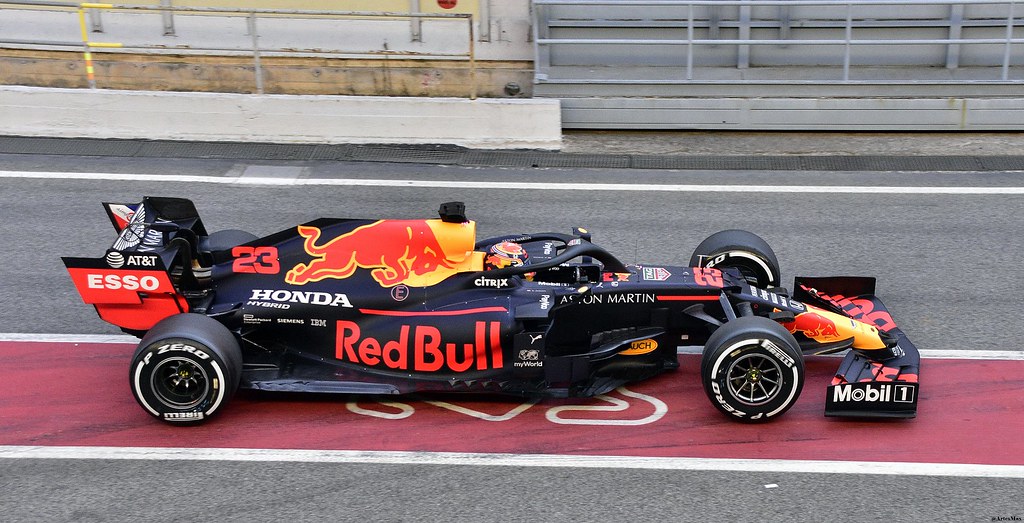




The New Front Wing Upgrade of Red Bull Racing: A Deep Dive into Performance Enhancement
INTRO
The latest technical update from Red Bull Racing has been centered around a significant redesign of their front wing, a critical component that influences aerodynamics and overall car performance. With its intricate detailing and precise engineering, this upgrade is expected to enhance both stability and aerodynamic efficiency. Given Red Bull’s formidable presence in Formula 1, especially since Max Verstappen took the driver’s championship, this front wing upgrade is crucial for their ongoing dominance in the sport. Understanding this update sheds light on how key teams continuously evolve their cars to maintain competitive advantages.
SECTION 1: Technical Details
The newly redesigned front wing features a modified endplate design and a more aggressive angle of attack. According to Red Bull’s engineering team, the updated wing incorporates additional elements to fine-tune airflow around the tires and the rest of the car. The curvature at the endplates is slightly more pronounced, which helps to direct a smoother airflow towards the side of the car, thereby reducing drag.
Red Bull has described this upgrade as primarily focused on enhancing the car’s “ground effect” capabilities. This is critical given the regulations that emphasize underbody aerodynamics. The team also emphasized that by making these minute adjustments to the front wing, they can achieve a more refined balance between downforce and drag, which is crucial for both low-speed cornering and straights.
SECTION 2: Intended Performance Impact
The intention behind the new front wing update goes beyond mere aesthetics; it aims to improve balance, tire wear, and overall efficiency. By optimizing the airflow over the car, Red Bull hopes to enhance the aerodynamic stability, which in turn can help optimize tire performance during races.
While teams often refrain from making specific lap time claims, the general consensus is that better aerodynamic balance can lead to less tire degradation and more consistent performance over race distance. Furthermore, a well-balanced car can allow drivers to attack corners more aggressively, leading to improved lap times indirectly through strategic tire management.
SECTION 3: Competitive Context
In the competitive landscape of F1, every detail counts. Red Bull’s update is particularly critical in light of the advancements made by rival teams like Mercedes and Ferrari. Both have made significant strides in their aerodynamics, and the new front wing seeks to counteract these developments.
Mercedes has developed their own upgraded front wing that optimizes airflow management, while Ferrari has been refining their aerodynamic components to enhance straight-line speed. In this context, Red Bull’s investment in front wing technology is a direct response to an increasingly competitive environment, ensuring they stay ahead of the pack.
SECTION 4: Season Implications
The introduction of this upgrade signals a clear direction in Red Bull’s development strategy for the current season. As teams allocate resources, the decision to implement a front wing update hints at a longer-term plan that might focus on maximizing downforce through subtle enhancements. The ongoing battle for aerodynamic supremacy is likely to drive Red Bull’s development efforts for the remainder of the season.
Resource allocation might shift with continued updates expected as the season progresses. Should the new front wing prove to be efficient, it is likely that Red Bull will invest further in aerodynamic improvements, possibly even exploring new designs for the rear wing or underbody. This front wing upgrade sets the groundwork for future iterations, which may include refinements based on race data and performance feedback.
SECTION 5: What to Watch Next
As the season advances, fans should keep an eye on upcoming races to see how the new front wing performs in real-world conditions. The validation phase for data from practice sessions and qualifying will be crucial in confirming the benefits of the redesign. For example, observing tire wear during the race can provide insights into the effectiveness of the new aerodynamic package.
The next few races will serve as a proving ground, not just for this particular upgrade but for the overall evolution of Red Bull’s car as it aims to maintain its competitive edge. Meanwhile, analysts and fans alike will be closely scrutinizing practice data, where every tenth of a second often makes a significant difference.
In particular, the high-speed circuits approaching mid-season will be key indicators of how well the updated front wing integrates with Red Bull’s overall aerodynamics. As we head to those tracks, expect a flurry of data analysis and insights from Red Bull regarding the wing’s performance, as they aim to validate their decisions.
Thoughtful Fan Question
With Red Bull’s ongoing efforts to refine their front wing design amidst stiff competition, how do you think the aerodynamic developments in Formula 1 will shape the strategies of teams in the upcoming seasons? Are we nearing a potential change in how teams approach aerodynamic upgrades?
